Full article about Vilar de Andorinho: Onion-Scented Plateau Above the Douro
Wander Vilar de Andorinho, Gaia’s onion-farming parish where swallows, kale beds and two Camino trails outrun the skyline
Hide article Read full article
Vilar de Andorinho: where onions once cleared customs
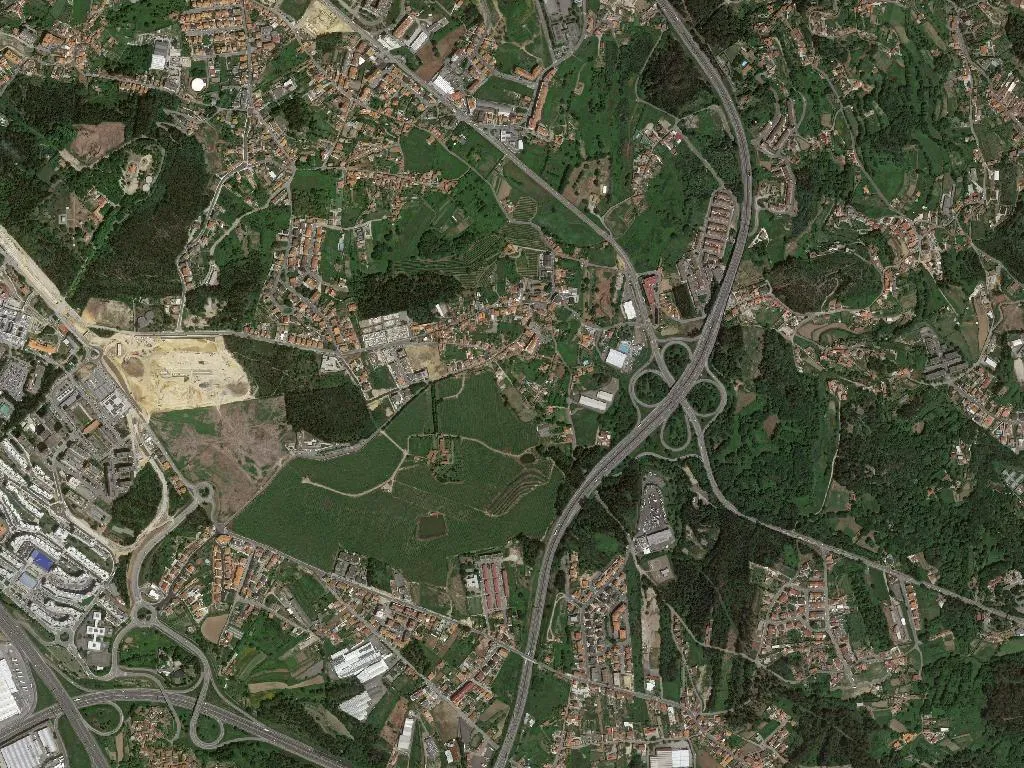
The first clue is the smell: loam lifted by the spade, dark as espresso grounds, almost sweet. One lungful and you know this is no dormitory suburb of Vila Nova de Gaia. At 125 m the plateau commands the Douro without turning its back on the river, and 18,000 people live pressed into just over seven square kilometres. Yet between the roundabouts and the apartment blocks, vegetable plots still muscle through granite walls. Kale rubs shoulders with washing lines; onions push their shoulders out of the soil like green light bulbs. The place has deeper roots than the skyline admits.
Priest, hamlet and the flight of the swallow
The parish registers begin before Portugal did. A charter from 1146 calls the settlement Vilar de Febres, after its tiny church. The modern name shrinks the Latin Villa de Andorinus – “farm of little Andorinus” – a medieval cleric whose name stuck to the landscape like burrs to a sleeve. When the council engraved a coat of arms in 1856 it chose a swallow in mid-air, wings scything the shield, flanked by two verdant onions. No castles, no swords: just a bird and two bulbs. At the turn of the twentieth century local growers were packing crates of those onions for Bristol and Liverpool docks; the vegetable earned the villagers the nickname ceboleiros – the onioners – and the bulbs earned their passport.
Two pilgrim motorways meet in one field
Unknowing walkers stride across the same terraces that once fed England. Both the Central Portuguese and the Coastal routes of the Camino de Santiago slice through the parish, a rare convergence that turns ordinary pavements into medieval infrastructure. Nineteen places will give you a bed: spare rooms with crocheted curtains, self-contained flats smelling of fabric softener, no corporate branding in sight. The hospitality is pre-modern in its simplicity – a clean sheet, a glass of water, the implicit understanding that everyone is passing through.
Processions, fairs and the patron saint of sat-navs
The liturgical calendar here is a three-part overture. In mid-May the parish carries Our Lady of Health through the streets at the pace of a slow waltz, candles trembling in the breeze, rocket fire cracking overhead. June belongs to São Pedro: fairground synth-pop, doughnut grease that seasons your clothes for days. The emotional climax is the romaria of São Gonçalo and São Cristóvão – the latter the protector of travellers, honoured in a place that has spent centuries watching feet trudge north-west. Geography and devotion overlap with cartographic precision.
Eighteen thousand people and one allotment
Census ink tells the future. Under-14s number 2,363; over-65s reach 3,281. Morning benches host the unhurried conversations of the latter; the former are still at school when the sun begins to dip. Density tops 2,500 per km², on paper a commuter grid. Yet the parish refuses to surrender its pitchfork. The crown mural on the coat of arms – a privilege once granted to market towns – sits above a shield that brags of agriculture, not artillery. Nobility is measured in tonnes per hectare.
The onion that outlived the export ledger
Come late afternoon, low sun grazes the granite and the stone turns the colour of dried straw – the same tone those fields took a century ago when men and women tugged bulbs free, trimmed the roots, stacked them like gold bars in poplar crates. The trade died, the terraces shrank, but the onion stayed, double and green, etched in heraldry the way lovers carve initials into cork oak. Bend over one of the surviving plots and the scent rises sharp and grassy, an olfactory postcode you will never mistake for anywhere else.