Full article about União das freguesias de São Facundo e Vale das Mós
Stone-terraced hills cradle medieval olive harvests and stony vineyards above the Tagus.
Hide article Read full article
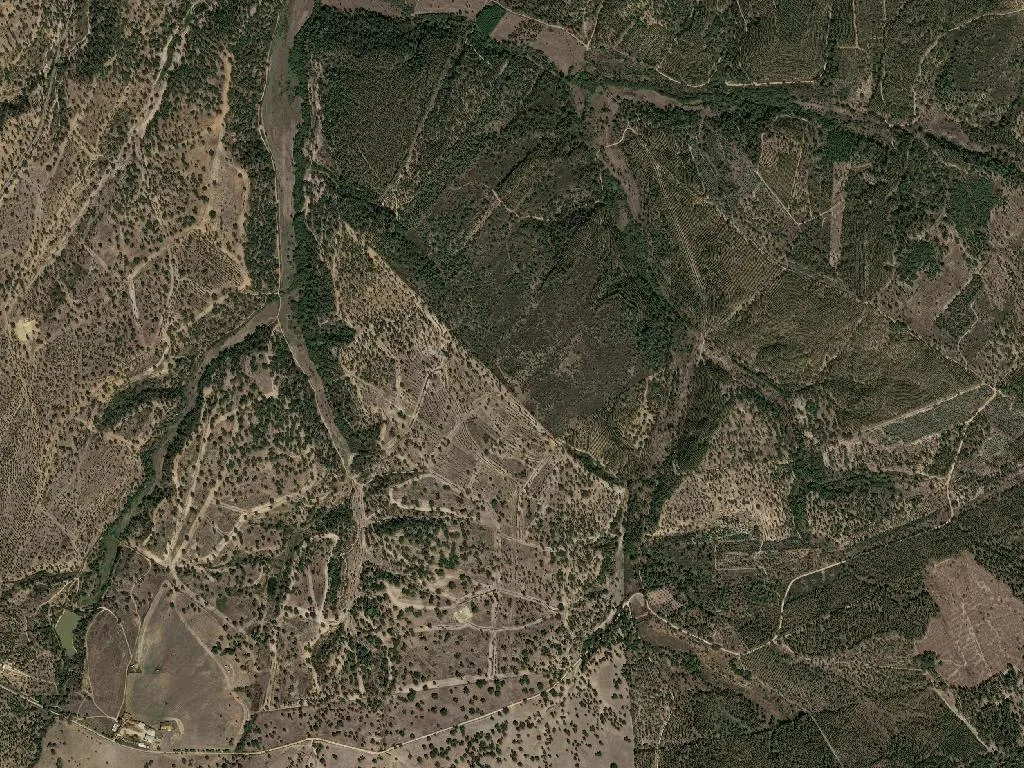
Dark schist ribs the hillside, and the late-afternoon light from Abrantes’ castle keep drags long shadows across olive terraces that staircase down to the valley. Between São Facundo and Vale das Mós the land is stacked in stone ledges—tilled earth, dense scrub, sky the width of the Tagus. Silence has weight here, broken only by wind scouring the packed-clay tracks and the distant bark of Sr Joaquim’s mongrel.
Taking the measure of the land
Walking re-calibrates distance. The average contour is 180 m, but the terrain folds and crests without mercy: up the “spine” of Vale das Mós, down to Carrascal, then another climb to Portela. Olives own the slopes—small, gnarled trees that qualify their oil for DOP Tejo Norte status. Soil is thin, summer sun razes the ground, and the fruit is still plucked in December when each olive carries three drops of internal moisture. On the quintas of Figueira and Alviobeira the harvest is medieval: cork poles, nets spread like sails, grandchildren on Christmas break roped in to help grandparents fill 15 kg crates.
Wine arrived later. Sr Albano’s vineyard on Cabeço da Mãe roots itself in tooth-achingly stony schist and yields grapes that taste of powdered rock. Only a thousand vines, yet every bunch carries the austerity of these ravines where even the air feels thinner.
Living at the balance point
Population 1 265, ageing ratio four-to-one. Vale das Mós primary school shut three years ago; the daily bus to Abrantes now leaves at 07:00. Zé Manel’s café opens at 06:30 to pour bica for field hands. Two registered b&bs: one in Carvalhal, one in Lamegal. Overnight guests wake to Sr Aníbal’s rooster and to Saturday bread runs—Dona Rosa drives to Carrascal’s wood-fired oven for crusty pão de trigo that still costs under two euros.
The old EN118 bisects the parish but is barely a lane; meet a John Deere and someone reverses to the nearest lay-by. The school run takes twenty minutes—an hour when winter rains swell the Tagus. “That’s the price of quiet,” the elders shrug.
What endures
No marble monuments, just a 16th-century stone cross slotted into São Facundo’s cemetery gate where mothers lay wild daisies on Sundays. The annual festa on 28 August commandeers the shuttered primary school: grilled sardines, cornbread, and the local folk-dance troupe spinning until the generator times out. The communal oven fires five times a year—St Martin’s Day, Easter week, and whenever someone turns eighty and still wants to deliver orange-scented cake to neighbours.
Sr João’s fumeiro cures in a soil-scented cellar. His blood-black morcela mixes backyard onion and Dona Odete’s own paprika; fried in cast iron, the fat turns the exact gold of an August sunset.
Dusk settles over the olives, wind drops, and the smell of oak that Sr Joaquim splits for the hearth rises straight into still air. Tomorrow will repeat—until Dona Rosa can no longer fetch the bread, until the last grove is signed over to a buyer who has never walked these stones.