Full article about Tejo’s Oxbow Secrets: São Miguel do Rio Torto & Rossio
Olive roots hide Moorish echoes above river-loop vineyards outside Abrantes
Hide article Read full article
The Tejo’s Quiet Annex
The river arrives broad and unhurried, a sheet of molten pewter sliding past Rossio ao Sul do Tejo as if Lisbon could wait. Locals still call the flood-plain “the river’s ballroom” because the water loops and turns here, buying time. Cartographers drew the parish only after the Tejo had finished editing the land; everything else—wharves, wheat barges, olive presses—followed the river’s choreography. Stand on the thin ribbon of road at dusk and you can almost hear the creak of 19th-century boards: gangs of men levering Alentejo oil amphorae on to flat-bottomed boats bound for the capital, the splash of oars echoing off the stone quay that no longer exists.
When the Port Still Earned Its Keep
Rossio and São Miguel do Rio Torto were yoked together by an administrative pen-stroke in 2013, yet the settlements predate most nation-states. In São Miguel they whisper of Ulmeiro, a vanished Moorish town said to lie beneath the olive roots near Moinho do Meio; tractor drivers claim the mechanical harvesters sometimes groan in a cadence that sounds like Arabic. Above the terraces, the whitewashed chapel of São Miguel keeps watch—sixteenth-century, Manueline lace framing a stone Trinity as delicate as communion bread, while the archangel skewers a dragon that looks suspiciously like a local wild boar. Inside, the air is thick enough to muffle mobile phones; even German cyclists lower their voices.
The Fort That Never Fired a Shot
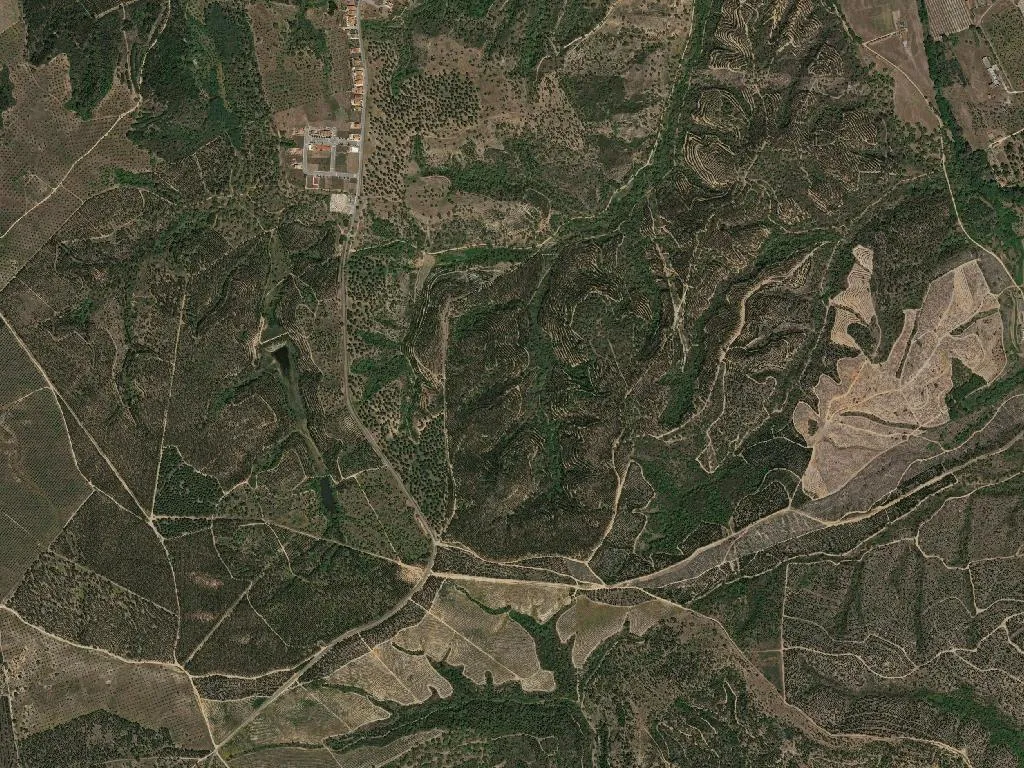
Climb the dust road through cork oaks to the Fortim do Caneiro, a toy fortress planted 134 m above the valley floor. Built in 1810 to keep the English or the French—or perhaps both—out of Abrantes, it never received an enemy. Instead, it became an open-air drawing room for vultures and teenagers. The cannons were sold for scrap long ago; today the only artillery is the click of selfie shutters aimed at the Tejo, its oxbow vineyards stitched like green kilims across the hills.
Olive Oil, Grape and Soil
Every bend reveals another lagar: low white buildings with granite rollers and the faint perfume of crushed olives. Ribatejo DOP oil is not the gentle Tuscan cousin you drizzle over burrata; it bites the back of the throat with chlorophyll and pepper, then melts into a sweetness that makes dentists despair. The same terraces grow grapes the rest of the world has barely heard of—Fernão Pires for citrus-scented whites, Trincadeira and Castelão for reds that taste like sun on schist. Summers solder the berries to the cane; winters drown the soil; the river moderates both with the indifference of something older than calendars.
Daily Life in the River’s Shadow
Spread across 57 km² live 4,104 souls—fewer people than fit inside a London Underground carriage at rush hour. Density is 70 per km², which means dogs have surnames. When the parish council installed a cash machine in Rossio (cost: €6,500) it made the weekly paper: pensioners no longer had to ride the bus to Abrantes for a twenty-euro note. Conversation in the only café still revolves around whether the bread will rise another cent, whether the doctor comes Tuesday or Wednesday, whether the river will behave. There are 1,446 over-65s and 382 children; whoever stays does so by choice. Night falls tangerine on the water, silence deepens, and you can hear your own stomach ask what’s for dinner. Bring walking shoes, an empty suitcase and a willingness to taste oil poured from a plastic jug by someone whose grandfather pressed olives for the Queen of England. After that, tell me this place doesn’t have a flavour of somewhere you thought had vanished.