Full article about Beechwood groans & fresh oil sting in Bugalhos
Lagar de Varas still presses olives as villagers return from Paris & Porto for harvest toast
Hide article Read full article
The creak of 1901
The sound is part moan, part heartbeat: beechwood beams press against olive paste in Lagar de Varas de Bugalhos and the building answers back. Green-gold oil slips into granite troughs; the air smells of wet bark and pepper. A century-old belt still drives the screw, and no one has seen a reason to swap it for stainless steel.
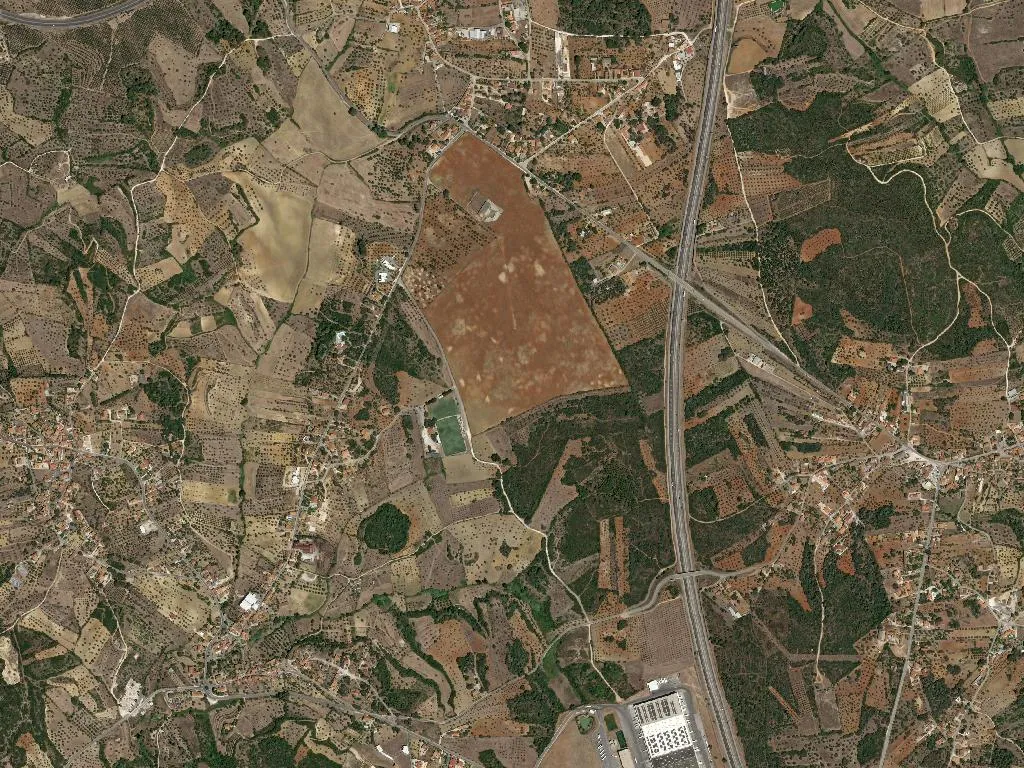
Bugalhos sits 111 m above sea level where the Serra de Aire’s limestone foot-walls dissolve into 1,645 ha of soft, chalky hills. The name is medieval shorthand for “little olive-covered knolls”, and the geography still honours the contract: silver-green canopies alternate with whitewashed farmsteads, the whole map reading like a palimpsest of prunings and dry-stone walls.
Olive oil as autobiography
Cadastral maps from 1758 already split the settlement into “Lower” and “Upper” Bugalhos; the upper hamlet vanished, but the lower one doubled-down on its DOP Ribatejo oil. The estate presses are not museum pieces—each November the wooden poles are slotted back into place and the slow waltz begins. At Quinta do Conde, two kilometres out, the mill sells cloudy, cough-inducing new oil over a counter scented with quince jam made from the same orchards that line the seasonal streams.
November, the month of homecoming
Pickers arrive before first light: returning Paris electricians, Norwich carpenters, a granddaughter studying in Porto. On Olive Harvest Day the lagar throws open its doors, someone tunes a guitar, and the population quietly doubles. Cafés run a continuous breakfast service; at O Lagar on Rua da Igreja (open since 7 a.m. sharp since 1983) toast is drizzled with oil so fresh it stings, served on brown paper that turns translucent with heat and fat. No procession, no fireworks—just the secular liturgy of fruit and branch.
Between the Manueline cross and the groves
The parish church of Nossa Senhora da Conceição keeps a displaced Manueline cross, rescued from a long-vanished hermitage on Cabeço do Facho. Stone volutes, softened by rain, contrast with the 1909-rebuilt façade still showing earthquake scars. From the porch the Olive Trail (Trilho dos Olivais) loops five kilometres through pear orchards—Rocha do Oeste DOP territory—then climbs to the Cruz viewpoint. The path is powdery loam, walls knitted with loose stone; knee-high kermes oaks and cotton lavender release resin under afternoon heat. Partridges call from somewhere invisible; the Serra de Aire floats grey-blue on the horizon like a half-erased line drawing.
At table, condensed Ribatejo
A Cabana serves lamb stew in a clay pot that arrives bubbling, its rim blackened from wood-fired ovens. Migas—breadcrumbs pan-turned with coriander, garlic and crackling—are the texture of damp velvet. Sunday lunch means kid goat, skin lacquered, flesh still pink. Desserts arrive straight from the convent recipe drawer: Torres Vedras bean pastries, egg-yolk “nuns’ bellies”, all washed down with local white wines that taste of lime peel and dried fennel. Nothing is refined; everything is rehearsed.
The weight of silence
Dusk stains the groves copper; light sticks to the undersides of leaves like foil. The village is quiet, but not hollow—58 people per km² see to that. It is the silence of certainty: waiting for the olive to darken, for the pear to blush, for the oil to clarify in settling tanks. Up at the Cruz lookout the wind carries the scent of turned earth and, somewhere below, the metallic chime of a disc harrow working a late field. No spectacle, only continuance.