Full article about Vultures, bells & cork-smoke trails of Serra de Santo Antóni
Watch Egyptian vultures circle above 340 m limestone ridge where limekilns still glow
Hide article Read full article
The noon bell that watches for vultures
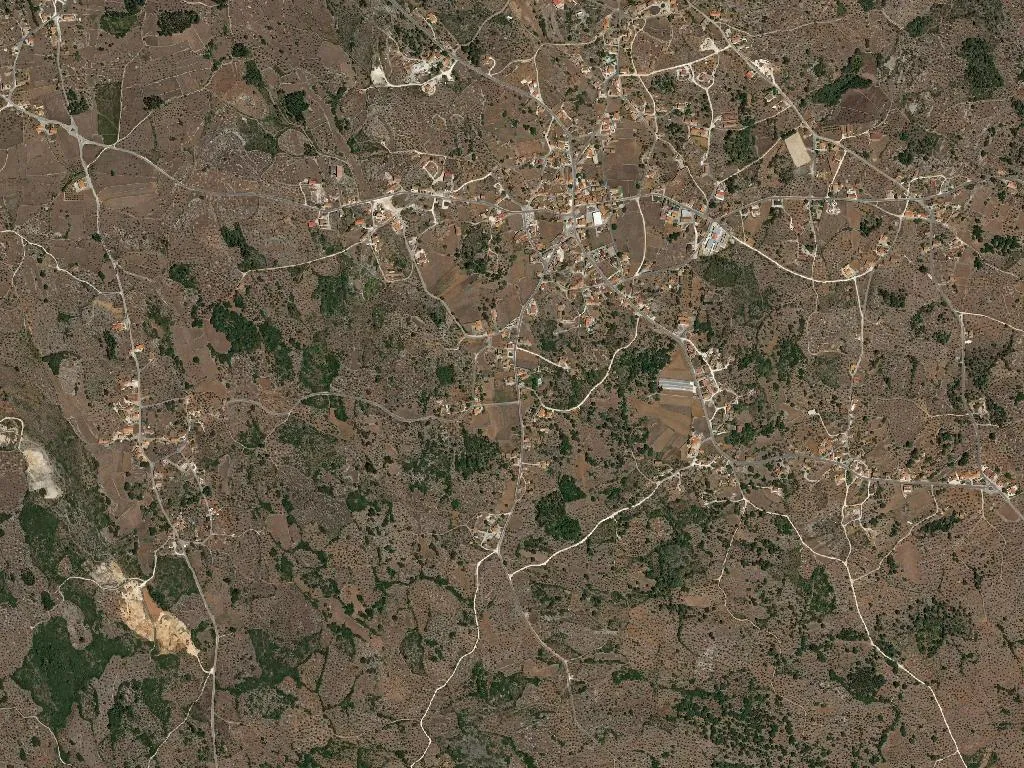
The electric bell of the Chapel of Nossa Senhora da Conceição strikes twelve. No one genuflects; instead, heads tilt skyward. A kettle of Egyptian vultures—lanky, white-bellied, yellow-faced—slides above the ridge. The custom began with shepherds who read storm warnings in their flight; the chapel merely mechanised the alert. From 340 m up the western slope of the Serra de Santo António the view clears the Alviela valley and the Ribatejo plain, while wind lifts resin from sun-warmed rosemary and limestone.
A parish born from a hermitage
devotion, not geography, founded the settlement. A mid-16th-century hermitage to St Anthony drew pilgrims and graziers; in 1573 the boy-king Dom Sebastião upgraded the ridge to an independent parish. The name is literal—Serra de Santo António, saint and landscape fused. The present parish church (1785) rises on the same footprint: two-tiered belfry, chipped-stone portal, interior riot of gilded carving sheltering a 1600s statue of the saint. A 1653 ledger stone records the donation of a field by “a blind man who recovered his sight invoking St Anthony”—the first certified miracle of the village.
Limekilns, coal smoke and charcoal
In the 1800s the ridge’s thick cork-oak woods became fuel. Charcoal burners fed a ring of limekilns that supplied Alcanena’s tanneries; one survives at Paul, a three-metre circular furnace classified as a National Monument. Each July it is still fired the medieval way—cord upon cord of cork oak stoked by hand—sending a pale plume over the treetops. The six-kilometre Trilho dos Fornos loops from church to kiln to the granite cross that marks the Cruzeiro lookout, where griffons nest in the crags and dawn silence is ripped by their hisses.
Processions, pine-cones and folk plays
The Sunday after 13 June, the statue of St Anthony is shoulder-carried round the churchyard while trays of honey-slick walnut cake are handed out—crust shattering, crumb clinging sticky to fingers. On the first Sunday of May the Festa da Pinha revives a courtship rite: boys once offered girls a ribboned pine-cone; today children learn the drill in craft workshops. At Christmas the Auto dos Pastores packs the nave with shepherds in homespun, adufe frame-drums and concertinas rattling through improvised seventeenth-century couplets that have never been written down.
Eating at shepherd’s pace
Lamb stew “à pastora” spends four hours in a wood oven—potatoes, onion, mint and a generous slick of DOP Ribatejo olive oil—filling the kitchen with aromatic steam. Clay-pot roast kid, simply rubbed with garlic, salt and sweet paprika, appears on Pentecost Sunday. The local honey cake uses rosemary honey from hives dotted along the slope, while West-Region Rocha pear is poached in orange-peel syrup. A semi-curdled ewe’s cheese, faintly peppery, wants a chilled Lisboa white. In winter, black-eyed-bean and spinach soup meets corn-bread toast, the surface crackling like thin ice.
Cold water and autumn mushrooms
The Alcanena stream cuts east–west, tumbling into pools deep enough for summer swimming. Poço do Cão—literally “Dog’s Pool”—has stone tables under ash shade and water so clear you count the pebbles. North-facing slopes trap Atlantic moisture; come October, chanterelles and milk-caps push through heather and moss. The ridge’s cork-oak and holm-oak Mata shelter wild boar and one of Portugal’s densest griffon colonies. A fixed telescope at the Cruzeiro lets you clock their nine-foot wingspan, and, in April, spot wild daffodil and Italian orchid speckling the turf below.
At noon the bell rings again. No vultures wheel—only high cirrus and the metallic echo sliding down the valley. Passers-by no longer scan for rain; they merely register the sound, an old reflex that refuses to die on the ridge where a saint christened a village and the kilns still smoke once a year.