Full article about Fazendas de Almeirim
Walk red-barked cork cathedrals, taste warm caralhotas in this Ribatejo plain village
Hide article Read full article
Fazendas de Almeirim: where the air is priced by the arroba and the kilo
The smell reaches you before the place does. A saturated, buttery haze drifts from half-open bakery doors and braids itself into the dry Ribatejo dawn. It is the scent of dough swelling in cloth-lined bowls, of sugar bronzing since five a.m. in ovens that refuse to cool. There is no marble-clad monument to greet you, no miradouro selfie-point—only this airborne loaf, so dense you could almost bite it.
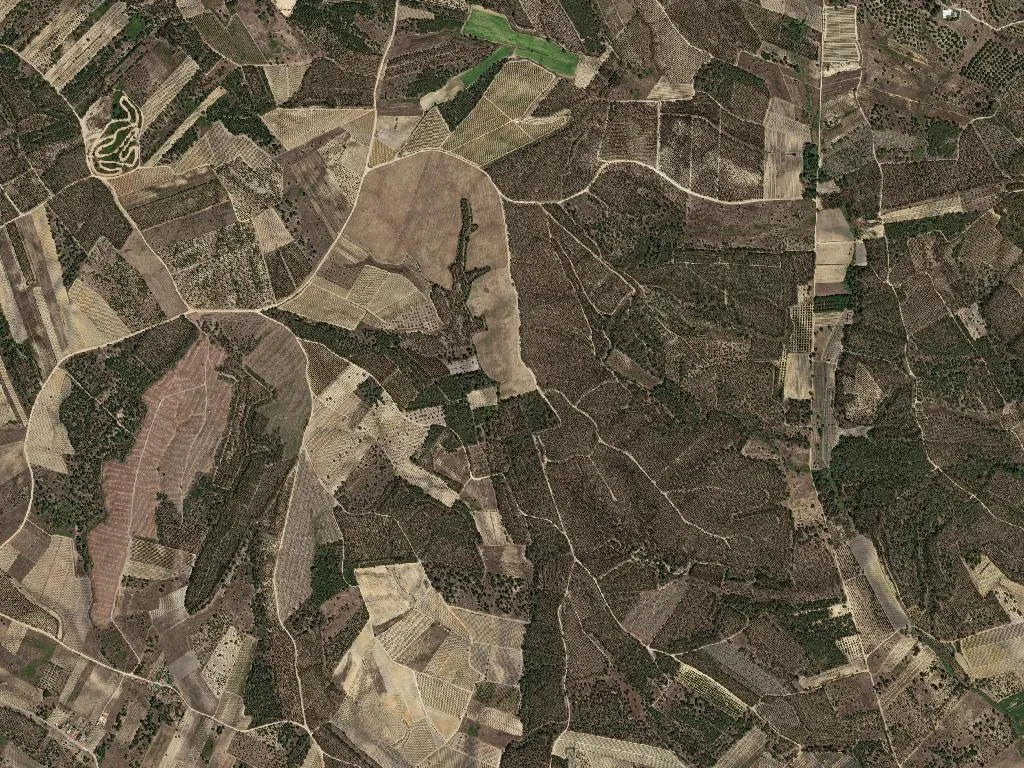
Fazendas de Almeirim spreads across 58 km² of gently creased plain, 110 m above sea level, 70 km north-east of Lisbon. Vine rows, cork grids and tomato terraces run ruler-straight to a horizon that liquefies in summer heat. Some 6,350 people live here, the electoral roll shrinking every decade as the young migrate to the capital and the old remain, trading the school run for the shade of a cork oak and the parish chronicle for the café television.
From garlic fields to cork vaults
The toponym is a relic: Almeirim derives from the Latin alium (garlic), a crop that financed medieval tithes. What the Tagus floodplain really delivered, however, was weighty, chocolate-dark soil and a micro-climate that ripens grapes in September and cork in August. Today the garlic survives only in window-boxes; the economy is governed by the arroba (14.7 kg) of cork bark and the litre of wine must.
Walk the estates—Herdade do Monte Barbo, Herdade dos Gagos—and you step into a 700-hectare cathedral of Quercus suber. The trunks, freshly stripped, glow vermilion like sunburnt shoulders; the crowns knit a green-black vault that clicks with bee-eaters and woodpeckers. Underfoot, acorns crack like porcelain, releasing a resinous warmth that no perfumer has ever bottled.
Caralhotas: the ID card you can eat
No one leaves without swallowing the local passport: Caralhotas de Almeirim IGP. Imagine a sweet bread roll crossed with a brioche, baked until the crust shrapnels under the tooth while the crumb stays tight and faintly humid. Tradition demands you cleave it open while still warm, insert a translucent slice of chouriço or a fold of presunto, and let the pork’s paprika-smoke duel with the dough’s whisper of citrus peel and cinnamon. The pairing ought to collapse under its own contradiction; instead it achieves the balanced tension of a good Sancerre with goat cheese.
Order a plate at Pastelaria Rosa and the waitress will bring a glass of tawny Tagus rosé without being asked. The wine list everywhere here is short, local and confident: light, garnet-coloured reds from Castelão and Touriga Nacional that taste like sun-warmed cherries cooled by river mist.
Geometry lessons: vines, olives and the occasional egret
Rent a bike from the parish council (€10 a day; they’ll lend you a helmet and a paper map) and roll south on the ecovia that shadows the N118. For 12 km you glide between irrigation ditches where purple herons balance like origami. To the left, tomato canes are lashed to bamboo tripods; to the right, corduroy vineyards end in a sudden cliff of eucalyptus. The gradients are negligible, the tarmac still warm from yesterday’s 35 °C, and the only soundtrack is the pneumatic hiss of a tractor compressor sealing another stack of cork boards.
Detour east at the sign for Muge and the Tagus estuary opens into a lattice of salt pans and rice paddies. In October the storks arrive, retrofitting their cathedral-sized nests on telegraph poles with IKEA-worthy discipline.
Earthquakes and afternoons measured in litres
Fazendas keeps no hotel chains, only four guesthouses, each occupying a low, white-washed farmhouse whose wi-fi password is the vintage of the owner’s first wine. Wake at Quinta do Casal Novo and breakfast is coffee, Caralhotas and a vineyard tour led by the winemaker himself; the dog is called Arinto and the cat Fernão Pires.
The ground trembles more than tourists realise—two shocks above magnitude 6 since 1900, the last in 1969—but the locals shrug the way Cumbrians shrug rain. Their calendar is shaped by the mundão (the big harvest) in July, the saca da cortiça from mid-June to early August, and the tomato rush in September when Polish students arrive to earn €70 a day in the greenhouses.
By late afternoon the sun slants through the cork vaults and everything turns the colour of Madeira cake. Somewhere a bakery reloads its trays; the scent drifts across the square, past the parish noticeboard advertising Saturday’s arraial and the mobile library timetable. You tear the last Caralhota in half, press a final curl of chouriço inside, and understand that this—sweet crust, smoked fat, resinous air—is the exact longitude and latitude of Fazendas de Almeirim. No GPS required.