Full article about Raposa: Ribatejo’s silent wheat sea
Lean soil, 497 souls, pastries €1.20—Almeirim’s empty plain hums
Hide article Read full article
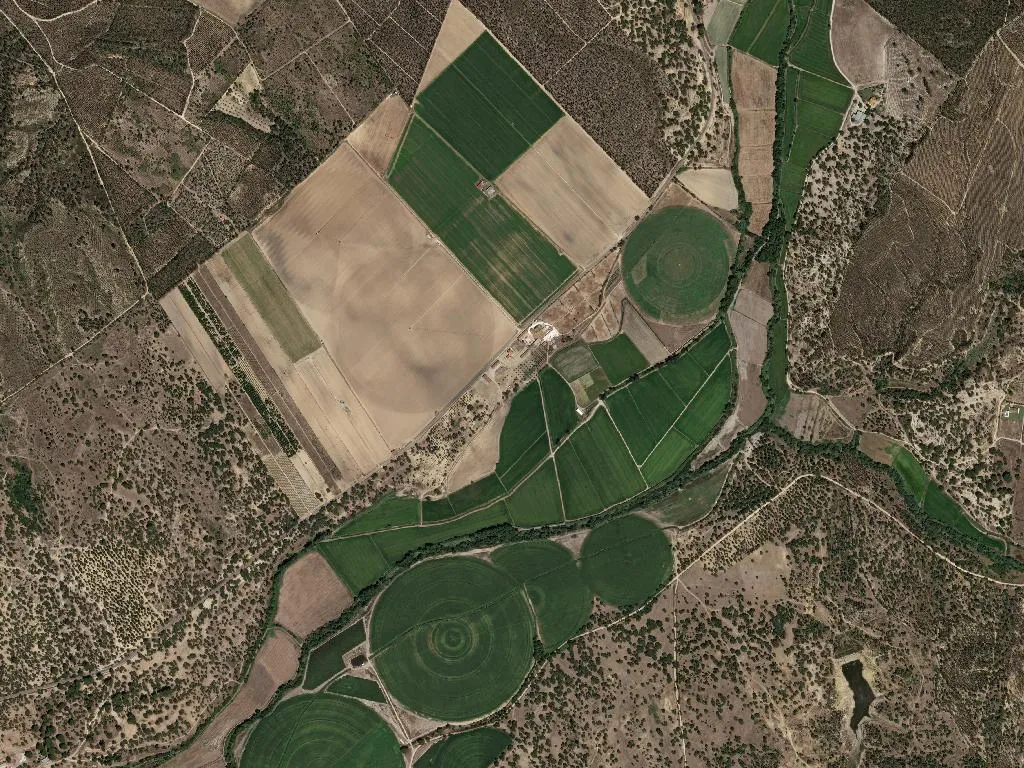
The wind arrives unchallenged, scything across 6,178 ha of Ribatejo plain and lifting ochre dust from the furrows. Stand on the municipal road that clips the northern edge of Raposa and you are a mere 29 m above sea level, yet the gaze sails west until the Lezíria marshes dissolve into summer haze. Wheat, sunflower and maize replace one another in rectangles that change colour like swatches—no vines, even though the parish has officially belonged to the Tejo wine region since 2009. Only 497 people share this canvas, a density of seven souls per square kilometre; silence is the dominant crop.
Dry Land, Long Views
The soil is a lean cambisol—sand laced with clay—marking the geological handshake between flood-prone valley and the first stubborn hills. Larks trade calls that seem to echo, and a single John Deere can be heard kilometres away, working the Sousa estates or Quinta do Arneiro. When the late sun slants across stubble the air thickens with pollen; throat, skin and retina register the same arid note.
What the Kitchen Remembers
Serious eating happens behind modest façades. Since 1983 the only year-round tavern, Café-Restaurante “O Parque”, has turned out Almeirim’s trademark caralhotas—flaky pastries stuffed with pumpkin preserve and almond, protected by IGP status and still €1.20 a piece. Locals roast Carnalentejana DOP beef, reared on these same plains, and serve it with punched potatoes and tight-shredded kale. In winter the smokehouse comes alive: chouriça de carne, blood sausage, paio cured over holm-oak logs. Lunch at Dona Alda’s house in Rua da Igreira can last two hours, especially if it’s a high-mass Sunday and the cozido à portuguesa is simmering.
Living Thinly, Slowly
One third of the 497 residents are over sixty-five; only 49 children remain after the primary school closed in 2018. Visitors looking for deliberate solitude check into one of three rural lodgings—Monte do Arneiro, Casa da Eira or Quarto da Avó—each licensed since 2019 and set among cork oaks or kitchen gardens. There are no signposted trails, no listed monuments. The parish church of Nossa Senhora da Conceição, rebuilt after 1755, keeps its gilded baroque altarpiece that survived the French incursions of 1810. Raposa does not pitch itself; it simply endures—plain, sun-struck, wind-polished—smelling of turned earth when the first autumn rain finally arrives.