Full article about Barrosa breathes with the Tagus tide
Rice fields, flamingo skies and oak-grilled beef in Ribatejo’s wetland heart
Hide article Read full article
A Ribatejan tide-table
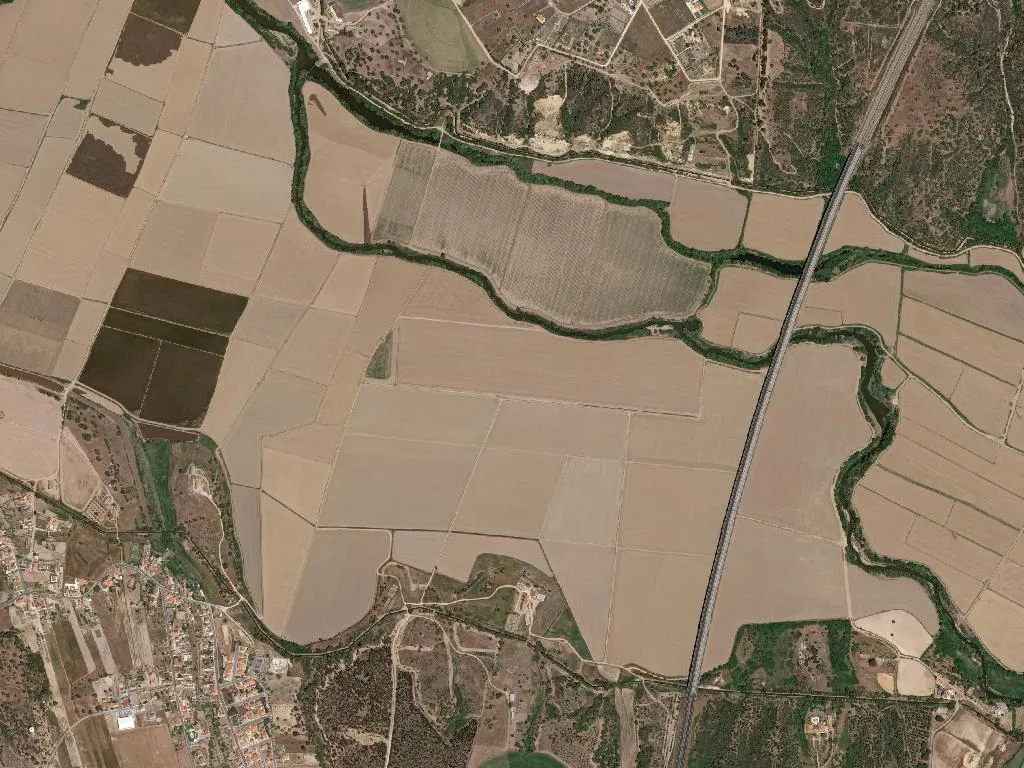
Four metres above sea level, the fields of Barrosa still inhale and exhale with the Atlantic. Stand at the crossroads beside the whitewashed chapel and you can almost feel it: a slow, almost geological pulse that lifts the water table twice a day and leaves the soil the colour of freshly-ground coffee. Poplars, planted like fence-posts along the drainage ditches, are the only vertical punctuation in seven square kilometres of alluvial flatness. Everything else – rice, sky, cattle, road – runs parallel to the horizon.
The river’s pantry
Barrosa is one of nine parishes glued to the northern lip of the Tagus estuary, inside Portugal’s largest wetland reserve. From October to March the airspace above the parish becomes a Heathrow for waders: glossy ibis, black-tailed godwits, and the stray flock of greater flamingos that descend on the flooded paddies like scraps of sunset blown inland. Farmers simply work around them; the birds have right of way.
Come April the fields are drained into chessboard furrows and planted with the short-grain Carolino rice that carries the IGP stamp of the Ribatejo marshes. The grain is pearly, almost chalky, built to absorb stock without collapsing – the reason local cooks can turn out tomato-laced arroz malandro or the saffron-weighted rice with duck without ever reaching for a timer. Ask in the café opposite the parish council and someone will tell you the water arrives by gravity alone: sluice gates at Valada and Samora Correia open at the turn of a brass wheel, and the river does the rest.
Cattle graze the same levees. The red, lyre-horned Lusitano-Raiano cows that carry the Carnalentejana DOP label feed on wild clover and meadow foxtail, producing beef so intrinsically flavoured that a churrasqueira needs nothing more than salt and a grill of holm-oak embers. On the feast of St. Peter (29 June) the whole village smells of singed hair and rendered fat; every household keeps a plastic tub of dripping by the stove for the year’s rice and beans.
Horizon as perimeter
There is no coastline here, only a gradual surrender of land to estuary. The Tagus broadens into a 14-kilometre-wide slack-water lagoon: no surf, just silver-grey chop that reflects the sky like the inside of an oyster shell. Farmers set their day by the tidal charts pinned outside the agricultural co-op; gates open two hours before low water, close again before the flood. Even on windless days a faint brackish tang drifts inland, carried on the same westerlies that once filled the sails of caravels heading to India.
Barrosa’s 638 registered souls are outnumbered eight-to-one by overwintering birds. A quarter of the population is over 65 and can recall the winter of 1979 when the dykes gave way and seawater lapped against sofa legs. They tell the story without drama, as if describing a late delivery of fertiliser, then finish their bica and head home for the noon news. The 71 children under 19 learn to cycle on the raised farm tracks, returning at dusk with the same fine silt on their shoes that coats the rice seedlings. There is no cinema, no bus after six, no streetlights for stretches at a time; darkness is softened only by the sodium glow of Benavente six kilometres west.
A kitchen governed by tide and draught
Lunch begins at one sharp. Grilled eel arrives first, glazed with a reduction of white wine and bay so reduced it tastes almost like Madeira. Then the rice dishes – perhaps arroz de cebolada, onion-sweet and the colour of burnished mahogany, or a catfish stew thickened with coriander stems and the local early-harvest olive oil that carries a hint of green tomato. Wine is poured from unlabelled jugs: Tagus-region reds built for stew, or a lemon-tinged Fernão Pires if the day has turned humid. Bread is yesterday’s, sliced thick; no one apologises for the crust, it is architecture for sauce.
Dessert is arroz doce cooled in a shallow copper pan, cinnamon sifted through a paper stencil into spirals so precise they look printed. Eat slowly; the grain still holds its bite, the milk has reduced to silk, and the citrus peel has given up only half its perfume. Outside, the fields revert to mirrors of hammered gold as the sun drops behind the poplars. Somewhere downstream a sluice gate sighs open, and the river, faithful as ever, returns to irrigate the night.