Full article about Cartaxo’s Wine-Scented Cellars & Market Day Haggles
Breathe oak-aged Castelão beneath Cartaxo’s pavements, then taste pears at the 1937 market.
Hide article Read full article
The scent arrives before the guidebook
The scent arrives before the guidebook. A sweet, almost fungal perfume rises from the compacted sand floor the moment you duck beneath the lintel of a wine cellar sunk six metres under Cartaxo’s main street. The temperature drops like a stone; gooseflesh races up your forearms. One bare bulb throws ochre light over a ceiling curved by generations of shoulders brushing the chalk. Oak casks the colour of burnt sugar line the walls – Castelão, Trincadeira, Fernão Pires – breathing in the same humidity that once soaked the tunics of Roman vineyard slaves.
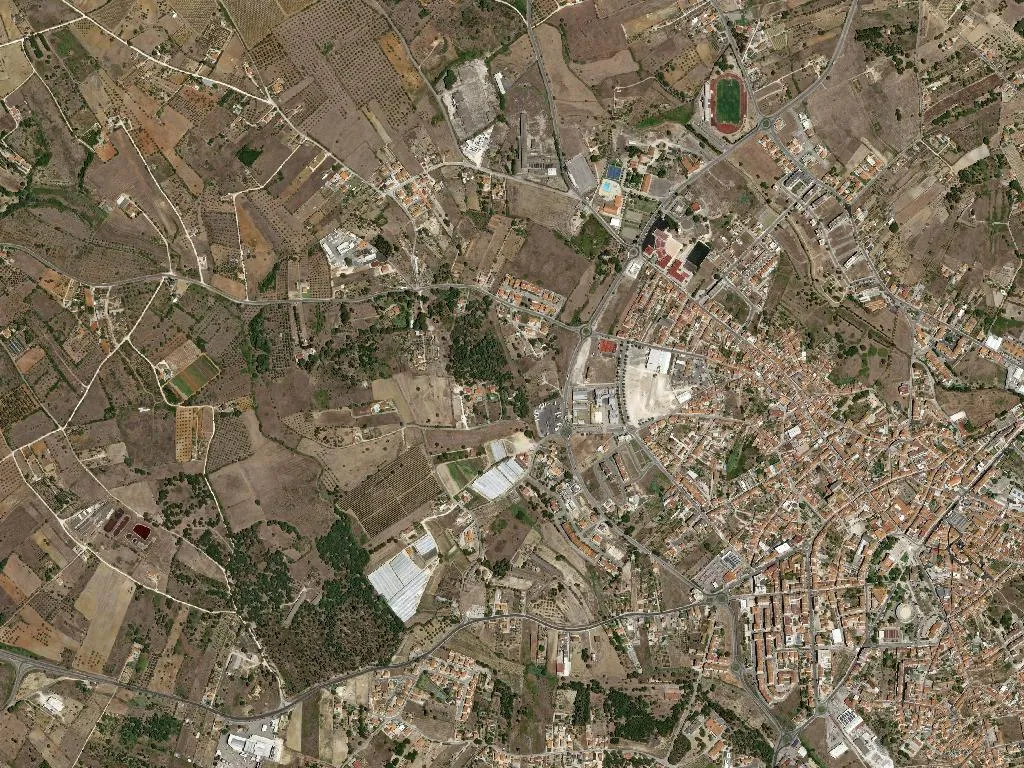
This subterranean lung is the unofficial headquarters of the Tejo wine region, a title Cartaxo has claimed since 1985 when its annual grape fair first turned a farming routine into civic pride. The town (population 12,302) sits only 62 m above sea level but feels lower: the Tagus plain is so wide here that the horizon bends like the inside of a bowl.
Market day, Tuesday, 07:43
Market day, Tuesday, 07:43. Metal shutters rattle up on the 1937 municipal market. Pêra Rocha pears from the irrigated allotments west of town still wear their morning dew; oil from early-harvest Galega and Cobrançosa olives gleams the colour of liquid Chartreuse. Customers greet producers by first name – no brands, no middle-men. The same families have sold sheep’s-milk cheese and black chouriço here since the rail link arrived in 1891, the sleepers shipped over as ballast in coffee boats returning from Brazil.
Royal charters and railway tracks
Royal charters and railway tracks. A charter from Dom Manuel I in 1512 turned an informal wine-and-grain fair into a regulated market; the 19th-century royal road Lisbon–Torres Novas poured traffic through; but it was the railway that altered the town’s metabolism. The station keeps its original late-Victorian woodwork and a forged-iron canopy where footsteps echo like dropped coins. José Joaquim de Sousa Reis – local journalist, member of parliament, born 1837 – lobbied for the line; his brother, Padre Joaquim, founded the municipality’s first agricultural co-operative in 1901, the ancestor of today’s Adega Cooperativa whose tiled facade dominates the southern approach.
Baroque gold inside whitewashed walls
Baroque gold inside whitewashed walls. The parish church of São João Batista looks plain enough from the square, but step through the door and 18th-century gilded carving erupts in volutes and cherubs. Blue-and-white azulejos narrate the life of John the Baptist in cobalt the shade of a winter sky. Two kilometres east, in Vale da Pinta – literally “Painted Valley”, named for a rust-red basaltic scar visible from the ridge – the little chapel of Nossa Senhora da Conceição offers a quieter counterpoint: Mannerist bones retouched in the 1700s, the whitewash drinking the late-afternoon light. An administrative merger in 2013 stitched the two settlements together, yet the shared vineyards and medieval land registers had long made the union factual.
Saints, bonfires and lamb stew
Saints, bonfires and lamb stew. On 24 June the square turns into a pot-plant maze of potted basil and crackling bonfires for the Festa de São João. A brass band drags a bailarico dance well past midnight; at dawn the priest distributes the manjericos – pots of basil wrapped in coloured paper – to anyone who will promise to keep them alive until next year. Vale da Pinta answers in September with the Romaria de Nossa Senhora da Conceição: processions, folk-dance troupes, and cauldrons of ensopado de borrego – lamb shoulder simmered in local red wine, mint and yesterday’s wheat bread – that empty long before the last hymn.
Winter brings the Ciclo dos Santos, when improvised duet singers face off outside candle-lit churches, the Ribatejo style of cante ao desafio: voices circling, teasing, laughing while fingers stiffen around glasses of tinto. Seasonal cooking is non-negotiable. Tomato soup with poached eggs marks the grain harvest; chanfana de cabrito – kid marinated in white wine, bay and paprika – appears only when the thermometer drops. Walnut-and-honey cakes and dark honey broas finish every feast. Maria Lúcia Vaz de Sousa, born 1951, was the first winemaker here to bottle a serious rosé; her medals in Bordeaux and London cleared the path for the small estates now welcoming visitors by appointment.
Eight kilometres of vines and sky
Eight kilometres of vines and sky. The signed Wine Route footpath (PR1 SL) leaves the town centre, slips between trellised vines, olive groves and low cork oak where cattle egrets balance like white handkerchiefs dropped from the sky. At 62 m altitude the plain offers 360-degree sightlines: on clear winter days the limestone rampart of the Serra de Aire e Candeeiros floats 40 km away like a paper cut-out. The trail ends on a raised platform above the river valley where the only sound is insect wings among the grapes. The Central Portuguese Way of Santiago cuts across the same landscape; pilgrims refill bottles at the irrigation channels where, at dusk, local boys still fish for barbel.
Back in town, the Wine Interpretation Centre occupies the 1935 cooperative winery. An interactive exhibition walks you from pruning to pour, finishing with four-glass tastings. During construction of the 1950s irrigation canal workers uncovered a Roman tile and amphora cache – now displayed in the same room where the co-op’s 1935 olive-oil press still works every November, releasing a cloud of green perfume that clings to clothes like cigar smoke.
The weight of a full glass
The weight of a full glass. Early evening on the main square: marble-topped café tables, swifts slicing the sky. The wine in front of you is Castelão, pomegranate-dark, the first sip carrying ripe fruit and a lick of sandy earth – the same sand that cradles the cellars, the same sand that gives the region its pulse. The church clock strikes seven; the bell’s note lingers against stucco walls, then dies. What remains is the quiet heft of the glass in your hand, full of a place that has been fermenting since the Romans first planted here two millennia ago.