Full article about Vale da Pedra: Where Limestone Breaches the Earth
Vale da Pedra, Cartaxo—limestone ribs, Touriga Nacional vines, fading kaolin pits and a quiet Camino crossing in Ribatejo.
Hide article Read full article
Mid-afternoon glare on limestone
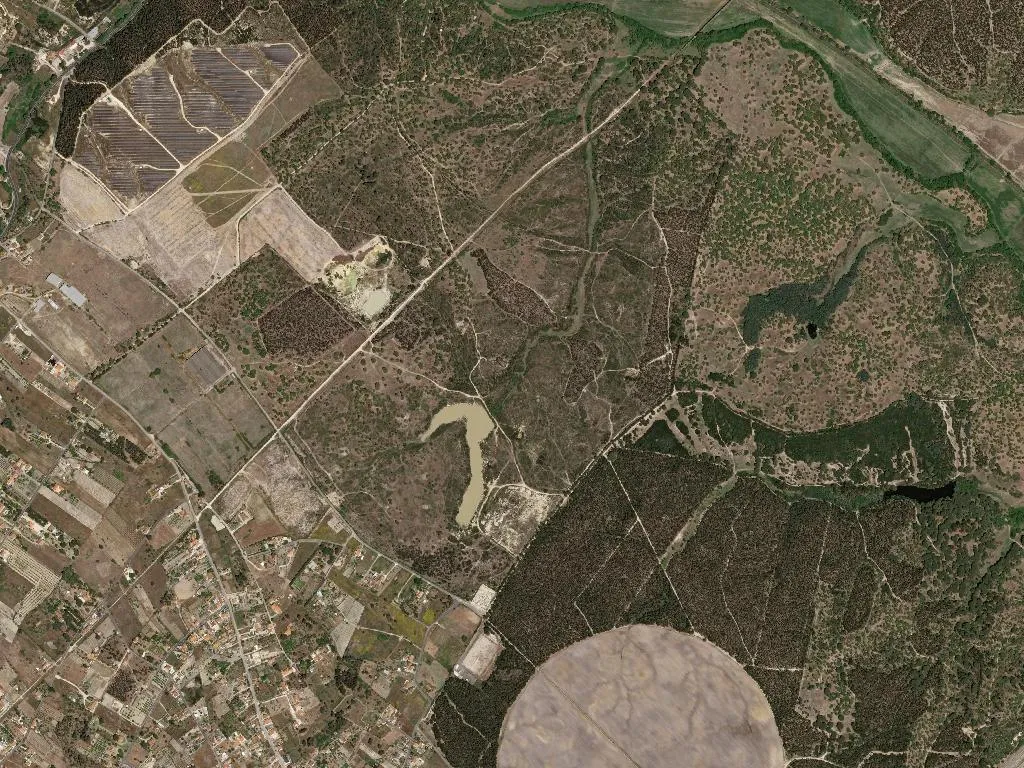
Sunlight hits the flat fields at right angles, rebounding off a puddle trapped between loose stones. Beside the River Tejo, Vale da Pedra refuses to disguise its skeleton: slabs of limestone jut through the vines, form knee-high boundary walls, and splinter into white shrapnel that crackles underfoot. This is the Ribatejo’s thinnest-skinned landscape, where bedrock dictates architecture – single-storey farmhouses sit directly on stone, their doorsteps quarried from the same stratum that ploughs scar each spring.
Sixteenth-century roots
The parish was first recorded in the 1527 Cadastro da População do Reino but only became part of Cartaxo municipality after the 1820 liberal reforms. Before that it floated in an administrative grey zone between river valley and interior plateau. Stone dictated everything: dry-stack walls that still separate smallholdings, ox carts that once hauled blocks to build Santarém’s arcades, and the now-silent kaolin pits north-east of the settlement.
Wine, oil and pears
Vale da Pedra’s 1,409 ha lie inside the Tejo PDO, so rows of Touriga Nacional and Fernão Pires follow the stony seams. Drainage is ruthless, ripening generous. Between the vineyards, twisted olive trunks supply Ribatejo DOP oil, while wind-sheltered orchards give a modest crop of Pêra Rocha do Oeste, the west’s famous pear.
Way-marked respite
The Central Portuguese Route of the Camino enters the parish from Pontével, crosses the railway at Vale de Figueira, and exits towards Azambuja. Three low-key guesthouses offer beds; no souvenir stalls, no way-marked boutiques—just flat tarmac lanes and the long light of late afternoon that turns whitewash amber and drags shadows across the cereal stubble.
A quiet ageing
Census numbers read like a rural ledger everywhere in inland Portugal: 195 residents under 30, 496 over 65. Density is 116 people per km²—space enough to hear cane leaves hiss beside the old noria. Inside the single café, the click of dominoes on formica keeps time with the wind scraping the telegraph wires. No melancholy, only the tempered cadence of a place still anchored to stone and season.