Full article about Ulme: Ribatejo’s silent wheat ocean
Walk roads where eight souls share each square kilometre and vines stitch the horizon
Hide article Read full article
The plain that measures time
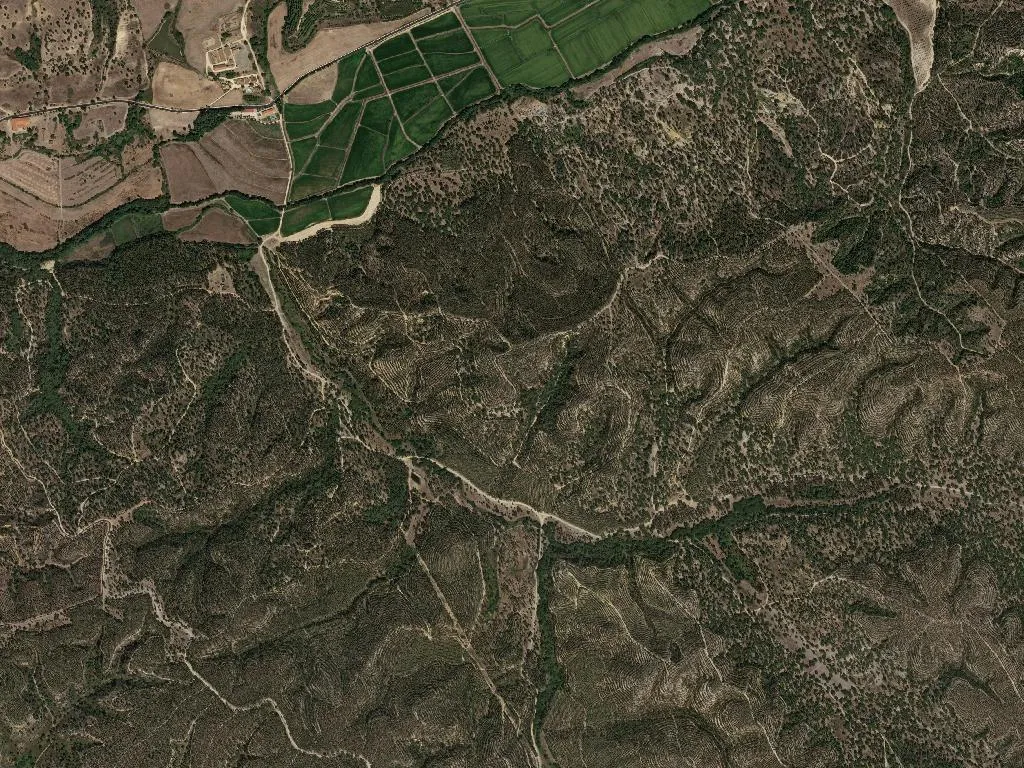
At 138 m above sea-level, Ulme spreads across 120 km² of Ribatejo flood-plain—an area the size of Manchester with 1/500th of its people. Stand on the raised verge of the CM1135 and the compass-straight road dissolves into wheat stubble until the horizon buckles into blue. The Tagus is 15 km south-west, yet its microclimate governs everything: the low-angled winter sun that takes until noon to lift the frost, the convection heat of August that shimmers the air like glass.
Arithmetic you can see
317 residents are over 65; only 109 are under 14. The arithmetic walks with you: haberdasheries shuttered since the 2008 crash, a café that unlocks at 06:00 and rolls down its metal grille at 20:00, the 400 m stroll from the church to the post office without meeting a soul. Density is eight inhabitants per km²; every encounter feels like an event.
What the earth signs
Vines arrive in ruler-straight rows, interrupting the cork-and-holm-oak montado where Carnalentejana DOP cattle graze—the same auburn breed driven here on summer transhumance from the Serra da Estrela. In October the purple alyssum of new vineyard plantings turns the plain into a pointillist canvas.
Food is not theatre. Wednesday means ensopado de borrego—lamb stew thickened with bread—at Café Central. Chanfana, goat braised in red wine and pig’s blood, appears at O Pescador if you ring two days ahead. There are no menus; there is what the day yields.
Living with distance
Walk the lattice of dirt tracks and silence becomes material: eucalyptus leaves clicking overhead, a tractor’s diesel swell that rises, fades, is reabsorbed by the flatness. Houses distribute themselves without apparent plan, obeying 19th-century footpaths, the proximity of a well, or a single mulberry’s indispensable shade.
Architecture is climate control rendered in stone. Walls 60 cm thick of lime-plastered masonry blunt both July furnace and January damp; windows the size of tabloid pages admit only the useful slice of sun; open-sided hay-lofts still carry the iron hooks where chouriços hang to smoke. Nothing is decorative; everything earns its keep.
Dusk arrives fast, the way it does when no skyline competes. The plain glows tangerine-rose for three minutes, then the temperature plummets. Yellow porch lights wink on, scattered like low stars across the black. Inside, time is measured by the 20:00 television news and the slow hours of a shared meal, until the next dawn re-starts the cycle with the same oblique light.