Full article about Águas Belas: Where Factory Sirens Replace Spring Waters
Suckling pig, silent kilns and 24-hour shifts in Ferreira do Zêzere’s former royal town
Hide article Read full article
When we were a ‘town’
The pillory leans against the roundabout as if apologising for still being there, its Pereira coat-of-arms hacked into the limestone like a tattoo that outlived the romance. Three steps, one cracked shield, done: this is all that survives of the 323 years (1513-1836) when Águas Belas sent its own councillors to Lisbon and kept its own prison records. Parish chroniclers insist the name comes from the “beautiful waters” that spout from five springs around the settlement; the 1,139 people who actually live here know the aquifers have been piped into plastic since 1998 and the prettiness is now measured in industrial-output statistics. Ceramics, pet-food pouches and laser-cut steel parts roll out of hangars on the southern fringe, and the local council-tax yield per square kilometre is the highest in Ferreira do Zêzere. Twenty-two square kilometres, three shifts, little sleep.
What the kilns left behind
The promised “Museum of Pottery & Saw-milling” is still a line item. Meanwhile the brick ovens have been bricked up again, backing on to boxy new houses whose satellite dishes face the same direction Mecca does. Sicarze moulds farmhouse roof-tiles, Meigal stamps out chassis brackets for Volkswagen, PetMaxi extrudes tonnes of dry kibble that smell faintly of chicken liver. The wood smoke that once drifted from drying sheds has been replaced by the vanilla-chemical note of curing resin; at 6 a.m. the mechanical thump of presses syncopates with cockerels that even the most protein-rich feed cannot shut up. Truck drivers heading for Spain and the Ruhr know the turning better than any tourist board.
Suckling pig and whatever the garden spares
Outsiders are directed to Casa dos Leitões on the main crossroads. The skin is blistered to a bronze sheet that shatters like thin toffee; the meat arrives faintly pink and irrigated with its own fat, a respectable 180 km detour from Bairrada’s capital of roast pig. There is no canonical recipe beyond that. Gardens supply what they can: olive oil if the fruit-fly cycle is kind, Rocha pears if wild boar haven’t raided the orchards. Saturday means bean-and-turnip greens soup, thick enough to hold a spoon upright; Sunday mass still ends with plates of yolk-rich doces de ovos balanced on the presbytery wall, swapped for coins dropped into the poor box.
What you see, what you don’t
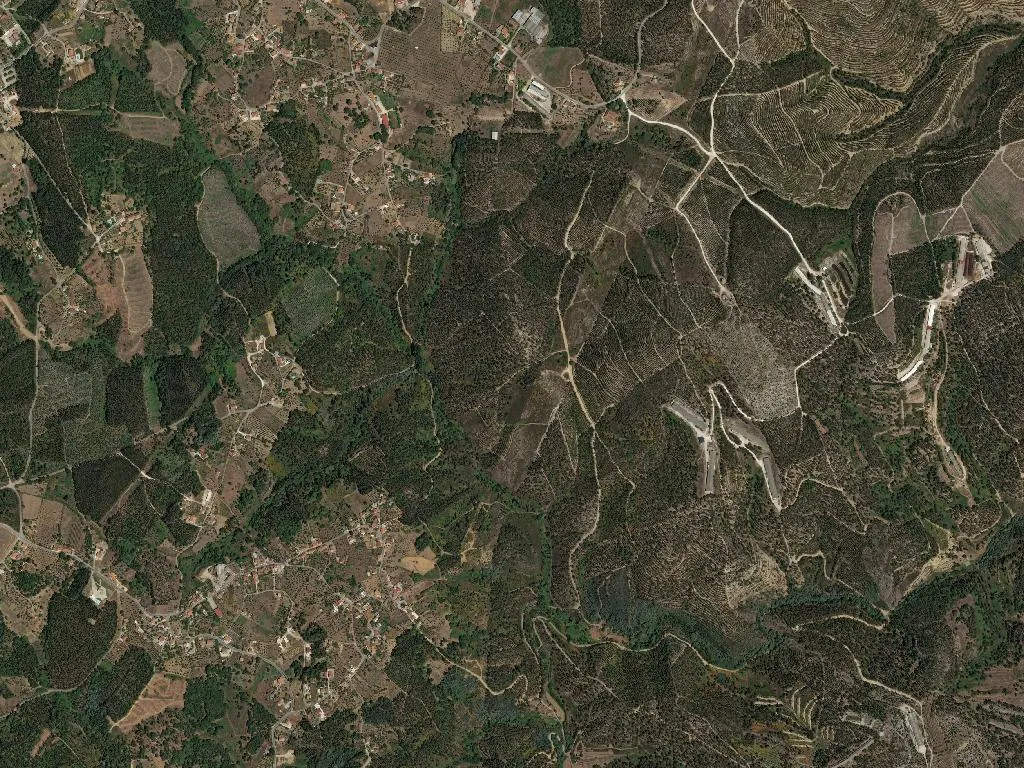
The parish sits at 293 m on a bench of olive and schist. No signed footpaths, no river beach, just a leisure park being landscaped behind the parish council: two wooden benches, a zip-wire and a noticeboard promising “rural co-working”. The day-centre further up the hill is busier than the cafés; two-thirds of residents are older than 65, so Júlio’s bar sells more camomile tea than lager. Still, three in four turn out to vote – not resistance, reflex. Tejo is 40 km away and the only viewpoint is a concrete slab beside the recycling bins. What Águas Belas does offer is the hush that falls when the factory hooter signals shift-change, wood smoke threading through olive prunings at dusk, and water that still tastes of stone even after the kilometres of PVC. Most motorists simply follow the GPS to the next junction. The few who stop tend to stay long enough to order a second bica, and only then realise they can hear their own pulse above the quiet.