Full article about Areias e Pias: Sunday market scent of olives & beeswax
Between Roman-named Areias and castle-crowned Pias, time is gauged by olive groves older than Napole
Hide article Read full article
Sunday morning in Areias
The weekly market in Areias begins with the metallic pop of van doors, canvas flapping like loose sails, and the low murmur of farmers arguing over the price of carrots still wearing their soil. By seven o’clock the square is a grid of trestles: pyramids of Pêra Rocha pears, bowls of oil-dappled olives, cheesecloth bundles that leak whey onto the cobbles. Customers arrive on foot from the surrounding hamlets; the luckier ones climb down from tractors that double as family transport when the fields are too muddy for a Citroën. Steam from the baker’s tray mingles with the resinous whiff of cured olives, and every transaction is conducted in the same half-whistle dialect that has been heard here since the Romans scratched “Aridas” onto their route maps.
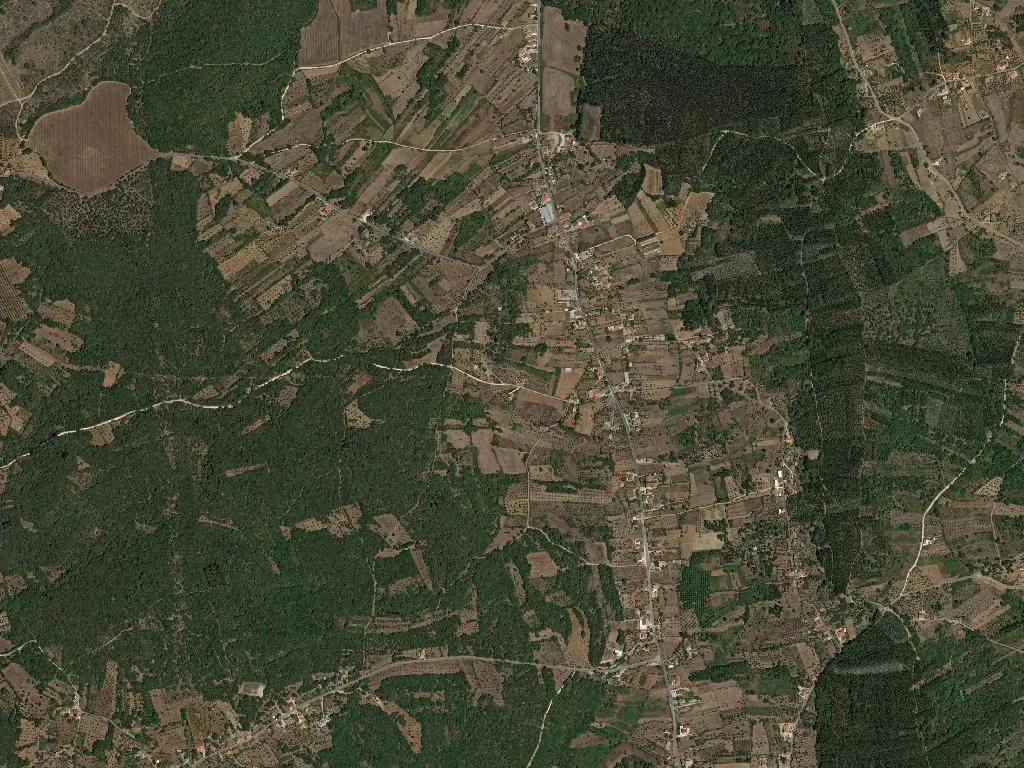
Areias e Pias is the largest civil parish in Ferreira do Zêzere—almost a third of the council’s land—but size is measured less in hectares than in the slow minutes it takes to drive between olive groves planted before the Napoleonic Wars and pine plantations that smell of warmed resin at noon. Distance is the gap between the honey-coloured National Monument that is Areias’ parish church and the tooth-like remnants of Dom Gaião’s castle, still cresting the ridge like a medieval exclamation mark. It is also the stretch of imagination required to link this dry, wheat-gold landscape to the Azores: Gonçalo Velho Cabral, commander of the Order of Christ at Pias, left these hills in 1431 to settle the Atlantic archipelago that would later bear his name.
Stone, faith and what survives
Inside the mother church the air is beeswaxed and cool; gilt woodwork glints in the half-light and the only sound is the choir loft giving a warning creak beneath the verger’s weight. Three kilometres away the castle ruins keep a stone vigil over nothing more threatening than grazing sheep. In Pias, the pillory—thin, tapered, almost elegant—still stands in the shadow of houses whose doorjambs are stamped with 1835, the year the village lost its town charter. Complete the triptych with the tower at Pereiro and you have the skeleton of a forgotten borderland, picked clean by time yet still photogenic at golden hour.
A ten-minute walk north of the church brings you to the Gruta de Avecasta, a fissure in the limestone that exhales 15 °C air even when the thermometer outside is flirting with 40. Local children treat it as a natural fridge; archaeologists have found Neolithic pottery and the bones of now-extinct goats. No ticket office, no floodlights—just the smell of damp basalt and a silence that feels older than the Christian bells.
Cheese, oil and the right kind of pear
Areias cheese is still coagulated in copper vats, the curds cut with a harp strung with surgical wire, then drained into terracotta bowls that leave perfect concentric rings. The result is a firm, lemon-coloured wheel that tastes faintly of thistle and can hold its own against a slice of maize bread or a glass of light red. Production rarely exceeds a dozen wheels a day; there is no website, no queue-jumping influencer tour—just a handwritten sign on the farmhouse door that reads “Há Queijo”.
The same smallholdings supply two protected designations: Ribatejo olive oil, pressed in granite mills whose grindstones are still turned by diesel engines that sound like 1950s London buses, and Pêra Rocha do Oeste, the pear that ripens on the branch long after holiday-makers have flown home. Both appear at the Sunday market in quantities that would fit into the boot of a single Volvo estate.
Footprints of pilgrims and Sunday drivers
The A13 and the EN110 slash across the parish like impatient rulers, but the real map is traced by dirt lanes walled in loose schist. These unsignposted paths link olive terrace to pine compartment, and every so often a scallop shell painted on a gatepost confirms that the Caminho de Santiago Interior—also marketed as the Via Lusitana—passes through. In 2022 the parish council spent €149,000 converting a former primary school into a twelve-bed hostel: hot showers, bike racks, a logbook already swollen with the handwriting of Germans, Koreans and Galicians who left before dawn.
Twenty kilometres north-east, the Castelo de Bode reservoir provides the region’s beach substitute. On August Sundays the Blue Flag river-beach at Lago Azul fills with Lisboeta families who have driven up the A13 for water cold enough to make them gasp and pine shade that smells of grilled sardines. Return in October and you will have the granite sand to yourself, plus the distant echo of the market traders back in Areias, already folding their tarpaulins until next week.