Full article about Beco: Dawn Smoke & Stone Soup in Ribatejo’s Quietest Corner
Serra de Aire chill meets 16th-century bakery ovens, olive-oil medals and Napoleonic hoofprints.
Hide article Read full article
Dawn in Beco
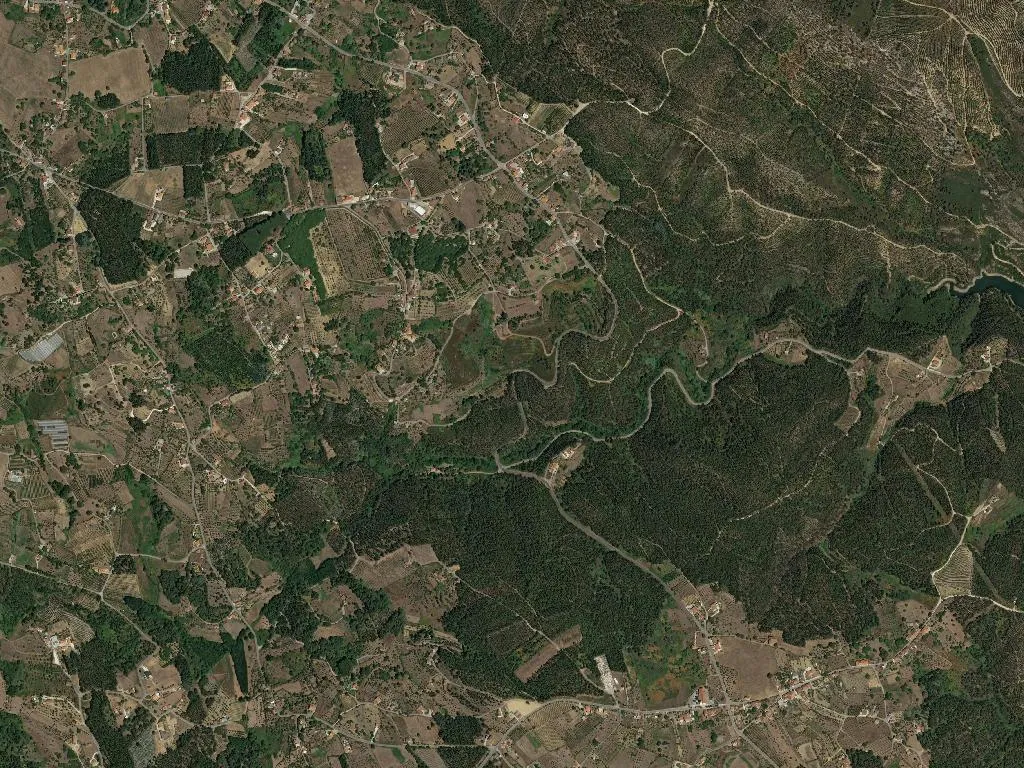
Light slips in at a slant through the wooden shutters, striping the floorboards the colour of butter. Outside, a tin bucket knocks against the village well, the metallic clatter ricocheting down an empty lane. Oak-wood smoke drifts in on the cold air that slides from the Serra de Aire. Beco wakes slowly, as if four centuries of routine still outweigh the digital tick of smartphones. Only 753 people live here, scattered across 16 km² of creased hills at 265 m above sea-level; the 2021 census counted 46.9 inhabitants per square kilometre, one of the lowest densities in Portugal’s Ribatejo. At 07:30 sharp, Dona Ilda lifts the iron latch of the only bakery and recites the daily tally—67 pensioners, 18 children—while rye dough proves under a linen cloth.
The church that outlasted Napoleon
São João Evangelista, a severe limestone rectangle erected in the 1520s, is the parish’s sole listed monument. Its gilded baroque altarpiece survived both the 1755 earthquake and Masséna’s troops, who wintered nearby in 1810–11 and used the nave as a stable. Baptismal records, begun in 1703, note the first entry—“Domingos Pires, son of ye farmers of this place of Beco”—ink now the colour of weak tea. Even when the thermometer nudges 35 °C outside, the interior stays a cool 19 °C; on the first Sunday of May, 20 first-communion children still process in lace veils stored for three generations in cedar chests.
Few walkers recognise the discreet bronze tile set into the churchyard wall: the Portuguese Federation of the Way of Santiago laid the Via Lusitana through Beco in 2019, yet there are no gaudy arrows. Pilgrims arriving from Alburitel find Café Zêzere shuttered on Mondays and wait for Martim, who opens at 14:00 to serve the sole lunch—stone soup, salt-cod with boiled greens, and cinnamon-dusted rice pudding, €8 with house red.
Olive oil with a silver medal
The parish Agricultural Cooperative tends 42 ha of olive groves; every November the pneumatic harvesters shake 15,000 l of extra-virgin oil from cobrançosa and galega trees, all bottled under the DOP Azeites do Ribatejo seal. Armindo, the cooperative’s president, keeps the 2019 silver medal from the National Olive Oil Competition in his shirt pocket, producing it like a conjuring trick for visitors. Pêra Rocha pears follow in September, trucked straight to Ferreira do Zêzere’s packing plant and, within 48 hours, stacked in UK Lidl branches.
Tourism supply is stubbornly finite: of eight registered guesthouses, only three stay open year-round. “Casa da Avó” is booked solid from April to August by second-generation emigrants returning from Paris and Newark; the scent of Dona Alice’s wood-oven cornbread greets grandchildren who have never known a Portuguese dawn chorus. The remaining keys hang on a nail behind the bakery counter; Céu will hand them over when the health centre runs a first-aid course or when a bride arrives from Lisbon wanting the church bells at 16:00 sharp.
When the ridge turns to flame
At dusk the sun slips behind the Cabeço da Vela ridge, igniting the sky from ochre to bruise-purple. Schist walls exhale the day’s heat; chimney smoke rises as straight as a plumb line. The last bus to Ferreira do Zêzere leaves at 19:15; Celestino’s bar closes whenever the final customer stands up, usually before 22:00. In that narrow window Beco reveals its true scale: a grid of three streets, two wells, one bakery, and 753 people who measure time by bakery lights and church bells rather than by Google alerts.