Full article about Seven Streams & One Bell: Igreja Nova do Sobral
Dawn mist, granite seams and goat-path chapels above the Tagus ridge
Hide article Read full article
The seven o’clock bell
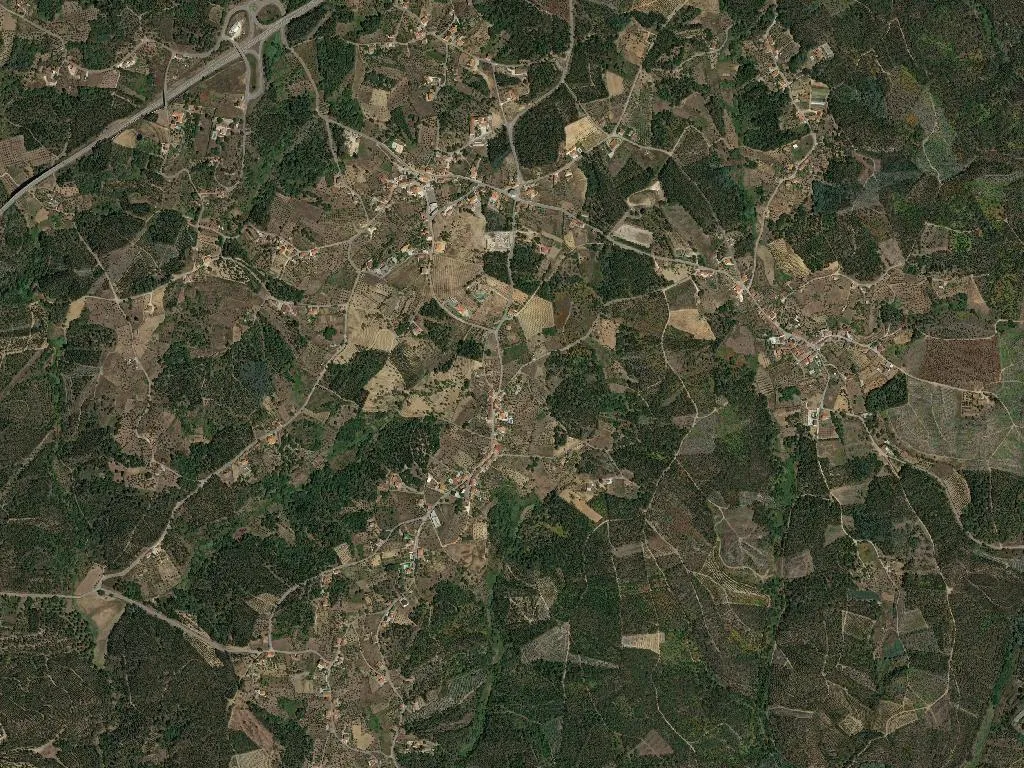
The parish church strikes at half past seven, summer or winter, and the note hangs long enough to braid itself through the eucalyptus groves that quilt the ridge. Inland from the Tagus, 300 m above sea-level, the dawn light arrives milky, sieved by mist rising off seven nameless streams—Sobral, Morto, Boucha, Penedinho, Azenha Nova, Barqueira, Pereira. Their Portuguese names matter because they still appear on the dry-stone milestones that pepper the goat paths. Twenty-four hamlets, each with its own tiny chapel and threshing floor, are stitched together by these water threads; in July you smell the smoke from a dozen saint-day bonfires before you see a single tiled roof.
Why “New Church”?
Parish records begin in 1608, but the toponym is older. “Igreja Nova” marks the moment in 1736 when villagers demolished their dilapidated 16th-century chapel and rebuilt on the same footprint; “Sobral” hints either at cork-oak cover or stony soil—etymologists still argue over the accent. Until 1855 the settlement belonged to Tomar’s municipal orbit, then was parcelled into neighbouring Ferreira do Zêzere. Granite for the new façade was quarried at Pedrógão Pequeno, lugged downslope by mule teams, and trimmed so precisely that the joints look sugared rather than mortared.
A constellation of chapels
Beyond the mother church, whitewashed satellites glint across the ridges: Espírito Santo in Póvoa, São João in lower Sobral, Santa Catarina at Casal do Lombo, Nossa Senhora das Candeias above Fonte Boa. Between June and September each one hosts its own romaria—procession, brass band, grilled sardines, and a raffle whose first prize is usually a live rooster. The oldest pilgrimage belongs to Nossa Senhora do Ó, first Sunday in May; the 4-km walk from the parish church to her 1674 hermitage is still done in silence, lace headscarves fluttering like handkerchiefs of fog.
Potatoes, olive oil, truth
The kitchen calendar is ruled by three local staples: potatoes, olive oil, and red wine from the sandy Tagus basin. Thirty hectares of the parish are planted with tubers; the crop is sold the same morning at the Saturday market in Torres Novas. Olive oil carries the DOP Azeites do Ribatejo seal, pressed from cobrançosa and galega cultivars that survive the 600 mm annual rainfall. Black Alentejano pigs fatten on acorn mast, Serrana goats provide the raw milk for a peppery queijo de ovelha, and every chimney smokes its own chouriço. Expect dark-green mint soup served scalding, lamb stew the colour of church mahogany, and “St Clare’s cakes” brought home in 1923 by D. Maria das Mercês after a novitiate in Lorvão.
The Lusitanian Way
Way-markers with a discreet yellow shell guide hikers along the Caminho Interior da Via Lusitana, the lesser-spotted Portuguese tributary of the Santiago network. Within the parish boundary it runs 12.3 km, slipping between olive terraces and second-growth eucalyptus, never far from the sound of water. There are no curated hiking brochures; instead, the council clerk emails you a PDF of farmer’s gates to close and where the dogs are merely theatrical. Three stone houses—Casa da Biquinha, Casa do Póvoa, Casa do Sobral—offer two-room stays where the Wi-Fi password is written on a slate and breakfast arrives in a wicker basket.
583 souls, 73.4 % turnout
The 2021 census counted 583 inhabitants; 237 are over 65 and only 45 under 14. Yet at the last local election more than seven in ten registered voters cast a ballot—an act of civic muscle rarely flexed in rural Portugal. The former primary school now houses the São Martinho day centre where Tuesday means Sueca card championships and Thursday is soup-and-sing-along. Teenagers may have decamped to Torres Novas, but WhatsApp voice notes ricochet across the valleys, keeping the diaspora looped into debates about potato blight and the price of diesel.
Lights on the ridge
Dusk settles; sodium lamps click on one by one, a slow-motion constellation mapping the folds of the Serra de Aire. The bell sounds again, shorter now, as if clearing its throat. Somewhere downhill a tractor coughs into life, headlamps fingering the mist. Tomorrow the same routines—irrigation pumps at six, bread van at seven, church bell at seven-thirty—will reassure the valley that time still keeps its old contracts.