Full article about Nossa Senhora do Pranto: Olive-Green Hamlet Above the Zêzere
Visit Nossa Senhora do Pranto in Ferreira do Zêzere to walk ancient olive terraces, sip bica with farmers and sleep in Rui’s envelope-paid pilgrim rooms.
Hide article Read full article
A road that climbs with purpose
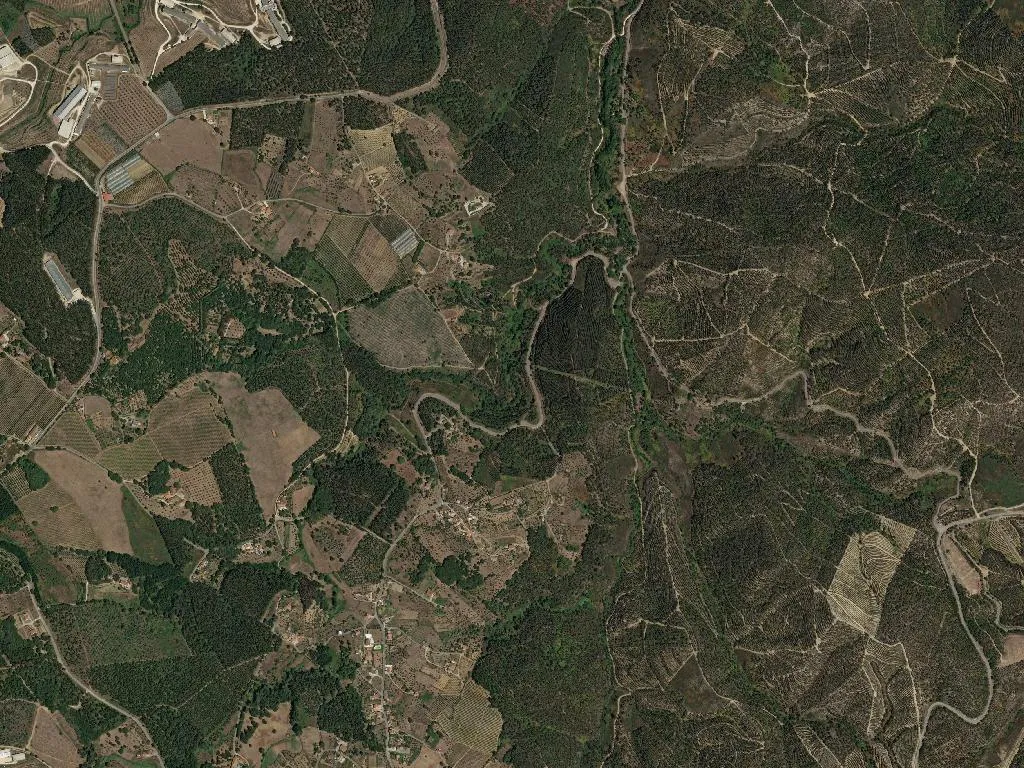
The N113 peels away from the Zêzere, corkscrewing upwards through 187 m of schist and umbrella pine until the valley floor is only a green crease below. Olive terraces appear—trees so old and untended they feel like a forgotten inheritance. The air smells of bruised thyme and diesel when a farmer rattles past in a three-wheeled Piaggio. At the last hairpin the ridge flattens and there it is: Nossa Senhora do Pranto—Our Lady of Tears—an entire parish you can inventory in a single sweep of the eye.
What the census never records
Officially 993 souls. In January you will meet perhaps twenty: the card table at Café Central where yesterday’s bread is toasted over the espresso machine; three children who wait for the 07:05 bus to the secondary school in Ferreira; the rest are faces that materialise only on Sundays when daughters drive up from Lisbon with supermarket roast chicken. Population density is printed as 32 per km², a bureaucratic joke: mid-week the main street belongs to two tabby cats and a pointer that once belonged to the parish priest.
The place stays alive because the olive harvest still happens exactly as it did in 1973. Between November and January hands turn black with pruning sap and knees ache from crawling under low branches. The fruit travels six kilometres down the mountain to the community press, but every litre of oil is earned on these slopes, not in council ledgers.
Who actually stops
The Caminho Nascente, the lesser-known eastern branch of the Portuguese pilgrimage to Santiago, way-marks its way through the village. Pilgrims are rare, usually German, sun-cream stripes across trekking sandals, expecting Algarve weather and finding mist instead. They drink a bica at the counter, ask about beds, and Rui—who converted his grandparents’ house into two spare rooms—sometimes takes them in. Payment is whatever fits in the honesty envelope; profit is not the point, company is.
The name of the place comes from a seventeenth-century wooden statue of the Virgin kept in the tiny chapel above the cemetery. Legend claims she wept when the 1755 earthquake shook the valley, though no one alive has seen tears. These days the only crying is done by farmers when drought shrivels the olives or the bulk-buyers offer less than two euros a litre.
What you will eat
Olive oil is not a condiment; it is cutlery. It slicks the garlic soup, softens the lamb stew, glosses the winter greens. Pears are whatever grows in a cousin’s garden near Tomar; they arrive bruised in the boot of a Renault Clio. There are no tasting menus. Dona Lurdes will slide a tray of kid into the wood oven if you ask nicely the day before, and Sr António’s red wine is poured from an unlabelled bottle that stains the glass purple. Drink two glasses and the mountain road back down feels almost generous.
To sleep, choose one of the casas de campo restored by children who came home after Eurozone lay-offs. Expect embroidered linen that smells of lavender wardrobes, iron beds that sing when you turn over, and the damp breath of stone walls that have forgotten what central heating feels like.
At civil dusk the sun slips behind the ridge and every olive leaf turns to foil. The valley fills with a silence so complete you can hear the river you cannot see. That is when you understand why 993 becomes 20 without anyone noticing: time is still measured in harvests here, and the calendar has the decency to wait.