Full article about Azinhaga: Saramago’s scent of beans & Tagus wheat
Azinhaga, Golegã: stand in Saramago’s childhood bedroom, smell centuries of wood-smoke, wheat and village stories.
Hide article Read full article
The iron bedstead still remembers
The pressed-earth floor in José Saramago’s grandparents’ bedroom keeps the ghost-pressure of childhood heels. Their iron bed remains bolted to the same whitewashed wall, opposite the pine chest that once measured winters in dried-bean handfuls. Each floorboard syllable creaks under museum visitors, but the acoustics are still village-accurate: outside you hear the neighbour’s hen disputing the sill with a tabby, inside you smell wood-smoke that drifted in years ago and never quite left. Literature, you realise, began here – not as metaphor, but as the smell of scorched olive twigs and the tick of beans swelling in terracotta.
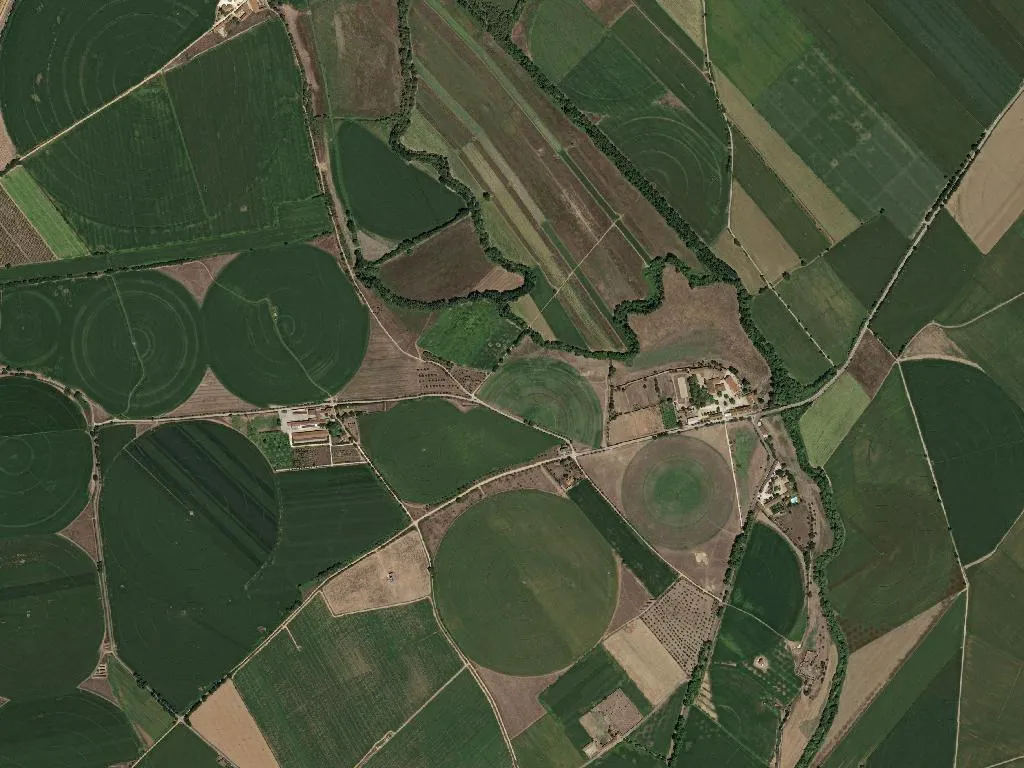
Azinhaga unfurls across the Tagus alluvium at a mere fifteen metres above sea-level, a rib of lanes between wheat that behaves like pale seawater when the wind runs through it. The parish’s name survives in the word azinhaga – the livestock tracks that hardened into streets just wide enough for a single Clio and the echo of old men arguing penalties outside the café. At the centre stands the 1591 Igreja Matriz do Espírito Santo, its stones mortared with four centuries of óbitos; the bell still tolls the old way, three short for a child, nine slow for an elder. Next door the former jail, registry office and now parish council issues ID cards and wedding congratulations – occasionally to the same surname, because the gene pool was never large.
Where two names meet at right angles
In 1987 the village pre-empted Stockholm and named a street after its most famous exile long before the Nobel arrived. Saramago, who had not walked here for decades, remarked that he would rather have a street in Azinhaga than in Lisbon: “At least here I know where it ends.” Twenty years later his widow, Pilar del Río, persuaded the council to intersect it with Rua José Saramago using a perpendicular Rua Pilar del Río, creating what the press dubbed the “kissing corner”. Residents shrug and call it “the bottom corner” because it is the only place you can park without blocking the bread van.
The Almonda River boardwalk unrolls thirteen illustrated panels that quote Small Memories. The water is the same classroom where generations learned to swim by being thrown in clutching a bundle of reeds; children still skewer dead minnows with bent wire and call it marine biology. The horizon lies flat as an upturned plate; when the north wind arrives it smells of turned earth and crushed cane. Between poplars you hear Adelino’s tractor grinding until dusk – land does not punch a clock.
Olive oil, beef and inherited flavour
Agriculture still writes the timetable. Olives become oil in co-operatives that replaced the stone press once run by Zé Manel inside the cellar that is now the bar. Carnalentejana DOP beef smells of parsley and stable; accept a bowl of ensopado from a neighbour and you have been admitted to the family. There is no restaurant – there is Tia Albertina who will boil you a cozido if you ask prettily, and the corner café whose bitoque steak arrives under a fried egg that tastes almost indecently buttery.
The José Saramago Foundation opens Wednesday to Saturday, admission free. Schoolchildren arrive clutching photocopied chapters; German pilgrims ask whether the writer “really” lived here. The exhibits – clay pitcher, paraffin lamp, hand-crank Singer – are identical to the contents of any grandmother’s loft, but here they wear museum labels and keep their dust for authenticity.
A path that slices the floodplain
The Central Portuguese Way to Santiago skirts the parish; walkers detour for a coffee, a toilet and directions. Go slowly and the landscape surrenders detail: stilts on a chimney-top nest, tarmac soft enough to record your footprint, Zé Mário leaning on a gate to declare that none of this is what it used to be. Population density is thirty-seven souls per square kilometre; the resulting hush is a currency you can spend only here, where everyone still keeps a mental family tree of everyone else.
The parish flag, approved in 1997, displays wheat sheaves and a campino’s leather hat. Nobody remembers the symbolism, but the hat belongs to Rui, who did national service and came home with a Paulo de Carvalho LP that still soundtracks the annual harvest dance. There are no celebrity fairs; on Children’s Day the council projects an animated film in the square and hands out popcorn to the dozen under-twelves – all known by name, all accounted for.
When the sun drops and low light turns the mud-brick copper, you understand why Saramago returned every August. Not for the museum, but for tomato soup with a poached egg, for Ventura’s stories of the “aquijá” time, for proof that somewhere the clock still runs on agricultural mean time. Azinhaga offers no spectacle, only ballast: the weight of beans in a chest, the protest of an iron bedstead, the smell of wet clay after rain. Memories you cannot invent; you lift them in both hands – and, if you arrive on the right afternoon, you leave carrying a still-warm cake of olive-oil batter wrapped in kitchen paper.