Full article about Pombalinho: Ribatejo’s flatland heartbeat
Marsh-loud village where hay meets heron and pilgrims beg water
Hide article Read full article
The Plain of Pombalinho
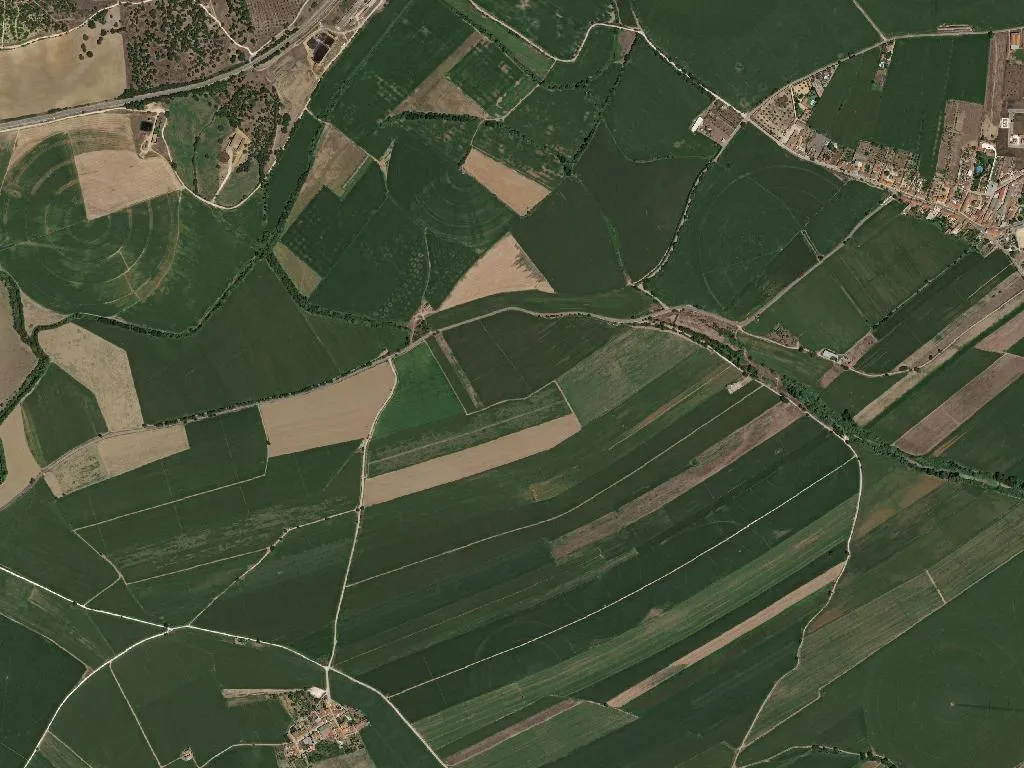
The Ribatejo opens like a watercolour left in the rain: ochre soil bleeding into pale green maize that, by late June, brushes the underside of the sky. Pombalinho keeps time with the land rather than the clock – 395 souls, the census says, though the number shifts with the seasons, scattered across eight square kilometres so flat the eye tests itself for a ripple that never comes. When the wind swings south-west it drags the smell of newly-turned earth through drying hay, and in winter the marsh exhales a cool breath of mould and tilled clay.
Between the Marsh and the Way
Locals never say “Paul do Boquilobo Nature Reserve”; they simply say “the marsh”. When the cattle egrets settle on the hawthorns you know summer is tilting towards autumn. Fields drain into nameless ditches that only walkers bother to learn – the clay traps water so efficiently that even in August opaque pools remain, loud with frogs that drown the diesel cough of tractors at dawn. The Portuguese Caminho threads through the village square, though here it is just “the way”. Pilgrims stop at Adelaide’s café for a free tap refill, then disappear down the dirt road, leaving a chalky footprint and the faint pong of damp rucksack nylon.
Listed Memory
All that hints Pombalinho once aspired to town status is the stone façade of São João Baptista, its corner quoins split like over-ripe figs. Inside, wax and scorched wick cling to coats and hair; outside, children thread tomb-to-tomb playing tag among 19th-century ledger stones no-one can quite read. A single bell still tolls at seven each morning, mechanical timer long since seized, yet somehow it never misses.
Ribatejo Table
Mid-week, Zé Manel’s tavern serves lamb stew that has been murmuring over vine embers since five a.m. The bread arrives from Golegã’s last wood-fired bakery, carried out at sunrise; red wine comes in unglazed clay pitchers rinsed only with water – detergent is thought to bruise the taste. After the annual pig kill, smoke coils from neighbouring chimneys; a week later the same sausages appear on tables, no certificate attached, just proof they once belonged to an acorn-fattened Alentejano pig. Olives are local, small and astringent, but a thread of new-season oil across the lamb renders anything else superfluous.
Low Rhythm
By four o’clock the streets are so empty you can hear the church clock swallow its own seconds. The primary school shut a decade ago; now the building is a day centre where retirees slam down cards and knock back espresso as dark as ploughed topsoil. Most under-thirties left for Lisbon or construction work abroad, yet every Friday one returns with a boot full of laundry and a half-hearted promise to stay “until something better turns up”. Dusk slips behind the eucalyptus plot, the cooling earth releases its scent, Silvestre’s dog barks at nothing, and the lengthening shadows appear to gather the remaining day into their folds.