Full article about Cardigos: where granite dawns scent of beeswax & thistle
Marvel at a 1605 pillory, Roman bridge and violet-thistle hills before maranho and river beaches.
Hide article Read full article
Morning stone
Granite light slips through the portico of Igreja Matriz just after sunrise; inside, the air tastes of schist and beeswax. Outside, the pillory stands like a weather-brief sundial: 1605, the year Philip II of Spain granted Cardigos its town charter. Today 965 souls remain, 470 of them over 65—the oldest parish in Mação.
From thistle to territory
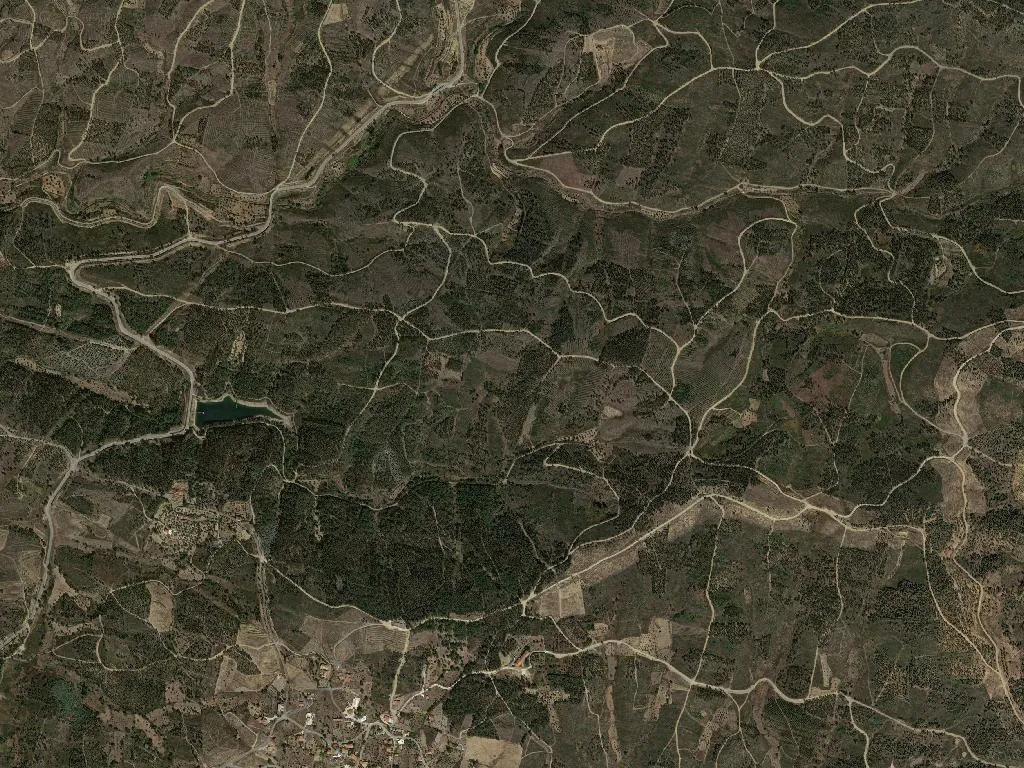
The name comes from the thistles that once painted the hillsides violet. Before the word there was the Anta da Lajinha dolmen, a single-arched Roman bridge over the Ribeira de Isna, Visigothic potsherds. The parish spreads across 70 km² of maritime pine and cork oak at 449 m, olive groves flashing silver when the wind turns.
What arrives on the table
In the tascas order maranho—pig’s stomach stuffed with minced meat, rice and mint—then kid goat spun on a spit until the skin blisters. Olive oil carries either Beira Interior DOP or Ribatejo DOP credentials; the olives themselves are Galega da Beira Baixa IGP. Finish with coscorões (crisp sugared fritters) and tijeladas (lemon-and-cinnamon custard baked in clay).
Where to go
Praia Fluvial do Vergancinho: tannin-dark water, lifeguarded in July and August, mown grass and stone barbecues. Trails climb through Serra do Santo, brushing past dry-stone terraces and fragments of Moorish roof tile. The Roman bridge—one perfect arch, granite polished by cartwheels—still carries foot traffic across the gorge.