Full article about Carvoeiro: a granite balcony above the Zêzere
Where 519 souls, one tractor and endless olive terraces outfox time itself
Hide article Read full article
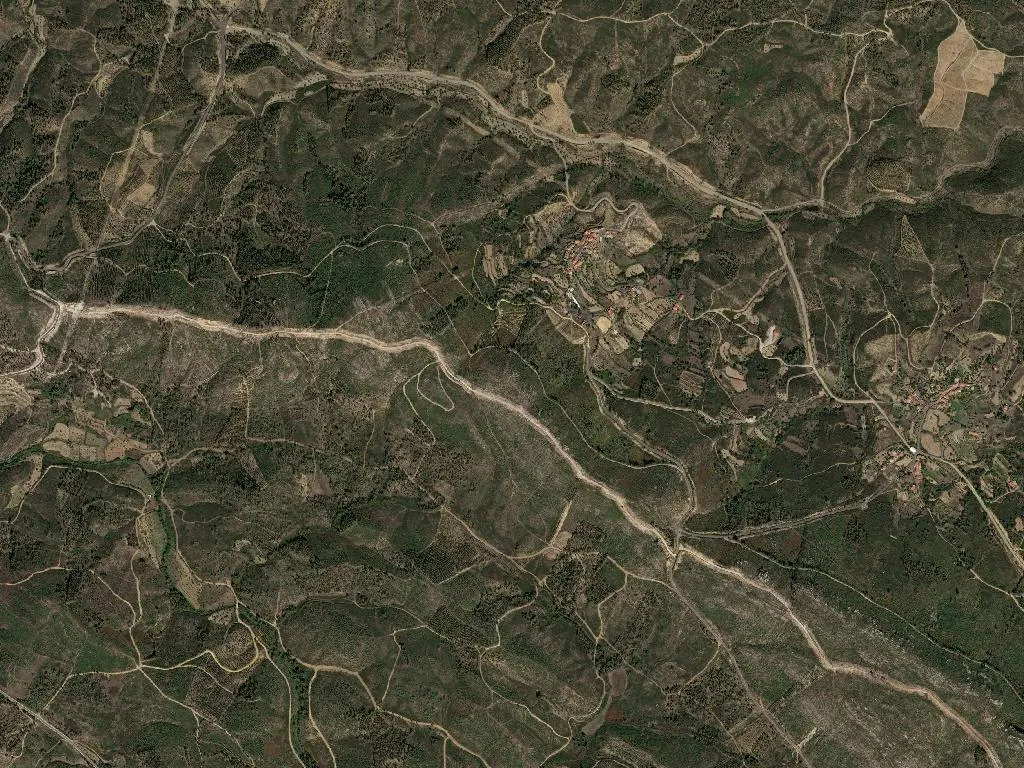
The tarmac climbs in loops that feel hand-drawn, each bend releasing its own cocktail of pine sap and hot rubber. Only when the Zêzere valley finally unwraps below—less spectacle, more slow-motion revelation—does Carvoeiro appear, glued to the granite like a climber who has decided the cliff face is the only logical place to live. At 380 m the air thins and sweetens: resin, warm earth, and a hush so complete you hear your own pulse hammering from the gradient.
Five hundred and nineteen residents. Say it out loud and it sounds like a mis-dialled number, yet by Saturday noon the ledger rights itself. Bread arrives from Vale da Senhora da Pobreza—the only loaf that doesn’t threaten dental work—delivered by a neighbour who remembers your grandmother’s oven. Zé trundles down on his tractor for a swift imperial at the Gualdim, engine left ticking outside like a horse at a hitching post. A Lisbon returnee appears with a blond toddler nobody recognises; the child is inspected, approved, and absorbed into the collective bookkeeping that passes for a census here.
The Maths of Staying Behind
Twenty-five children. Enough for mixed-year classes and five-a-side football where the goalposts are painted jumpers and every strike is a Champions-League final. Two hundred and thirty-seven residents have seen eighty seasons, but “old” is a banned word: Sr António, 89, still shoulders a hoe up the ridge; Dona Aurélia, 92, rings necks with the steady wrist of a surgeon. The village’s two tourist lodgings are simply houses whose owners have stepped out; they leave olive-oil cake on the table and a scribbled note—If you need anything, knock next door.
Vegetable plots are not “cultivated”; they are lived in. Each cabbage remembers the hand that planted it, onions are counted aloud like rosary beads, and pumpkins get chalk eyes so the children dream of them overnight. Olive oil is the previous summer decanted into green glass, blessed by Dona Ilda at Sunday Mass because “it sits better on the lining of the stomach that way”.
What the Serra Gives
Kid goat is not a menu adjective; it is the animal you fed crusts to in April and meet again on Sunday, crackling over pinewood embers. The skin shatters like celebratory fireworks. Alentejan beef does not “graze in protected meadows”; it grazes Sr Joaquim’s field, where every cow answers to a name and knows which olive tree casts the best midday shade. There is no choice of dish—there is simply what is available. If you are invited to supper, bring a bottle. It isn’t etiquette; it is gravity.
Landscape is not “heritage”; it is the view while washing up. Schist is the doorstep that turns treacherous in rain, the metallic dust that rises when you sweep, the porous skin that breathes winter into the bedroom. Maritime pine is not a “dominant species”; it is the neighbour who supplies kindling and complains, every August, that the resin isn’t running properly this year.
The Weight of Empty Space
Carvoeiro asks for nothing. It does not crave interpretation, pity, or a surge of weekenders. Its only demand is honesty: do not embroider what is already complete. Emptiness here is not an experience to package; it is the interval between events—the walk to the spring, the hush after the last moped, the acre still untouched by holiday cottages and “nature-based tourism concepts”.
Wood-smoke is not “silent resistance”; it is dinner under way. Sr Albano burns eucalyptus because it heats the water fastest; Dona Emília stirs bean stew for children driving in from the city. The scent reaches the lane before the house comes into view, and you know you are home before the key is in the door. Nostalgia is the wrong word—saudade is the right one, and it cannot be bottled. It tightens the throat when the blackbird sings at dusk and you realise your grandfather heard the identical note.
Staying is not sacrifice; it is continuum. It is waking to fog that strolls through the front door, brewing coffee in a dented tin pot, hearing a broken transistor play Brazilian música popular at seven a.m. Time keeps the same lazy cadence as the seasons, and in a world addicted to acceleration, that may be the single most radical act.