Full article about Casal dos Bernardos
Walk sauropod prints, taste DOP olive oil and sleep where pilgrims pass in Casal dos Bernardos
Hide article Read full article
Dawn on schist and silver leaves
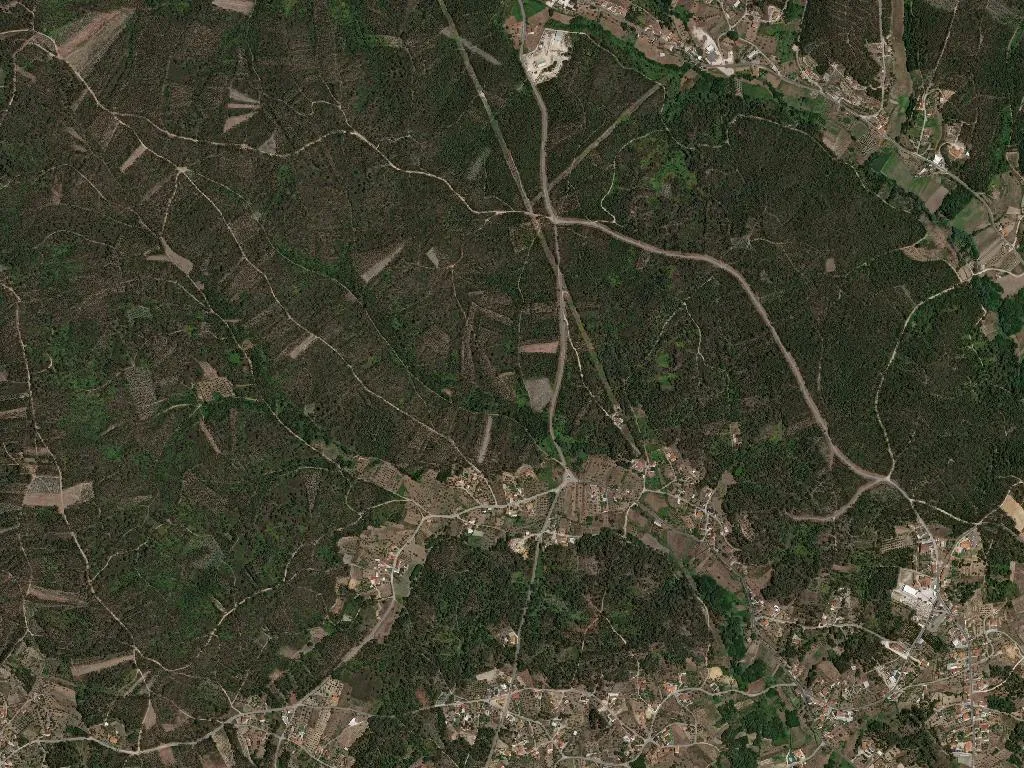
Morning light strikes the schist walls and rebounds the colour of burnt honey against the olive groves that quilt the hillsides. At 220 m above sea level Casal dos Bernardos wakes gently; only 1,146 souls share 22 square kilometres, a ratio that keeps the land alive without ever crowding it. Silence here is substantial – it carries the weight of limestone soil, the slow breath of the Ribatejo valleys and the unhurried tread of people who know every terrace by touch.
Olive oil and Jurassic footprints
Two-thirds of the parish is given over to olive groves certified under the Azeites do Ribatejo DOP, the protected status earned by winter rain, baking summers and calcium-rich earth. Trees stand in irregular ranks, many over a century old, their trunks corkscrewed by decades of hand-pruning. When the north wind rises the foliage flips to silver and the slope changes colour like a shaken cloak.
Five kilometres away, tilted limestone slabs at the Ourém/Torres Novas Natural Monument carry the heel prints of 30-tonne sauropods that padded through coastal lagoons 175 million years ago. The footprints – some half a metre across – are the coast’s revenge on geography: what was once tidal mud is now an inland ridge 30 km from the Atlantic.
Way-marked boots and spare rooms
The eastern variant of the Caminho de Fátima cuts straight through the settlement, funnelling a thin but steady file of pilgrims between May and October. They pause to refill bottles at the granite fountain, tighten laces outside the small grocery and leave again, the slap of walking boots marking time against asphalt. Visitor numbers never tip into inconvenience; the parish simply absorbs the rhythm of passing feet.
Accommodation is limited to two licensed guesthouses – modest villas with iron beds and kitchen privileges – aimed at travellers who arrive with their own wheels and an appetite for secondary roads the sat-nav second-guesses. There are no boutique flourishes, only clean sheets, olive-wood chopping boards and the certainty of being left alone.
Age profiles and everyday economics
Four hundred and thirteen residents are over 65; barely a hundred are under 15. Mornings belong to the older cohort who gather in the single café for galão and yesterday’s Diário de Notícias, passing the paper from table to table. School-age children appear at 8 a.m., disappear at four, then re-emerge in back gardens where play still involves soil, sticks and the occasional tame pigeon.
The calendar is agricultural, not social. Pruning finishes in March, blossom season is April, harvest starts in November. Small holdings keep Syrah and Aragonez vines between the olives, and every January someone’s smokehouse scents the entire street with curing chouriço. The weekly market in Ourém, ten minutes away, supplies what the gardens miss; the parish itself trades in produce, not performance.
What lingers
There is no postcard tableau to carry home. Instead the memory is sensory: the metallic snip of pruning shears echoing across terraces, the smell of turned earth after an August storm, the low sun igniting schist the colour of dull brass. Casal dos Bernardos offers the increasingly rare assurance that topography still dictates tempo, and that walking among trees older than your grandparents and rocks stamped by dinosaurs makes curated attractions feel faintly unnecessary.