Full article about Caxarias: Where Dinosaurs Strolled Above Olive Groves
Jurassic footprints, limestone benches and peppery oil in Ourém’s hidden amphitheatre
Hide article Read full article
Limestone benches and lorry-sized lizards
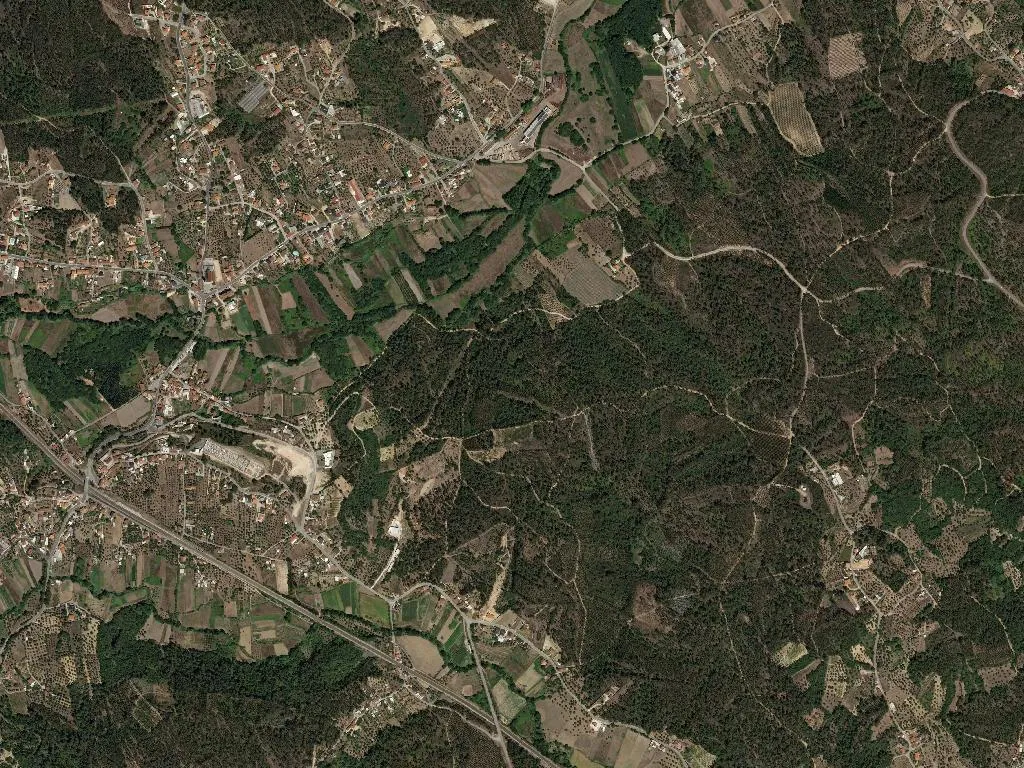
The Serra de Aire ends with a shrug, tipping its last slabs of cream-coloured limestone into a natural amphitheatre of olive terraces. From a distance the stone looks upholstered: broad ledges at exactly thigh height, inviting you to sit half-way up the slope and let the afternoon sink in. Geologists call it a hog’s-back ridge; locals say a giant once trod here, then vanished 175 million years ago, leaving only his footprints petrified in the rock.
Footprints older than the BBC
Those prints form the core of the Monumento Natural das Pegadas de Dinossáurios, a reserve that straddles the parish boundary with neighbouring Torres Novas. They were pressed into a Jurassic beach—think warm Tethys shallows where nodosaurus and megalosaurus padded about like double-decker buses on wet sand. Three-toed impressions the length of my forearm are now baked into the quarry face; at dusk the low sun throws them into relief so sharp you half-expect to hear the scrape of claws on stone.
Caxarias itself occupies 1,803 hectares and 2,136 residents—roughly one pensioner per hectare, if you count the 574 over-65s who still keep the rhythms of the olive calendar. Arrive any morning at the only café on Rua Dr. Francisco Sousa and you’ll be clocked as an outsider before the espresso has finished dripping.
Oil that tastes of bedrock and August
Every slope that isn’t vertical is planted with olives. The DOP-certified Ribatejo oil produced here is required by law to be cold-pressed within hours of picking, which happens between November and January when fingers turn the colour of raw mahogany. The soil is so calcareous that the fruit absorbs dissolved minerals; taste a newly-milled sample and you get pepper at the back of the throat followed by a faint lick of wet chalk—sunlight distilled through Jurassic seabed.
Way-markers of the central Portuguese Caminho de Fátima stripe the lanes, guiding hikers whose boots are held together by electrician’s tape. They refill plastic bottles at the 18th-century fountain of Nossa Senhora da Conceição, then disappear under the olive canopy as seamlessly as the donkeys that once carried the same loads.
Accommodation is scarce—just two casas rurais at last count—yet the station on the Linha do Norte receives four regional trains a day from Lisbon (1 h 22 min, €7–45). Stay overnight and you’ll wake to stone that still stores the heat of the previous afternoon, as if the sun that warmed the dinosaurs has only just gone down.