Full article about Cercal: Bread smoke & schist terraces above Ourém
Oak-fired loaves, olive groves and 1789 stone ovens scent this limestone ridge village.
Hide article Read full article
Wood-smoke mornings
The scent arrives before the sight: a dry, resinous curl of oak and cork that drifts uphill along the single-track road. Only afterwards do you notice the pale ribbon rising from the squat stone oven beside the 1789 fountain. By mid-morning the parish council’s Festa do Pão is already underway. Dough, nothing more than flour, water and salt, is being turned in terracotta bowls; the forneiro, grey-ash freckles on his white apron, feeds the fire with off-cuts of cork-oak so the flame neither gutters nor roars. The proving boards, split and pitted from decades of use, rest against the well-curb where Domingos Lopes carved his name the same year the Bastille fell.
Terraces of schist and lime
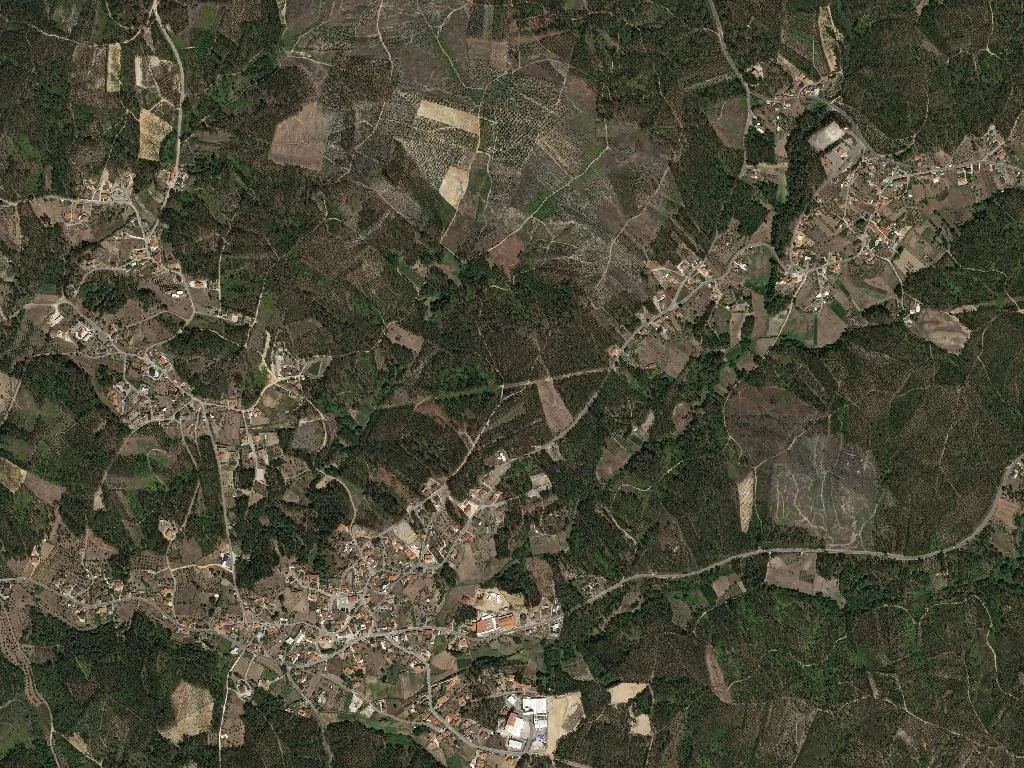
Cercal folds across 776 ha of ribbed limestone between 180 m and 300 m above sea level. Hand-stacked schist terraces hold olive groves of galega and cobrançosa varieties, the source of the peppery DOP Ribatejo oil that appears on every table. Patches of holm and cork oak are interrupted by strawberry-tree scrub and impenetrable mats of cistus. The place-name first surfaces in 1258 as “Circalu” – Latin circulus – suggesting a ring-farmed settlement or a walled enclosure. No medieval charter survives, yet the manor houses built of rammed earth and schist, their brick-trimmed eaves proud against the sky, testify to continuous occupation since the Christian re-conquest.
The eighteenth-century parish church, a single-nave affair with a plain pediment, blazes at sunset when the gilded baroque altarpiece catches the light. In the forecourt an arm-high Rococo cross marks the spot where processions pause. A few paces away the chapel of Nossa Senhora da Conceição – seventeenth-century rural masonry and a Mannerist altar – keeps the hush of small countryside sanctuaries. The communal well, six metres deep and still holding water, bears the same 1789 date stone.
Clay bowls and goat-milk sweets
Sunday lunch starts with chickpea stew baked in the bread oven: chouriço, morcela and winter greens bubbling in clay bowls slick with green-gold oil. Tomato-and-pepper soup sharpened with garden mint receives a poached egg at the table; the yolk melts into the crimson broth. Roast kid, Ribatejo style, arrives with rice and seared turnip tops. Fresh goat’s cheese is served with tomato jam, the sweet-savoury pairing echoed in bolinhos de noiva – egg-rich, cinnamon-dusted biscuits – and in tijeladas, rice pudding baked until the terracotta leaves a caramel crust.
Jurassic footprints in the stream-bed
A five-kilometre farm track follows the seasonal Cercal stream, tunnelled by bay and oleander, to one of Europe’s most accessible dinosaur sites. TheOurém–Torres Novas Natural Monument preserves 175-million-year-old sauropod prints the diameter of tractor tyres; walkers can leave the village after breakfast and be toe-to-toe with the past before the sun climbs high. From the 275 m contour the view opens west to the limestone ramparts of the Serra de Aire e Candeeiros. At dusk Egyptian vultures gyre overhead; little owls peer from wall cracks; in spring, red kites ride the thermals north.
The EM 598, which bisects the parish, doubles as a branch of the Caminho de Fátima; pilgrims pause at the fountain to refill bottles and have their credencial stamped by the parish council. With only 78 inhabitants per km² – and 232 of the 809 residents over 65 – the streets fall silent at noon, but it is the quiet of dough rising, not of abandonment.
When the iron door swings open, steam unfurls like a sail and the smell of toasted crust floods the lane. The first loaves come out crackling, chestnut shells and cotton-wool crumbs. Eat one standing up, torn and anointed with oil and coarse salt, and you hold in your hands the precise weight of a tradition that needs no label – only firewood, flour and people who know how to wait.