Full article about Rio de Couros: Dawn on limestone & dinosaur prints
In Ourém’s quietest parish, olive scent drifts past 175-million-year-old tracks and pilgrims
Hide article Read full article
Morning Light on Limestone
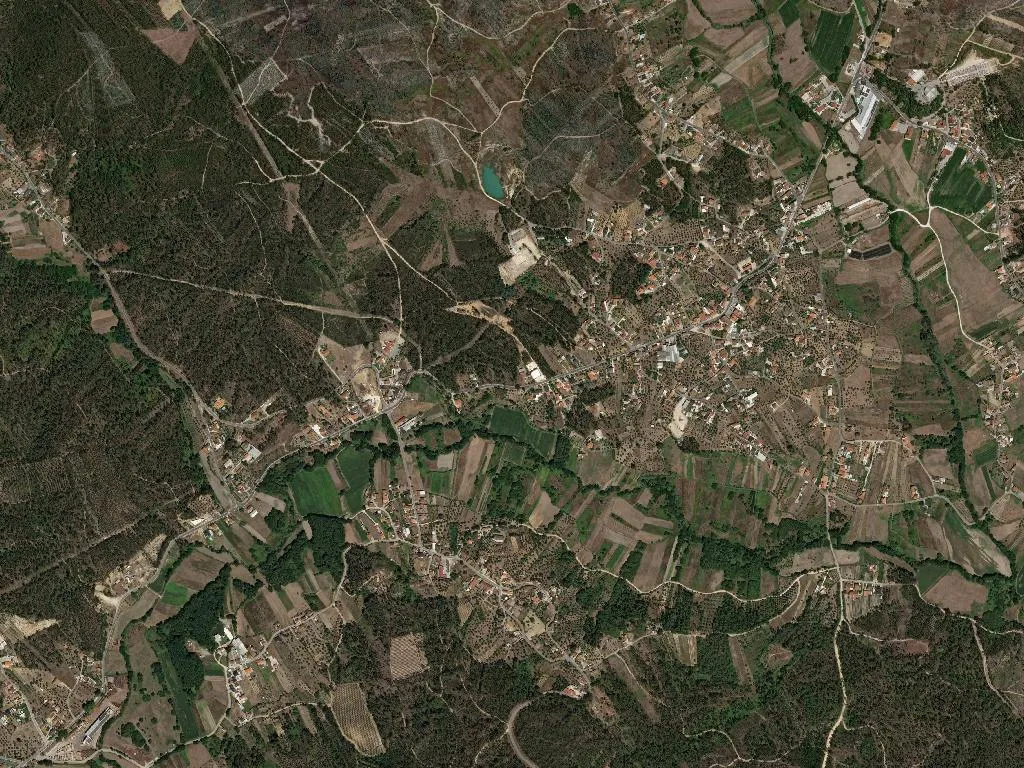
Dawn slips sideways across the stubble fields outside Rio de Couros, printing long bruise-blue shadows on the pale stone. At barely 120 m above sea level the air is already warm; a cock crows once, a wooden gate complains, and somewhere a bucket clanks against a well rim. Nothing else. The parish occupies 21 km² and just 1,146 souls—room enough for silence to settle between houses, between words, between one day and the next.
Footprints in the Stone
What makes Rio de Couros remarkable is literally underfoot. The village sits inside the Ourém–Torres Novas Natural Monument of Dinosaur Footprints, a slab of Lower Cretaceous limestone that once fronted a lagoon. Sauropods and theropods left their traffic jams in the mud 175 million years ago; the tide cemented them into stone. Local farmers still point at a ripple-marked block and joke: “That was the beach car-park.” Half the back gardens contain buried treasure no one excavates—tracks so common they are used as doorstops.
The same limestone feeds the olive groves. Rio de Couros lies within the DOP Azeites do Ribatejo, so every courtyard has two or three trees whose November fruit is carried to the communal press. Between harvest and Epiphany the air smells of crushed green olives, sharp and grassy, a scent that drifts into kitchens and lingers on fingertips.
The Pilgrims’ Cut-Through
The Caminho de Fátima bisects the village, funnelling footsore pilgrims towards the basilica 18 km south. They appear at dusk, sun-hatted, speaking Korean or Polish, looking for the tap Zé the baker has painted bright blue so no one can miss it. A dormitory in the old primary school is pushed into service; tents sprout on the council’s grass strip. Hospitality is not monetised—it is simply what you do when a blistered stranger asks where he can sleep.
Demography here is a pyramid stood on its head: 413 residents over 65, only 109 under 14. The three registered lodgings survive by hosting Fátima overflow—“like visiting London and staying in Watford,” laughs D. Amélia, whose one-bedroom annexe saves pilgrims €40 a night and gifts them star-filled quiet.
Slow Fade
The sun drops behind the red-tiled roofs, tinting them the colour of local wine. A bell tolls—church or perhaps Adérito’s sheep, no one is sure. Wood-smoke and dry earth ride the breeze. On the invisible paving stones below, dinosaurs wait patiently for the next curious eye. The villagers no longer look down; they scan the horizon where tomorrow will arrive the same way today departs—without hurry, without stories, but with the certainty that another cock will crow and another gate will creak at the exact moment the light tips once more over the limestone plain.