Full article about Seiça: Walk Where Dinosaurs Once Trod
Limestone pastures hide Jurassic prints, olive oil steams in 1953 press, pilgrims sip Serra cheese.
Hide article Read full article
Under the feet of giants
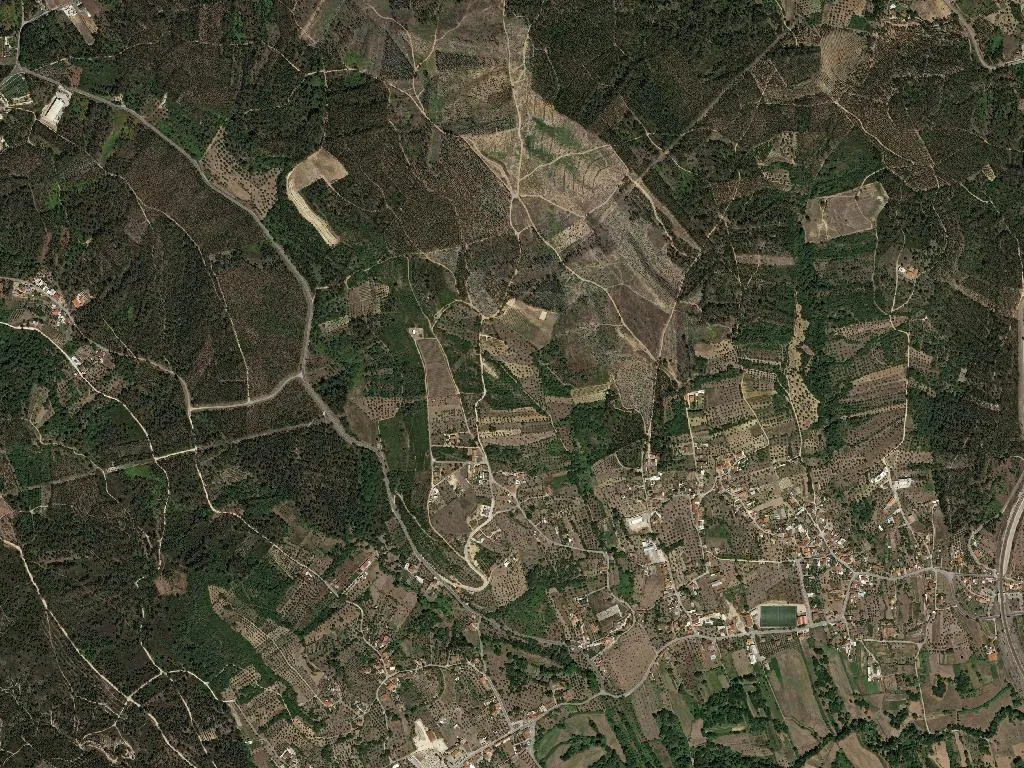
Footsteps echo across stone that once knew far heavier treads. In Seiça, sun-bleached limestone preserves the three-toed punch of theropod dinosaurs who sauntered across a Jurassic lagoon 175 million years ago. The parish now drapes itself over a sequence of modest hills—158 m above sea level—where olive groves interrupt seams of white rock and the air smells of bruised grass and wood smoke.
Tracks in plain sight
The Natural Monument of the Dinosaur Footprints bisects the village, but most visitors head for the signed circuit at nearby Vale de Meios. Locals know another gallery: unguarded slabs lying openly in pasture, grazed by donkeys that wear bells like loose change. No ropes, no interpretation boards—just the casual permanence of fossilised mud. Crouch and you can fit your palm inside the heel impression; the claw ridges feel as sharp as if stamped last week. You need no PhD to sense the jolt of shared ground, only the willingness to look down rather than ahead.
The same stone underwrites the local economy. Terraces of cord-thick olive trunks—many planted by hands now gone—feed the community mill at Casal da Serra where Zeferino still cold-presses on a belt-driven press his father bought in 1953. The soil’s calcium carbonate and the Ribatejo’s mild winters give the oil a peppery linger that catches the throat days later. Between November and January the village breathes in warm stone-fruit vapours as new pomace steams in the yard.
Pilgrims passing through
Seiça squats on a branch of the Northern Way to Fátima, yet the traffic is light: a trickle of walkers with scallop shells sewn to rucksacks who pause at João’s café for a glass of mineral water and a wedge of Serra cheese. There are seven guest rooms in total, scattered through houses whose doors carry no stars, only names—Dona Rosa, Dona Alice—painted in blue tile. Night noise is limited to Adelino’s dog announcing the wind. Of 1,879 residents, 644 are over sixty-five; on winter Sundays the benches outside the parish church fill with men in pressed trousers who have swapped Mass for sun, comparing stick measurements and blood-sugar counts while blackbirds quarrel in the plane trees.
What the eye keeps
There are no formal viewpoints, only the EN361 climbing towards Alburitel where, on clear days, the Tagus glints 30 km away like a dropped coin. Olive rows follow the contour lines so faithfully they might have been drawn with a compass; their shadows lengthen at dusk until the fields resemble a photographic negative. The light moves through several gears—noon white, honey just before the sun slips behind the Serra de Aire, bruise-blue when frost sugars the stubble.
Stand among the trees at that hour and it takes little imagination to sense something vast moving just beyond sight. Your fingers find cold limestone, the dinosaur’s middle toe aligning with yours, time compressing to the width of a hand. Seiça asks nothing of you except the realisation that the planet spun long before our calendars started, and will continue, indifferent and astonishing, long after we leave.