Full article about Arrouquelas: the village that time weighed and forgot
Slate sundials, 1707 beam-balance blessings and lamb stew in a place the fair left behind.
Hide article Read full article
The 11 o’clock echo
The bell of Igreja da Encarnação strikes eleven; its note unravels across olive terraces that shimmer like pewter in the heat. Beside the south door a slate sundial—carved 1869—registers a time no one heeds. Once a year, on the last Sunday of August, a 300-year-old beam balance is carried out and children are weighed in thanksgiving for answered prayers whose origin no parish archive records.
A fair that moved away
Tax rolls from 1527 list five householders; a royal charter of 1674 proclaimed the village’s right to a free fair. In 1739 the market decamped to Rio Maior, 12 km south, leaving Arrouquelas with biannual silence and a nave that fills only for Palm Sunday and the August romaria. The polychrome Madonna inside arrived as soldier’s booty: Captain Francisco Xavier Vieira brought her from the French front in 1918.
Where the limestone begins
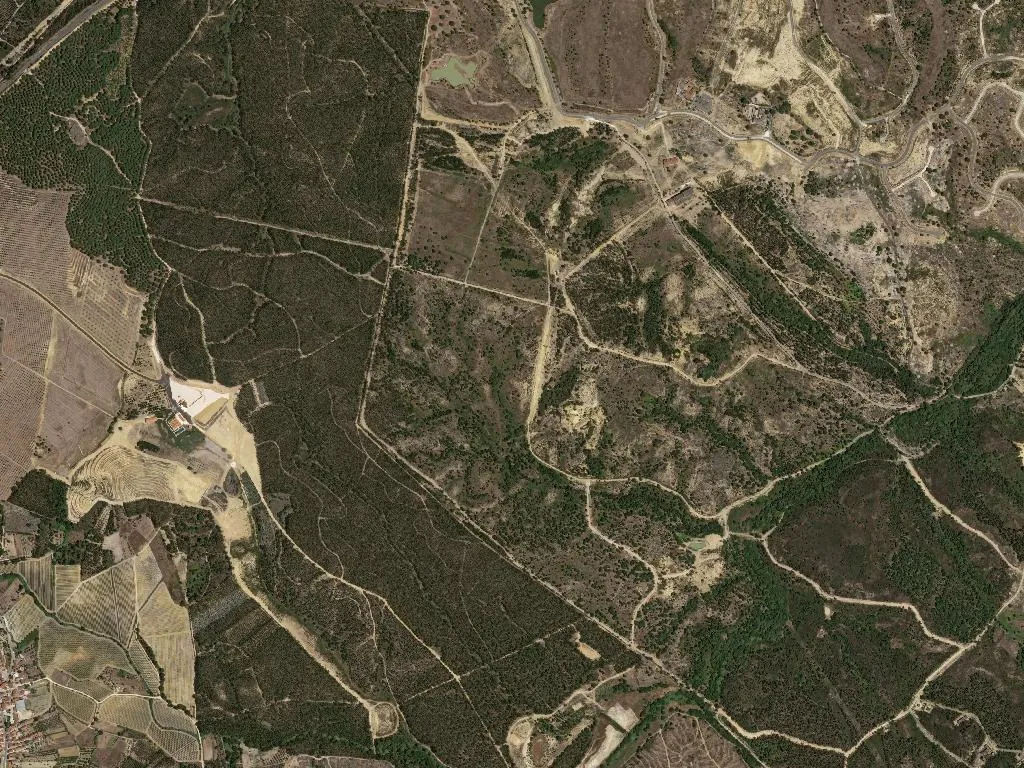
The land drops gently to 63 m above sea level, then shelves into a plateau of chalky terra rossa that cracks between the fingers. Dry-season streams vanish overnight; holm oaks give way to olive and umbrella pine. A 45-minute footpath strikes north to the abandoned Hermitage of Nossa Senhora da Vitória; the medieval Caminho de Torres continues eastward to Rio Maior along 14 km of compacted earth scented with cistus and wild thyme.
What to eat
Clay-pot lamb stew, slow-cooked in wood ovens until the bone flavours the gravy. Unlabelled extra-virgin oil is sold from garage doors for €6 a litre. Sunday lunch ends with sponge-fat pão-de-ló from Rio Maior’s lone café, its crumb the colour of farmhouse butter.
Pilgrimage days
25 March and the last Sunday of August. After dawn mass the statue is shouldered through lanes of gnarled olive trunks, followed by an open-air liturgy and a communal table of bread, wine and grilled sardines. The 1707 balance still works; infants in christening gowns are laid in its oak scoop, their weight in kilos and promises recorded in the priest’s ledger before the bell tolls noon.