Full article about Azambujeira & Malaqueijo: Olive Oil Rituals in Rio Maior
Azambujeira e Malaqueijo, Rio Maior: watch olives crushed on granite, taste roast kid and almond bride cakes under Manueline stone.
Hide article Read full article
The scent of new olive oil rises from the granite press. Hands push the dark pulp of crushed olives, a green-gold trickle runs along the groove carved in the stone and pools in the clay bowl. It is October in Azambujeira and the communal “pisaço” still draws the neighbours—onion soup steams in a cast-iron pot, chouriço spits on the embers, jugs of rough red rest in the porch shade. Low light strikes the centenaries of the olive grove, trunks cork-screwed yet still fruiting. There is no Cobrançosa here that was planted a century and a half ago; that northern cultivar arrived later, imported from Trás-os-Montes in the 1950s.
Stone that remembers
Azambujeira’s pillory stands in a small cobbled square, white Lioz limestone with Manueline capitals, granted by King Manuel I in 1514. At dusk, when the sun slips over the Tagus valley, the stone glows amber. Beside it, the parish church hides a baroque interior—gilded Joanine volutes, plump cherubs—while in Malaqueijo, São Bartolomeu’s curved 18th-century pediment and distant white belfry cut a clean line against the sky. Between the two settlements, single-storey houses of rammed earth and granite carry brick cornices and gates split by decades of sun. In back gardens, stone presses survive intact, their grinding wheels silenced since the 1970s.
Taste of the cork oak plain
Rio-Maior-style roast kid arrives on a clay tray, skin blistered, meat scented with garlic and pork fat. Lamb stew comes freshened with garden mint; chicken cabidela rice turns its dark mahogany from slow-cooked blood and liver. Petiscos appear: glass-crisp pork rinds, wine-marinated chouriço sliced thick, sheep’s-milk curd dripping with rosemary honey. On feast days, tomato-and-bread soup—Alentejo in spirit, basil-laced and slick with new oil—is ladled from deep bowls. Azambujeira’s “bride cakes” fold almond, squash and cinnamon; Malaqueijo’s foguetes are spirals of fried dough filled with egg-yolk jam. Tejo whites accompany boga and barbel netted in the local stream; barrel-aged reds balance partridge or wild boar.
Between ridge and rivulet
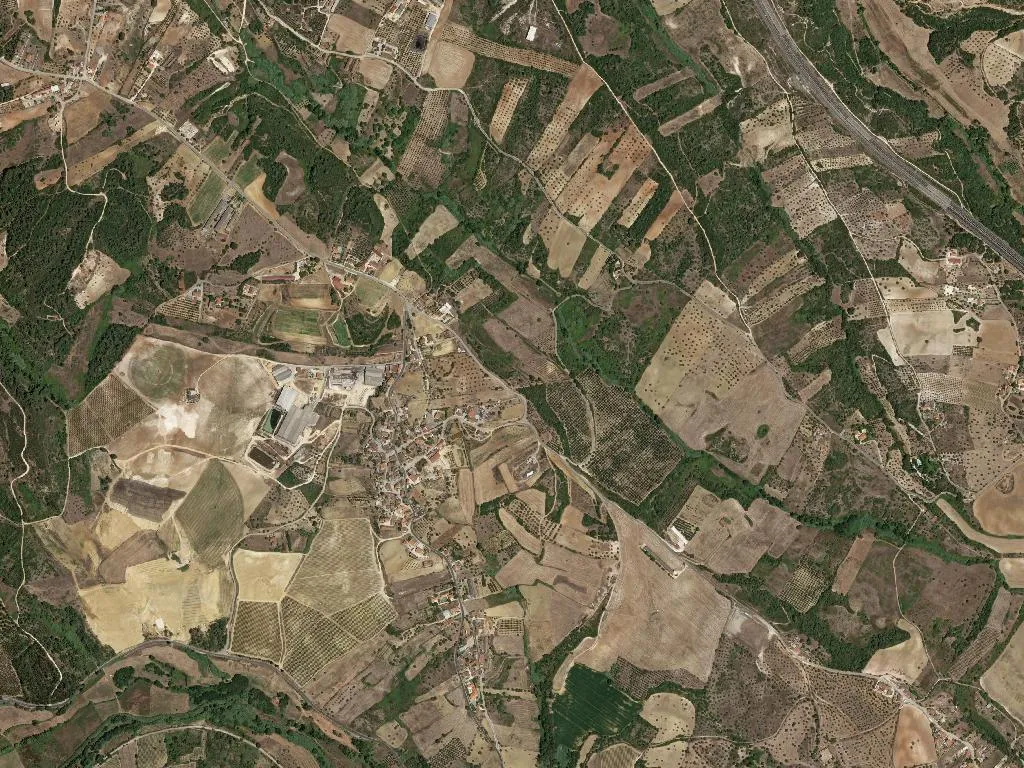
The southern rim of the Serras de Aire e Candeeiros Natural Park rolls out a limestone landscape, 80–200 m of undulating ground clothed in cork and holm oak. Strawberry trees and heather punctuate the understory; the Malaqueijo stream rises on the slopes, threading ash-shaded pools where grey herons and water-blackbirds nest. A three-kilometre footpath, the Mills Trail, links the two villages through olive groves, spring flower meadows and abandoned quarries where Jurassic ammonites lie scattered. Over the Tagus plain, the only sound is the mew of a griffon circling high.
Living memory
In 1880–1920 Father Joaquim de Azambujeira built schools and chapels in the Congo; in 1977 Maria da Conceição Silva became the village’s first elected woman parish councillor and brought piped water and a nursery. Joaquim Malaqueijo toured Ribatejo fairs with his five-string guitar, improvising verses now archived in Lisbon’s Museum of Ethnology. The cobbled road that once carried women with salt sacks balanced on their heads to Rio Maior’s famous salinas survives only as a whispered line in folk song: “Moça de Malaqueijo, vai-te o sal escorregando.”
Evening settles in Café Central, opposite the football ground where the local club, UDM, re-formed in 2022. A warm pastel de nata arrives with a bica; through the window the lane climbs between silver olive trunks darkening against the sky. Back at the press the green-gold trickle continues, hands still working the pulp, the scent of new oil clinging to clothes, skin and memory.