Full article about Mist, Salt & Pears: São João da Ribeira’s Quiet Alchemy
Rio Maior’s fused parish where river fog feeds DOP fruit and Roman salt pans still glitter.
Hide article Read full article
Between river and salt pans
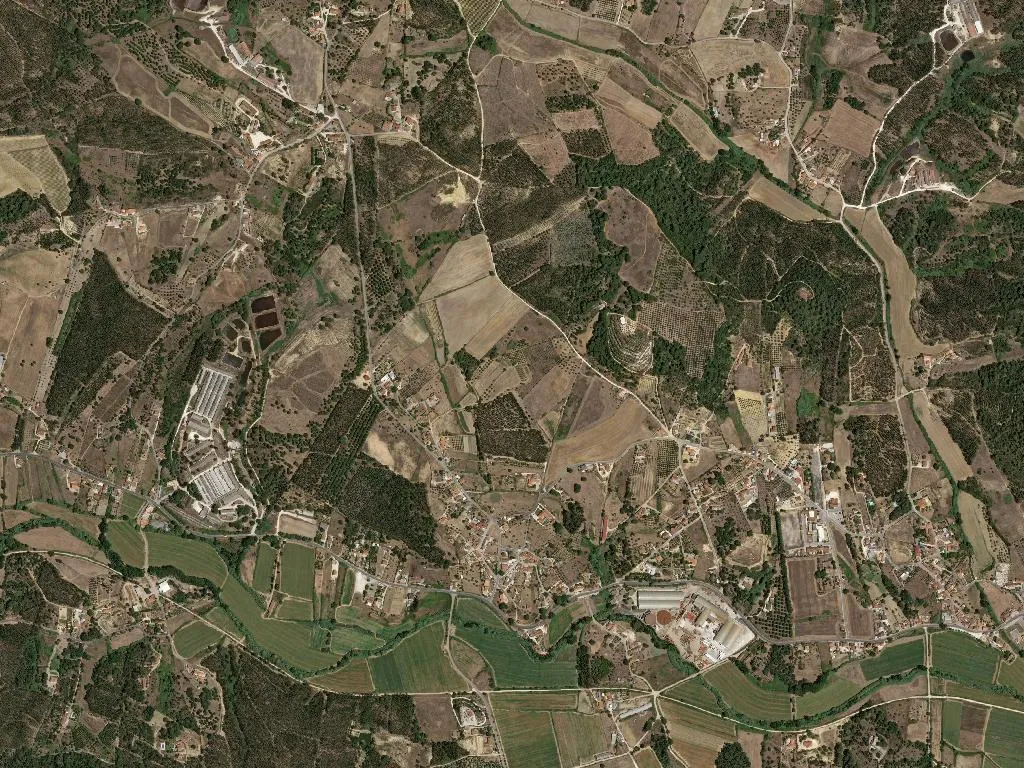
Dawn smells of wet loam along the Ribeira de São João. Mist lifts slowly, revealing orchards graded like green terraces, each row of apples and pears irrigated by the same stream that once turned Roman waterwheels. At barely 50 m above sea-level, the parish feels more basin than valley; sound travels far, and the river’s murmur threads every conversation.
Two parishes, one current
Administrative tidying in 2013 fused São João da Ribeira with its smaller neighbour Ribeira de São João, yet the geography had already done it. Both settlements honour St John the Baptist, both draw their living from water that slips past kitchen gardens and seeps into alluvial soils. Alcobaça apples and Pêra Rocha pears—DOP-protected varieties—owe their sugar balance to these morning fogs. Three kilometres east, inside the Fontainhas depression, Rio Maior’s subterranean brine erupts into open-air salt pans exploited since the first century AD. The resulting flor de sal, snow-white and faintly sweet, underwrites local charcuterie: black-pork presunto rubbed with bay and rock salt, then hung in attics where the Atlantic breeze sneaks through cracked tiles.
Where the plain meets limestone
Walk south and arable land loosens its grip. Wheat stubble gives way to broom and spontaneous oak; limestone crags poke through like kneecaps under skin. You have reached the buffer zone of the Serras de Aire e Candeeiros Natural Park, a karst plateau riddled with cave systems and the occasional griffon vulture. Way-marked loops—never higher than 100 m—thread between dry-stone walls built to shelter vegetable plots from the north wind. One of them, the Caminho de Torres, is an alternative branch of the pilgrimage to Santiago, its way-stones carved with the Cross of the Order of Christ rather than the scallop shell.
Salt, fruit and what lies between
Taste the territory at a single table: wafer-thin melon dressed with flor de sal, pear compote spooned over Queijo de Azeitão, and a tumbler of Tejo DOC white pressed from Fernão Pires grapes grown on sandy riverbanks. The parish council lists only three legal lettings—two cottages and a first-floor flat above the minimercado—so overnight guests tend to arrive with walking boots and bird guides rather than clubbing attire. Expect roosters instead of ring-tones, breakfast apples picked while the dew is still cold, and evenings soundtracked by the river’s unhurried conversation with itself.