Full article about Granho: Where the Tagus Writes its Name in Rice
Silent Ribatejo parish of 1,864 souls, horizon-wide paddies and garlic-scented Sunday lunches
Hide article Read full article
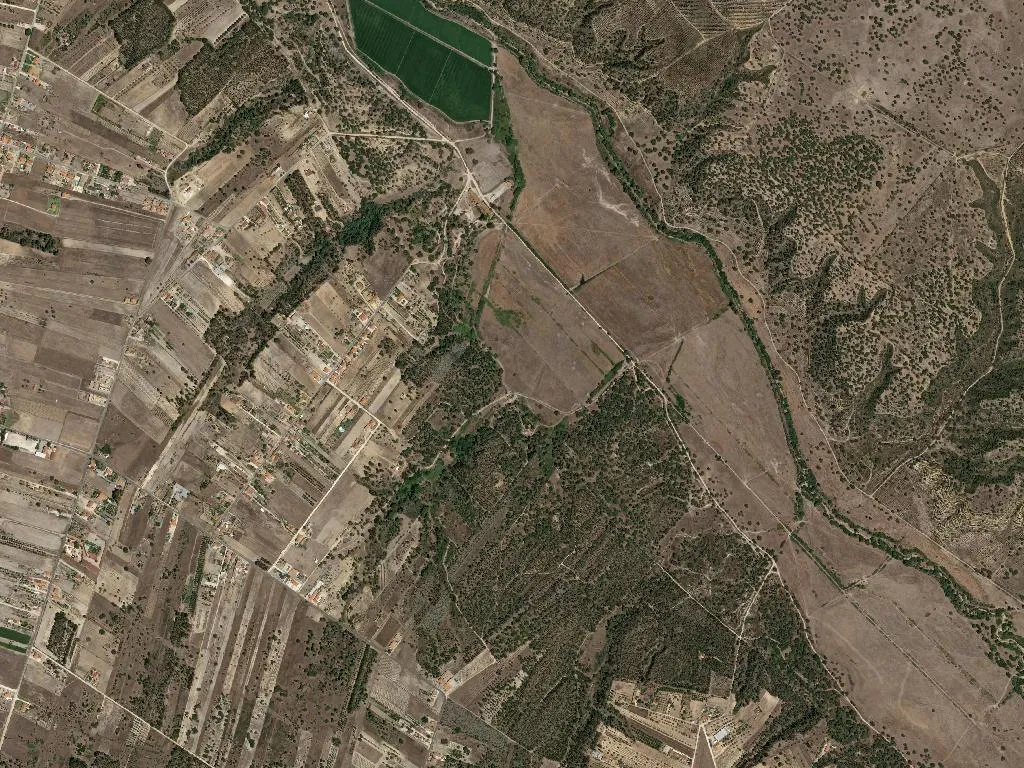
The Tagus sun lands flat on the earth and the horizon unrolls like a tape measure. At 16 metres above sea level, Granho spreads across 3,110 hectares of Ribatejo flood-plain where the green of young rice meets the umber of turned earth. When the wind swings east it carries the river’s damp breath; the only replies are a skylark overhead and, somewhere far off, the diesel purr of a Massey Ferguson.
Land you can read like a calendar
There are 1,864 people here, scattered so thinly (barely 44 per km²) that silence has room to settle. Whitewashed houses sit low, their rooflines the only interruption between ditch and sky. Alleys are wide enough for sun to park itself all afternoon; gossip outside the mini-mercado stretches until the bread van arrives. Almost a third of the parish is over 65 – retirees who can walk the margins blindfolded and tell you which field was pasture before it was rice, and rice before it was sugar beet.
What grows here ends up on the plate
Granho’s kitchen does not do “rustic chic”; it simply feeds people. The rice is Arroz Carolino das Lezírias Ribatejanas IGP, a short, pearly grain bred to drink in flavour. Fields are flooded from April; by July they mirror clouds like polished steel. Come September the combine harvesters crawl through, unloading into trailers that rattle the two kilometres to the Orivárzea co-op. The grain ends up in tomato-laced arroz malandrinho or paired with Carnalentejana DOP beef – animals raised on the same commons where egrets pace between cow hooves. Sunday lunch smells of minced garlic hitting olive oil, coriander stalks hissing in the pot, a glass of Tejo-region white passed across the table without comment.
Daily life, horizontally arranged
Forget checklists: there is no church spire to climb, no Interpretation Centre gift shop. Instead, the 8 a.m. bus to Salvaterra de Magos, the café where men debate Sporting’s back four over bica, the primary-school playground whose 183 pupils provide the only high-pitched soundtrack for miles. Winter turns the lanes to custard; spring brings lapwings and knee-high ryegrass; summer presses heat so thick the air appears to vibrate; autumn is the metallic scrape of disc harrows preparing the cycle again.
The horizon as state of mind
Some visitors complain the view gives them vertigo – nothing to rest the eye against. Stay a week and the opposite happens: the lack of punctuation teaches a different kind of focus. You notice the way storks glide without flapping, the exact shade of copper when the sun hits flooded clay, the moment night dew starts to form on alfalfa. Sunset is a 360° wash of coral and bruised plum; darkness arrives with a star density that makes the Milky Way look like cloud.
Leave Granho and what lingers is not a photograph but a set of sensations: the hush after the irrigation pumps shut off, the toothsome give of perfectly cooked Carolino, the realisation that, for once, you have stood somewhere the map has not been coloured in.