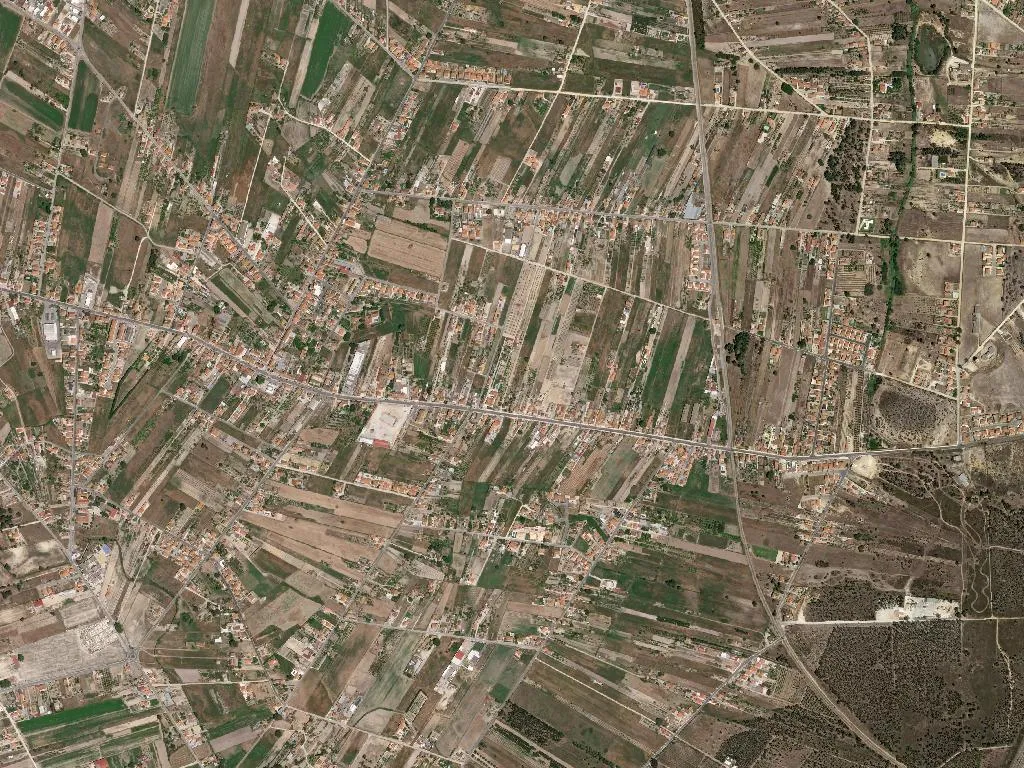
Full article about Marinhais: paddling through Portugal’s mirror-rice plains
Float above sea-level amid Tagus paddies that yield IGP Carolino rice
Hide article Read full article
Marinhais: where the land breathes under water
The silence is not empty – it is viscous, salt-tinged, the smell of silt and chlorophyll rising from paddies that lie lower than the river itself. At 34 m above sea-level you feel you are floating. Dawn unlocks kilometre after kilometre of mirror-bright water; the Tagus, still sluggish from the night, spreads its reflection until earth and sky lose their border. No hill, no wall, no telegraph pole breaks the line. Only the embankments that keep the river out, and the faint drone of the first tractor heading for the fields.
From tidal marsh to Carolino rice
The name first appears in a 1258 royal charter: “Marinhas”, tidal place. What is now pasture and rice was once salt-marsh, grazed only by half-wild cattle and the king’s deer when Dom Miguel rode over from his hunting lodge at Salvaterra. The land was only finally tamed after the 1940s, when the Estado Novo diktat to feed the nation met the perfect growing medium – heavy clay, sun, and an inexhaustible supply of Tagus water.
Today 30 % of the parish – 2,800 ha – is under water between May and October. The rice cycle is the local calendar: the glass-calm transplanting stage in late spring; the impenetrable green height of summer; the September drain when the fields blush gold and the air fills with diesel and dust as the combines roll. What leaves the field is not anonymous grain but Arroz Carolino das Lezírias Ribatejanas IGP, the short, plump variety that soaks up stock without collapsing and carries the taste of these alluvial plains.
A bowl deep as the lezíria
Order duck rice at O Cego on Rua Principal and it arrives in a black clay pot from Alcobaça, the crust cracked like a crème-brûlée lid. The tomato version, humbler, is stirred for an hour until it turns the colour of Iberian sunset and tastes of August condensed. Eels, fattened in the irrigation channels, are dredged in coarse semolina, fried in Marmelo-mill olive oil until the skin balloons, then finished with a shower of fleur de sel. Or they go into caldeirada, the coriander-laced stew that river-men make with whatever the net brings up: eel, perch, the occasional lamprey in January.
Puddings skip the convent-sweet clichés of central Portugal. Try the walnut cakes from Café Avenida, still warm from a gas oven older than the owner, or Dona Guida’s requeijão tarts – brittle pastry, cheese barely set, a whisper of lemon. Locals wash them down with Quinta da Alorna’s Arinto, a white sharp enough to cut the fry-up fat, or Casa Cadaval’s Pinot-heavy red that can stand up to the lamb and coriander stew served at Quinta da Piedade on Sundays.
Dirt tracks and water roads
There are no way-marked trails, no bird hides, no QR-coded interpretation panels – and that is the pleasure. Borrow a bike at Quinta das Laranjeiras and follow the municipal road 525 east; for 12 km you ride on the level, dyke on one side, canal on the other, storks lifting off their platform nests like overweight cargo planes. Turn down any track that ends in a gate and you are in the paddies: glossy ibis stepping between rice shoots, purple herons flapping off with a reproachful squawk, the occasional wild boar print pressed into the mud.
Anglers sit on plastic beer crates along the Vala do Castelo, Shimano rods arcing over water the colour of strong tea. They are after barbel and largemouth bass, but talk mostly about the year the river burst in 1979 and the rice crop became an inland sea. No one fishes for eel any more – the species is listed, and the glass-eel export trucks now leave from further north. Tradition adapts: catch-and-release, a thermos of coffee, the patience of people who know the Tagus gives only when it chooses.
A parish that works instead of celebrating
Drive through Ribatejo in June and you will bump into a saints’ day every other village: processions, brass bands, gin stalls under the plane trees. Marinhais has none. The parish council keeps a low profile; the 6,259 inhabitants prefer the rhythm of sowing, weeding, harvesting. Streets are named prosaically – Rua da Igreja, Rua do Rossio, Rua de São João – and everyone knows which gate the contractor leaves open so the cattle can reach the pump house.
Tourism infrastructure stops at ten self-catering houses on Rua das Flores, once labourers’ cottages, now let to Lisboetas who come for mushroom-collecting weekends in November. You wake to the same soundtrack as the neighbours: a Valtra reversing out of a barn, frogs arguing in the night drainage channel, the first commuter train to Lisbon sighing past at 6:12 a.m. No one sells postcards; the souvenir is the sound itself, carried home in the bones long after the rice scent has left your clothes.