Full article about Alcaravela’s Olive Silence: Ribatejo’s Forgotten Plateau
Granite lanes, 21 souls/km² and oil thick as honey in Sardoal’s hilltop hamlet.
Hide article Read full article
Olive light and granite shadows
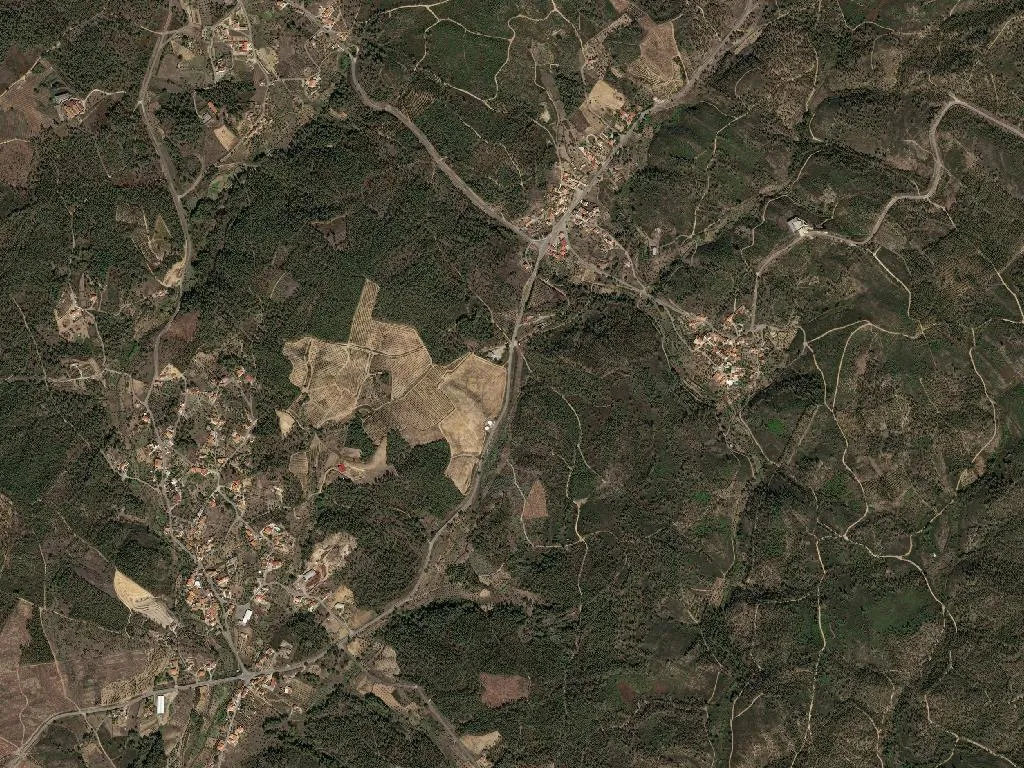
Sunlight slices through the olive groves on the Sardoal plateau as cleanly as a kitchen blind snapping open at seven. At 305 m the air has the weight of a brushed-wool throw—neither the river-level humidity of nearby Santarém nor the dust-dry heat that rises off tractor engines, but something you feel on the skin the moment you step out of the car. Alcaravela spreads across 37 km² of gently rumpled land where the olive still dictates the calendar and the 779 residents know every metre the way I know the short walk to my own village café.
The groves in formation
The landscape arranges itself like a half-empty stadium: olives in the lower tiers, ploughed plots higher up, sky closing the upper stand. Ribatejo DOP olive oil is not a souvenir cliché—it comes from trees that José Manel planted behind the EM112 road, the same ones his granddaughter strips each December wearing fluorescent-penalty-box gloves. In Sr António’s press, where the lane forks towards Herdade da Serrinha, the oil runs thick as heather honey and the scent stays on your hands for hours.
Population density is 21 souls per km²; the silence between houses feels like August grass at siesta time—quiet enough to hear your own pulse. Of those 779 residents, 285 are over 65 and only 65 under 14. The ratio of blossoming almond to closed front door is much the same: plenty of bloom, few witnesses. The three rural houses—Casa do Lagar, Monte da Oliveira and Quinta da Serrinha—sit in the landscape like benches in a square: occupied now and then, the rest of the time shared only with Alberto’s dog gnawing a bone in the shade.
Beef and soil
Carnalentejana DOP cattle graze the slopes above Rua da Igreja, chestnut-brown animals that move with the unhurried certainty of shoppers at a cashpoint on Christmas Eve. The flavour is all open pasture: buy the meat at Domingos butchers in Sardoal, grill it over holm-oak embers in Manel’s backyard pit, add irrigated potatoes from Dona Albertina’s plot. No sauces that promise the earth and deliver a PowerPoint presentation.
The land rolls like my grandmother’s corrugated tin roof—no vertigo, just a constant greeting of “hello, here I am again”. Granite outcrops near Fonte da Pipa, grey as a Sunday suit, against earth so iron-red it brands trainers like hot-chip grease.
The hush of 3 p.m.
Crowds do not happen here. The settlement index is 15—roughly the queue at a café when only one waiter is on shift. The N3 trunk road passes within earshot, yet traffic is as thin as paying members at my old football club. By mid-afternoon Praça da República echoes like a hospital corridor—each word has room to turn the corner.
Light changes mood the way my mother-in-law does: at noon it hits straight and unapologetic; by six it slants through the olives like blue glare off a laptop screen. Then the silence thickens, broken only by the bell of São Vicente or Bobi, Sr Joaquim’s dog, barking from the stone house before the bridge over Ribeiro de Alcaravela. Hands smell of oil and soil; the mouth keeps the faint metallic tang of spring water where we drank after playground football years ago.