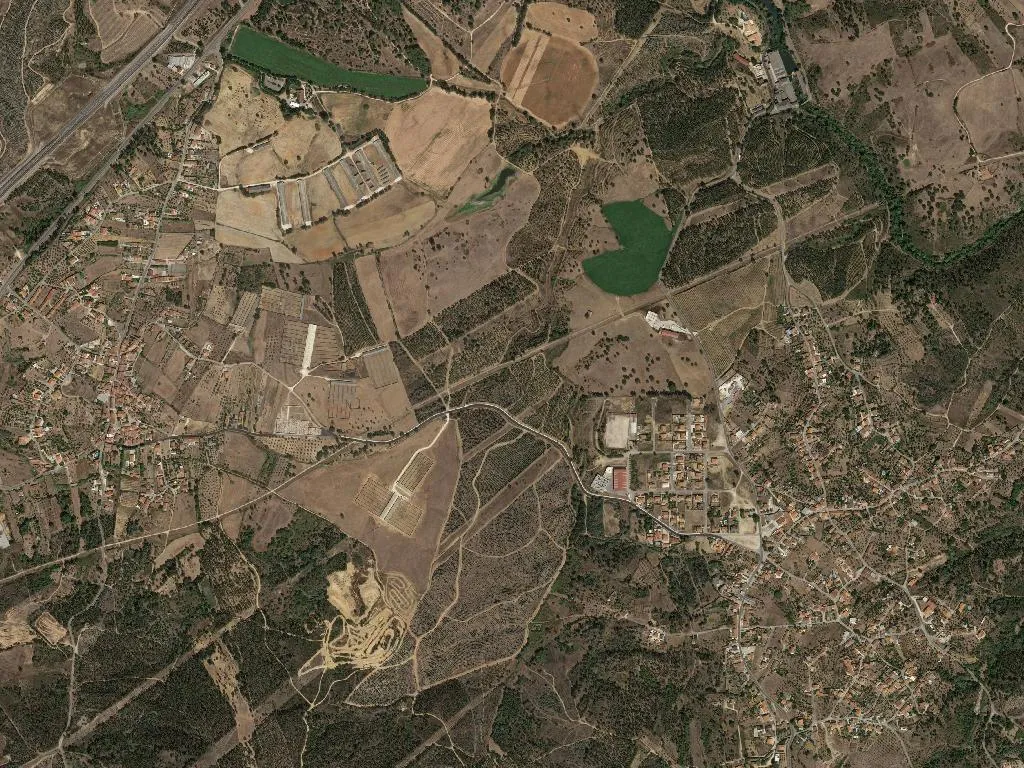
Full article about Asseiceira
Visit Asseiceira near Tomar: see the 1934 war monument, taste mule-pressed olive oil, hear crackling radios in the village museum.
Hide article Read full article
White Stone, Last Shot
The monument is right there, blinding against the olive terraces: a slab of limestone carved in 1934, exactly a century after the final fusillade of Portugal’s Liberal Wars. No café, no taberna, no bench – only wheat heads nodding where Miguelist troops once formed square. An old man leaning on a cane will still point to a cork oak and rasp, “Under that, the last absolutist laid down his rifle.” Nobody writes it down, but the tree remembers.
Territory of the Olive Presses
Asseiceira takes its name from the asseiceiro, the village miller who owned the stone press and charged neighbours by the kilo. A handful of beam-and-weight lagares still function: granite cylinders turned by mule power, dripping oil so peppery it makes your tongue curl. The parish church is unshowy – a lintel you duck through, a bell that gave up clanging years ago – yet it remains the village’s noticeboard: births, burials, who’s flying back from Paris for the weekend. Officially 2,439 people live here; half are actually on the A10 outside Charles-de-Gaulle.
Short-Wave Memories
Three kilometres north, in the hamlet of Linhaceira, a former primary school houses the Museu da Rádio. Ring the shutter and Zé – postman for forty years, now its guardian – will show you 300 wireless sets the size of sideboards. “This Pye pulled in Salazar’s speeches; this Telefunken picked up clandestine Renascença.” Saturday afternoons he powers up a 1953 Philips and a crackling French waltz drifts across the playground. Entry is free; a coffee coin in the tin is appreciated.
September Goes Fifteenth-Century
Every third weekend of September the village rebrands itself Ceyceyra Medieval – a pun no outsider ever pronounces correctly. Locals pad about in quilted gambesons, stalls serve lamb stew thick enough to stand a spoon in, and a trader from Barcelos flogs cardboard broadswords. It is, allegedly, the only festival in Portugal commemorating the end of the Liberal Wars – rather like celebrating the day your solicitor mislaid the deeds. By midnight the “crusaders” have swapped cider for Super Bock and the century gap snaps shut.
Templar Footprints
Three separate caminos to Santiago converge here. Pilgrims limp in with shredded boots, fill bottles at the spring, ask where to stamp their credencial. We send them to Café Central for Maria’s bitoque – a garlicky steak-and-fries platter that could coax a smile from a Grand Inquisitor – then point them east to Tomar, ten minutes away, where the Convent of Christ perches on its wooded hill. We stay behind, watching their dust settle back into the wheat.
A Ferrari in a Field
Santa Cita, population 472, owns a full-sized roller-hockey rink that has hosted Benfica’s first team. The pavilion is raw concrete and pine benches, yet when the lights come on even 87-year-old Sr Agostinho abandons his two walking sticks. The home side loses more often than not, but the post-match sardine grill and plastic cups of local red taste like silverware.
The Nabão River slips past unnoticed; summer bodies prefer the warm granite basin of Castelo do Bode reservoir. Still, the mind drifts back to that white obelisk in the olives – stone, wind, and a cork oak that once saw the very last shot.