Full article about Carregueiros: Olive Shadows & Templar Silence
Meet the hamlet where three Caminos cross above Tomar’s Nabão valley
Hide article Read full article
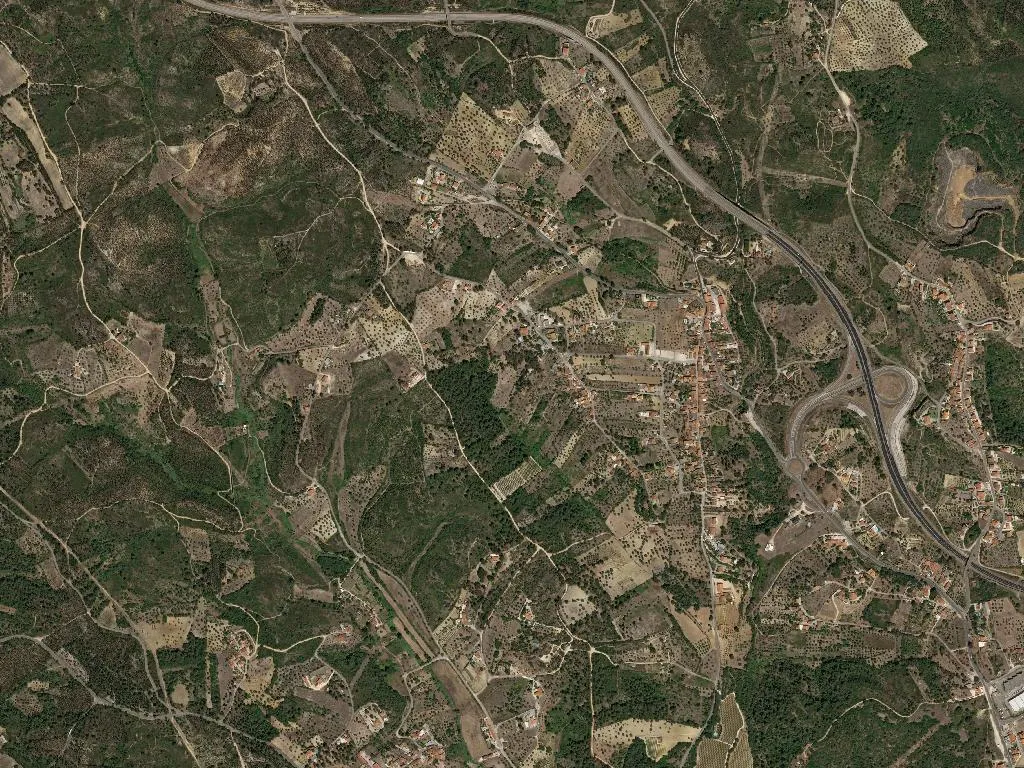
The tarmac gives way to gravel, then to ochre earth. At the lane’s end, a 300-year-old olive tree throws a ragged shadow across a dry-stone wall whose joints are stuffed with moss. Beyond, the Nabão valley unrolls in muted greens and rusts—olives, pears and wheat stitched together by pencil-thin lines of cypress. Carregueiros sits 162 m above sea level, but feels lower: a basin of warm air and slower time between Tomar and the river that once powered its Templar mills.
Between mattock and altar
There is no village square, no single centre of gravity. The parish spreads across ten square kilometres of gentle swell and dip, its 1,067 souls scattered in hamlets that keep a polite distance from one another. Older houses are built from local limestone the colour of wet sand; newer ones wear the white render that throws back the Ribatejo summer. The only building on Portugal’s national heritage list is the parish church, São João Baptista, erected in 1753 and little altered since. Inside, gilt angels balance on azulejo clouds; outside, the bell still tolls for Sunday Mass at the same hour it did for harvest suppers under Salazar.
Tomar—ten minutes by car—has world-famous masonry in the Convent of Christ, yet Carregueiros refuses dormitory status. Its olive groves supply the co-operative presses that bottle Azeite do Ribatejo DOP, extracted cold within hours of picking. In back gardens, gnarled pear trees sag under Pêra Rocha do Oeste DOP fruit; the micro-climate here is a degree or two cooler than the coast, giving the pears their snap of acidity.
Footpaths that intersect
Three variants of the Camino de Santiago cross the parish: the Central Portuguese, the Interior (also called the Via Lusitana) and the Fatima detour. Way-marking is discreet, traffic is thin—perhaps a dozen walkers a day in May, none in August heat. The parish offers seven places to sleep: two registered casas de campo, three rooms in family homes, a converted hay-loft and a municipal bunkhouse beside the sports pitch. Expect ironed sheets, a thermos of coffee at dawn and directions to the next bar 4 km on; do not expect turndown service.
The ledger of departure
Demography reads like a slow leaving: 121 residents under 14, 296 over 65. At 86 inhabitants per square kilometre, Carregueiros is half as dense as the district average. The last grocery-café pulled its shutters in 2018, yet the land is still worked. Wheat, maize and tomatoes rotate through small plots; tractors are second-hand, labour shared. Fields are too modest for agri-business, too loved for abandonment.
Kitchen without theatre
No tasting menus, no linen. Food is what you are served if invited—perhaps a bowl of bean-and-cabbage soup thickened with last year’s pig, or cod roasted with punched potatoes and river-water olive oil. On slaughter days, smoke curls from oak embers under chouriço and morcela; the same fire later toasts bread for açorda, the garlicky broth that uses up yesterday’s crusts. Wine comes in chunky tumblers from the Tejo VR cooperative: castelão with enough tannin to cut the fat, served at kitchen temperature.
Late afternoon light slants through the cypress rows, stretching shadows almost to the road. Somewhere a bell strikes—church or cow, impossible to tell. The air smells of turned soil and the first wood-smoke of evening. Carregueiros offers no postcard moment, only the steady texture of a place still shaped by calloused hands that know the exact weight of each season.