Full article about Woodsmoke, olives and silence in Casais e Alviobeira
Tomar’s forgotten parishes breathe slow, scent their oil and watch the young leave
Hide article Read full article
Smoke, Earth and Empty Roads
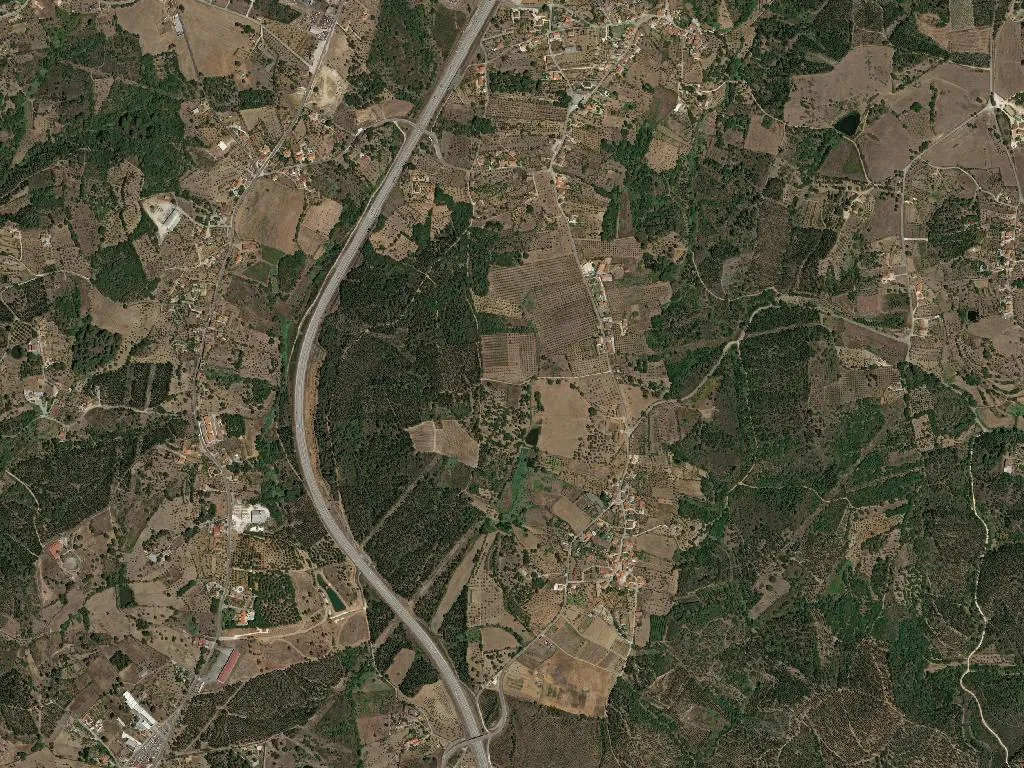
Woodsmoke drifts from chimneys that still outnumber satellite dishes, mixing with the scent of soil newly opened by a late-summer plough. Below, the Nabão River slices the valley like a blade through fruit, while the church clock in Casais strikes noon without waiting for anyone to listen. The twin parishes of Casais and Alviobeira were stitched together in 2013 during a nationwide cull of council budgets; they now share one parish council, one tight ledger and one stubborn predicament: 3,500 ha of land, 2,528 names on the register, and barely a soul under fifty to answer the phone.
Altitude is a modest 185 m, yet nights stay cool enough for dew to silver the olives. Those trees—centenarian, gnarled—produce an oil so low in acidity that Tomar’s cooper still froths when he pours it across his pottery bowls. Vineyards survive only where a retired teacher decided to bottle for friends; the rest were grubbed up when Brussels subsidies dried. Pêra Rocha pears thrive, but growers can count on one hand the seasons when the market price covered the cost of a ladder.
Stone houses shoulder the lanes, their schist walls held together less by mortar than by inertia. In the square the bandstand hasn’t seen a brass section since the Euro arrived; the benches host 783 pensioners and perhaps six children who leave on the 07:30 bus to Tomar’s secondary school. Chapels stay unlocked, yet Mass arrives only when the priest from Santa Maria dos Olivais remembers to fling his vestments into the boot of a dented Clio.
Three pilgrimage routes—Central, Interior and the lesser Fatima spur—cross the parish. Locals refresh the yellow arrows and pastel ribbons so walkers don’t vanish into the clay that turns to grease each winter. Most hikers pause only to photograph the azulejo of St Christopher, refill a bottle at the granite font, then march on toward the Templar castle five kilometres away. The café-mercado-tabac receives their coins, sells them a bica and returns to its real trade: gossip and scratch-cards.
For anyone tempted to stay longer, a dozen beds are scattered among converted stables and pool villas whose filters hum to no one. What you rent here is not luxury but interval: the squeak of a gate hinge, a dog barking three farms off, a tractor climbing the ridge at dawn. After dark the sky is so rinsed of light that you can clock Starlink trains and still catch the scratch of a barn owl. Solitude, in Casais e Alviobeira, is not absence—just the agreed distance between a human heartbeat and the next constellation.