Full article about Junceira: Stone-raft village above Tagus fog
Where tractors queue at dawn for olive oil and the Camino rushes past without stopping
Hide article Read full article
Where the tarmac runs out
The asphalt ends just past the cemetery bend and the air changes at once: diesel gives way to sun-roasted earth and the ammoniac sting of tractor-spread manure. It’s 7.30 a.m. in August and the only soundtrack is the low throb of irrigation pumps. Inside Bar do Nelson the first bica of the day is being pulled; the bread arrives wrapped in rough butcher’s paper and the butter is the exact foil-wrapped rectangle every Portuguese knows from childhood.
Masonry you feel, not see
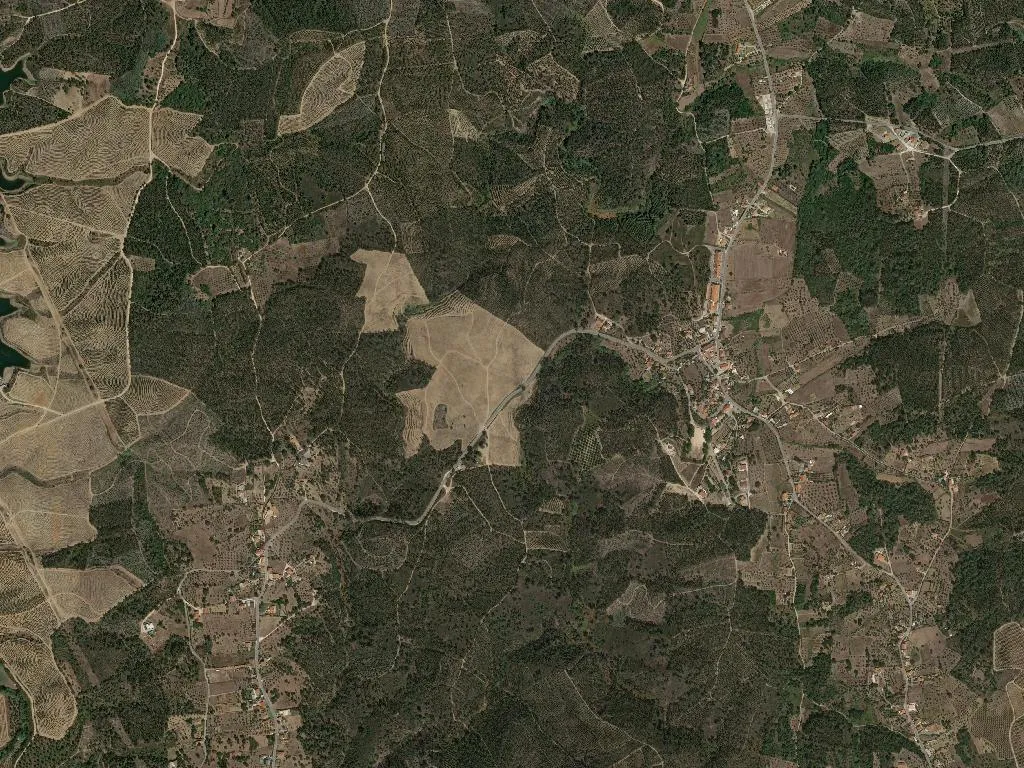
Tomar’s Convento de Cristo is only 12 km north, but in Junceira the Templar legacy is subtler. It survives in the waist-high schist walls parceling gardens, in the illogical kink of the municipal road—still tracing a twelfth-century livestock trail—and in the surname Carvalho carried by half the parish. At 190 m above sea level the altitude is negligible, yet when the Tagus valley fills with dawn fog Junceira floats above the cloud ceiling like a stone raft.
Green gold
From November to January the air is heavy with the smell of crushed olives. At the cooperative, Sr. Joaquim slides open the mill door at 4 a.m. and a plume of sweet-bitter vapour rolls into the street. Tractors queue with trailers stacked high in regulation blue crates. The oil produced here never sees a designer bottle; it leaves in five-litre jugs bound for Badajoz markets, and when the harvest money lands half the village heads across the border to spend it.
Pilgrims who don’t pause
The Portuguese Central Camino cuts straight past my gate, yet the hikers rarely stop. Sweat-striped and GPS-obsessed, they ask only one thing: “How far to Alvaiázere?” There’s a yellow arrow painted on Armando’s wall which he renews every Easter—not because he venerates St James, but because that particular stone takes chalk better than the rest.
Arithmetic that hurts
The census says 985 residents; reality feels closer to 400. The primary school closed five years ago when Matilde, the last pupil, moved to Prior Velho; she returns only at Christmas. At 5.30 p.m. the bar still fills: straw hats, rubber boots, the clack of dominoes. White-haired António orders his usual bagaceira laced with a splash of coffee, and no one mentions Zé Carlos’s funeral—two months ago now, though it feels like two centuries.
When the sun drops behind the olive terraces of Encosta do Sol the soil glows like molten terracotta. Dust hangs in the air, coating the throat, and the first sardines hit the grill. The scent drifts through the lanes, mingling with the blue-butane tang of portable stoves. Junceira isn’t trying to be anything; it already is everything it needs.