Full article about União das freguesias de Madalena e Beselga
Between Madalena and Beselga, schist terraces, pilgrim springs and a bell that still carries two kilometres on the wind create Tomar’s quietest time-warp
Hide article Read full article
Granite that stings, bells that carry
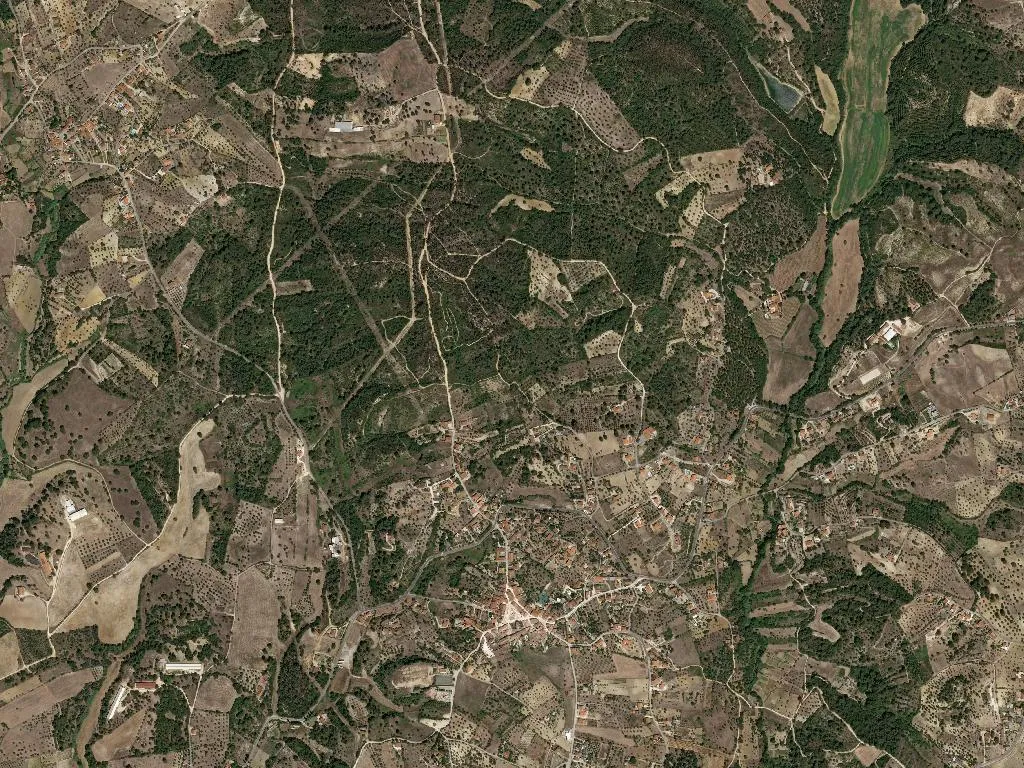
The afternoon sun turns the stone walls incandescent. At seven o’clock the single bell of Madalena strikes, a bronze note that drifts downhill on the prevailing westerly and, on evenings when the wind cooperates, is still audible in Beselga two kilometres away. Between stands an amphitheatre of terraces: olive groves that Sr António prunes with a hand saw because “the tractor can’t read the slope”, and a pocket of vines that Dona Rosa refused to abandon when her children left for Lisbon. The earth is schist, flaky and silver, pinned together by dry-stone walls that pre-date the 1755 earthquake. Dust only rises when the bakery van or Joaquim’s 1977 Massey-Fergusson rattles past—Saturday is field day, still.
Where pilgrims ask for water—and directions
The civil parish merger of 2013 is paperwork, not vocabulary. Locals continue to “go up to Madalena” or “come down from Beselga” as though the council decree never happened. The name Madalena is straightforward: the hill-top church dedicated to St Mary Magdalene. Beselga is foggier—village elders insist it derives from “basilica”, though no Early-Christian footings have ever been found.
What is certain is the traffic of feet. The Central Portuguese Way of St James cuts straight through the main square, its yellow arrows repainted every two years by Zé Pintor in exchange for a bottle of bagaço. Fatima-bound walkers arrive quieter, filling plastic bottles at Beselga’s spring before asking how far to Alviobeira. No one proffers maps; the directions are laconic: “keep right until you reach the broken wayside cross.”
Memory kept in a school house—and saucepans
The Museu do Caniçal occupies the single-room primary school closed in 1987. Inside, a hand-pressed olive press from 1946 still reeks of rancid oil and iron filings. Next door, the church owns a 1750 oil-on-wood St Peter that no guidebook mentions; parishioners remember it only because the bench beneath is where Padre António used to nap after the 7 a.m. mass.
Heritage here is domestic. The low wall of Casa Albertina preserves the chicken-hole brick that kept hens off the N349. The well on Rua da Igreja is dated 1924 in cursive stucco and runs dry every August without fail, a local meteorological barometer.
Oil that bites, pears that snap, wine that tells the truth
The olive oil carries no DOP seal; instead it prickles the throat, decanted into five-litre jerry-cans sold from Maria’s back door to buyers who know the knock. The Rocha pear was introduced from the Oeste in the 1960s, yet three ancient trees in Mário’s orchard pre-date the catalogue and fruit with a snap that supermarket specimens lost decades ago. Tejo wine is poured in 15 cl stemless glasses at Figueira’s tasca—open only when the proprietor feels like it, usually Friday, provided his wife isn’t annoyed. Kids roast on Alda’s wood-oven kid on the eve of St John; dessert is the grandmother’s trouxas-de-ovos, a convent sweet whose recipe survives only in muscle memory: “you measure with your eye”.
Between streams and footpaths—and eels
Elevation gain is 126 m; cycle from Madalena to Beselga and your jersey will stick. Ribeira da Bexiga shelters European eels that my cousin still tempts with bacon fat; Alviobeira’s stream dries to stepping stones by August. Over the ridge the castle of Tomar floats like a mirage, but legs will already ache if you have walked to Fonte do Pimpão. The paths are property lines: Sr Jaime’s orchard, Cascalheira’s vineyard, the cemetery where my grandmother shares a stone with a misspelt surname.
The weight of silence—and the crackle of Saturday night
After dark the village is a sound map: Toninho’s dog barking at scops owls, the whistle of a kettle on a wood stove, the first chestnut exploding in the grate. On Friday nights Figueira’s café flicks on a 1975 jukebox loaded only with Zeca Afonso and Adriano Correia de Oliveira. The air carries resinous pinewood smoke, steam from neighbour’s night-hung laundry, and, in November, the metallic tang of pig’s blood—the annual matança is a calendar fixture. When the wind veers north it drags with it the roasted-coffee breath of Tomar’s old Torrefação—an aroma impossible to bottle, impossible to forget.
Population: 3,421
Elevation: 126 m
District: Santarém
Municipality: Tomar