Full article about Olalhas: Ribatejo’s Whisper-White Hamlet
Olalhas hides above the Tejo vineyards, where pilgrims sleep beneath basil keys and tractors outnumb
Hide article Read full article
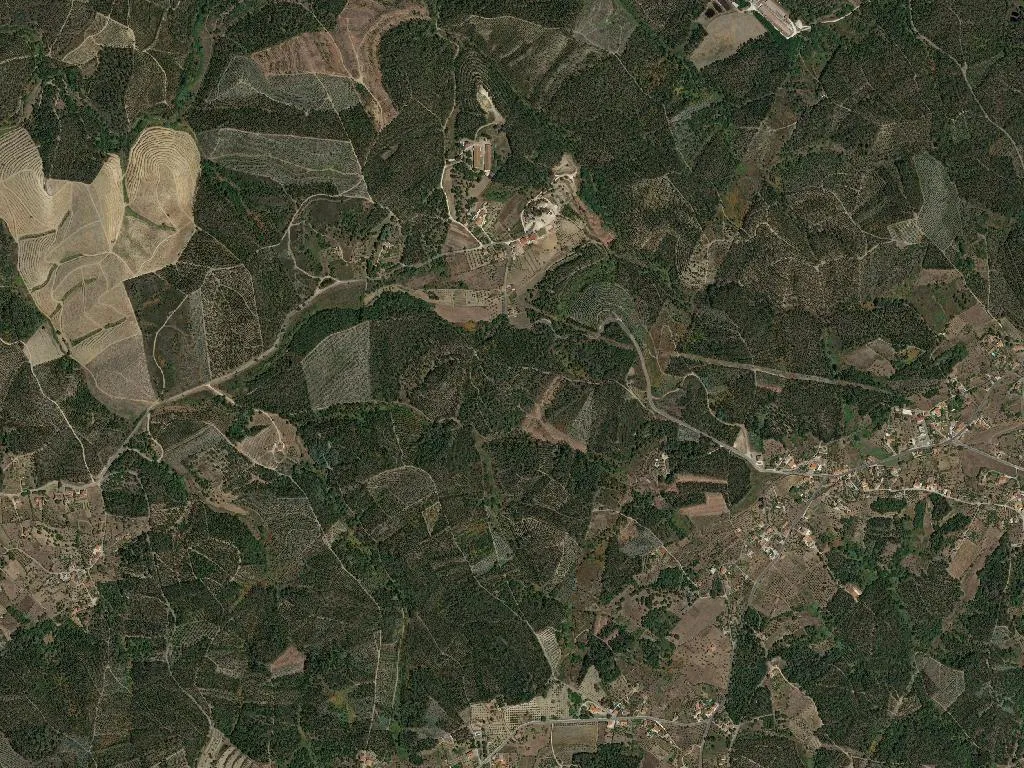
The tarmac warms beneath the tyres as the road climbs through a loose patchwork of pine and olive. Ahead, the hills of Ribatejo ripple like a crumpled tablecloth, their outline cut sharp against an unfiltered sky. Cicadas pulse, then stop, as if unsure whether anyone is listening. Olalhas never declares itself—no billboards, no brown heritage signs—just a scatter of whitewashed houses that slide into view along the N348, low stone walls corralling back-gardens where pear and olive grow side by side. Spread across 3,000 undulating hectares at 264 m above sea level, the parish keeps a population density of barely forty souls per square kilometre; you can walk for an hour and meet only a tractor.
Crossings & Stopovers
Three separate routes of the Camino—Central Portuguese, Interior (or Via Lusitana) and the Fatima branch—braid their way across these fields. There are no purpose-built albergues, no way-marketing every hundred metres; instead, pilgrims find beds in spare rooms of farmhouses whose owners leave a key under a pot of basil. Nine such places register overnight guests. Wake-up calls come from cockerels and the soft crackle of eucalyptus burning in kitchen stoves still lit in April. The demographic ledger reads like much of rural Portugal—1,216 inhabitants, only 105 under the age of twenty-five, 439 over sixty-five—yet gates are painted, vegetable beds weeded, orchards pruned. In the gardens, Pêra Rocha do Oeste DOP ripens to a sugar-sweet crunch; further up the slope, ancient olive trees deliver fruit for the co-operative presses that bottle Azeites do Ribatejo DOP.
Between the Tejo Vineyards and the Templar Citadel
Olalhas sits on the northern lip of the Tejo wine region, though vines appear as modest sub-plots rather than the serried ranks seen around Almeirim. Pine and cork oak still dictate the horizon; the local whites—Fernão Pires, Arinto—stay bright enough for seafood an hour from the coast, while the reds, mostly Castelão, carry just enough tannin to handle roast kid. No tasting rooms, no postcard-pretty quintas: wine is decanted from unlabelled glass flagons at Sunday lunch, poured by someone who remembers the vintage because it was the year the well ran dry.
Twelve kilometres east, Tomar’s Convento de Cristo dominates a limestone bluff, its Manueline window frozen in stone lace. Tour coaches rarely bother to look backwards, which is why the parish has become an unofficial dormitory for visitors who want the Templar story without the souvenir tat. Night here is properly dark; Orion hangs low enough to feel like a ceiling lantern.
An Unedited Afternoon
There is nothing to tick off. The parish church of São João Baptista unlocks at 11.30 for Mass; the café “O Pão de Cada Dia” sets out five aluminium tables where men in flat caps argue over the price of diesel. A single tractor, front loader stacked with olive prunings, rumbles uphill at 4 pm precisely. The menu is whatever Dona Amélia decides to lift from her pot: mint-and-black-eyed-pea soup, duck rice the colour of mahogany, chouriço blistered over open embers, an almond-and-egg-yolk pudding that tastes of Moorish occupation. Arrive by accident—perhaps rerouted because the IC3 was closed for resurfacing—and the impression is of stumbling onto a set after the director has called wrap: curtains billow from open windows, a radio murmurs fado, time keeps its own gentle cadence.
Dusk brings the scent of resin and sun-baked schist. Long shadows stitch the dirt tracks together; the church bell strikes once, twice, a sound so unhurried you half expect the sun to pause in acknowledgement before slipping behind the hill.