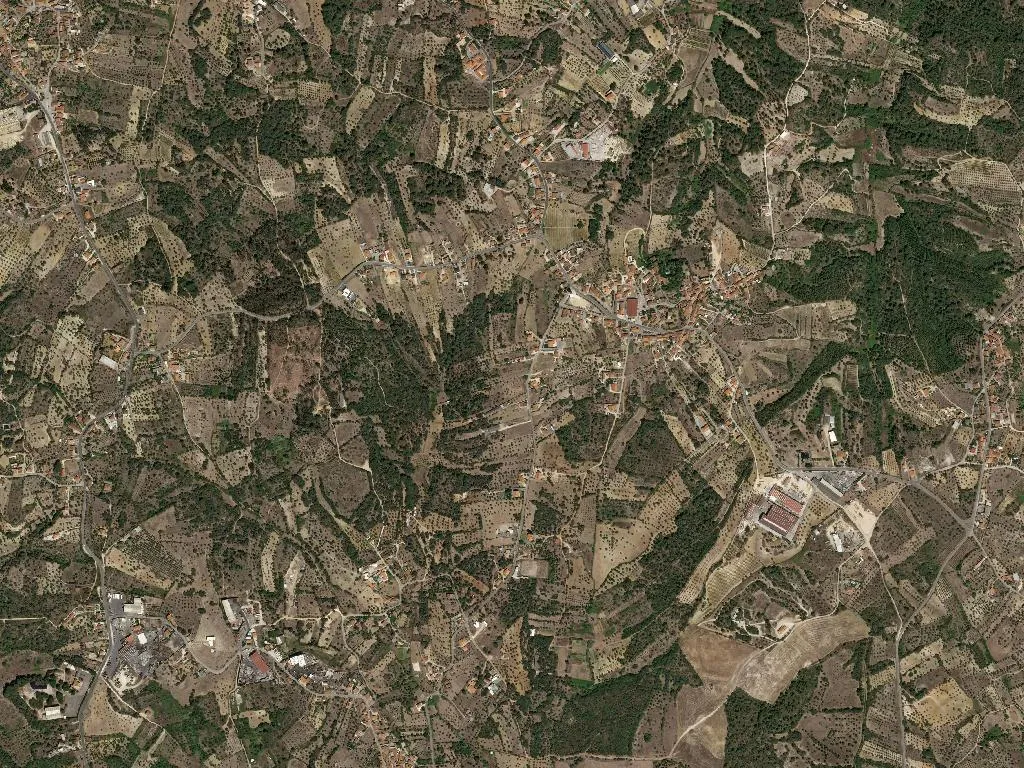
Full article about Assentiz: Bronze Arrows & Fossil Footprints
In forgotten Assentiz, unpaid 1598 chicken debts guard a locked church beside dinosaur prints.
Hide article Read full article
The bronze arrows have lost their shine
At the parish boundary the limestone stela is freckled where Santiago’s bronze arrows have rubbed away. They were hammered in for the Caminho Interior eleven years ago, yet the only feet that pause here belong to the occasional dog-walker. The tarmac drops to the Ribeira de Assentiz between derelict olive terraces and wheat left to its own devices. A stone spout, the Fonte de São João, disgorges water cold enough to numb a wrist; locals swear it chases rheumatism away, then admit they collect their drinking water from the tap at home.
Church & what circles it
The Igreja Matriz is kept locked. Knock at the north door and, if the sacristan is in the mood, he will let you into a nave that smells of beeswax and mouse. On the south wall a slate slab dated 1598 records an unpaid bill: six pairs of pullets owed for oil to keep the Blessed Sacrament alight. The debt is still honoured—twenty euros wired annually to the priest on St James’s Day, the chickens commuted to currency.
In the churchyard a calvary leans at a drunk angle; Christ’s head disappeared decades ago. Twenty paces away the Capela de São Sebastião unlocks only on 20 January for a single early mass, then returns to hibernation. From the knoll behind it you look over a chessboard of orchards where Pêra Rocha was grubbed up when prices collapsed; the squares are filling with rough pasture.
Tracks & prints
Three kilometres east the abandoned quarry at the Monumento Natural das Pegadas keeps Portugal’s longest sauropod roll-call: twenty prints baked into the limestone 175 million years ago. No ticket desk, no barrier—just a hand-written notice asking you not to picnic on the fossils. The signed “Moinhos Trail” once linked seven watermills; two have folded into the undergrowth, a third shelters sheep, the rest survive as ivy-clad punctuation marks beside the stream.
The council telescope on the São Sebastião hilltop has been broken since 2019. Griffons wheel overhead, but they are commuters from the Serra de Aire, not locals.
Where to eat
There is one restaurant, fluorescent-lit, on the N362. Wednesdays and Fridays it does lamb stew; ring ahead in case the cook’s mother is unwell. They serve chanfana here, but made with kid, not the old nanny-goat of Coimbra tradition. During the Festas de Santiago the town hall erects canvas taverns in the square: grilled sardines, bifana pork sandwiches, beer at supermarket prices—fine if you happen to be passing.
Assentiz corn bread, once baked in the communal wood-oven, is now a factory loaf coloured with caramel; the bakery sells out by ten.
What endures
On Saturday mornings the Lagar Cooperativo opens its steel doors. Bring your own bottle and the duty manager will draw off pepper-green olive oil for five euros a litre—identical to the supermarket label, only fresher. The first-Saturday flea market has long since forgotten agriculture; stalls groan with 1970s crockery and defunct Portuguese sewing machines.
At Epiphany four elderly men still shuffle round the square singing the Cantar dos Reis. Their voices crack on the high notes, they accept a glass of aguardiente, then shuffle home, one fewer some years.
Assentiz endures because leaving requires more imagination than staying. The young drift to Torres Novas or the university in Santarém; the fields revert to scrub; the church keys stay in the sacristan’s kitchen drawer. And those bronze arrows, already fading, point onward to Santiago for pilgrims who never came.