Full article about Brogueira Hamlets: Pêra Rocha, Limestone & a Rebel General
Pears, 175-million-year footprints and Humberto Delgado’s birthplace in Torres Novas’ quiet western
Hide article Read full article
Limestone, pears and a presidential birthplace
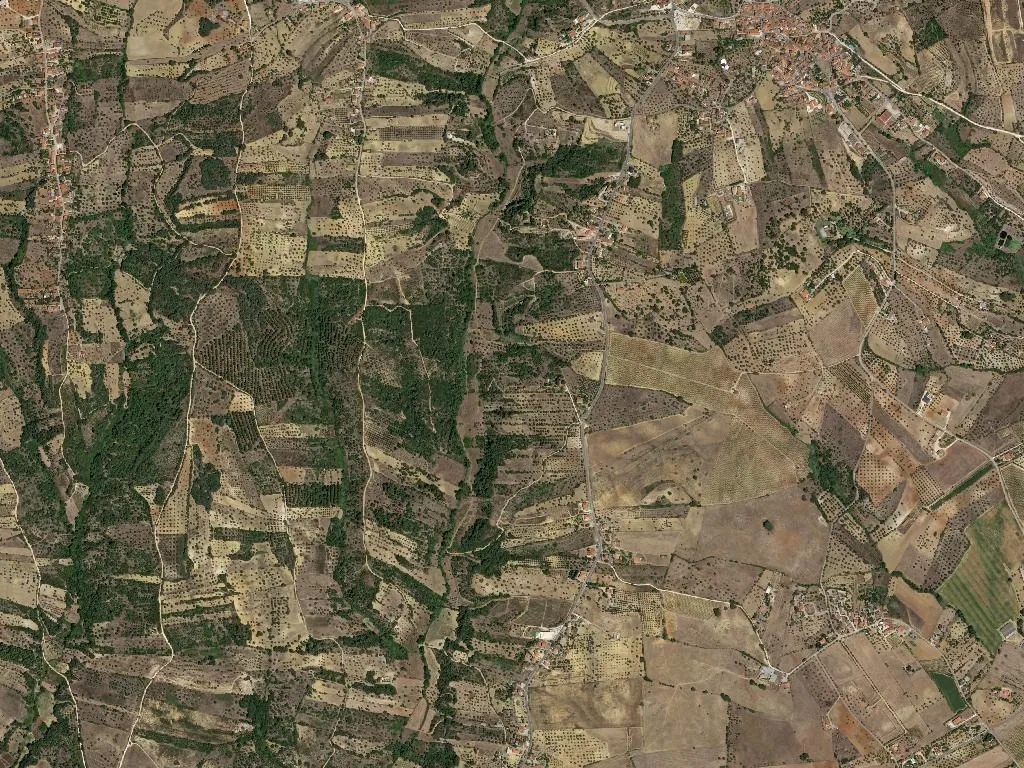
First light strikes the limestone escarpment above Brogueira, warming orchards of Pêra Rocha do Oeste and the silver-green fuzz of oliveiras. Since 2013 the three hamlets—Brogueira, Parceiros de Igreja and Alcorochel—have formed a single civil parish, yet their shared routines of pruning, pressing and harvesting long pre-date the paperwork.
The plateau sits only 70 m above sea level, but its 42 km² feel loftier: vineyards knit into the Tejo DOC, pear trees are trained to the strict geometry of DOP status, and olive oil is cold-extracted in mills where granite millstones sit beside stainless-steel decanters.
Where Humberto Delgado was born
The family house is gone, replaced by a modest plaque on a breeze-block wall. It is enough: locals still refer to “o general” as though he might appear at the café door. Brogueira produced the RAF-trained officer who flew Lisbon–Rio in 1958 to challenge Salazar, and the village keeps his clipped moustache alive in anecdote rather than memorabilia.
Census 2021 counted 2,602 souls; 828 are over 65, only 296 under 14. Density is 60 people per km², so the loudest sound is often a council bus changing gear.
175-million-year footprints and a pilgrim detour
The same limestone is part of the Ourém–Torres Novas Natural Monument, bedding planes stamped with sauropod tracks 175 million years old. Farmers use the slabs for gateposts; palaeontologists arrive with dental picks.
The interior branch of the Caminho de Santiago—called the Via Lusitana—cuts through the parish. Instead of albergues, five private homes offer spare rooms: book early during Holy Year. The route skirts pear plantations and stone walls warm enough to bake your palm.
Lunch for €8 and Thursday closing
Two tascas serve food, both shut on Thursdays. In Brogueira, blackboard chalk lists whatever the pot holds—perhaps sopa de nabos followed by borrego assado, irrigated with local Tejo red. Olive oil is poured from unlabelled bottles that never reach a supermarket shelf.
Arriving
Leave the A23 at junction 14, track the N3 for 8 km, then swing right towards Brogueira for another 5 km of tarmac trimmed by stone pines. Rodoviária do Tejo runs four buses daily from Torres Novas; two on Sunday.