Full article about Chancelaria: Where Olive Groves Guard Dinosaur Stone
Whitewashed lanes, Cretaceous footprints and river-cooled wine in Ribatejo’s quiet heart
Hide article Read full article
Afternoon Sun on Limestone
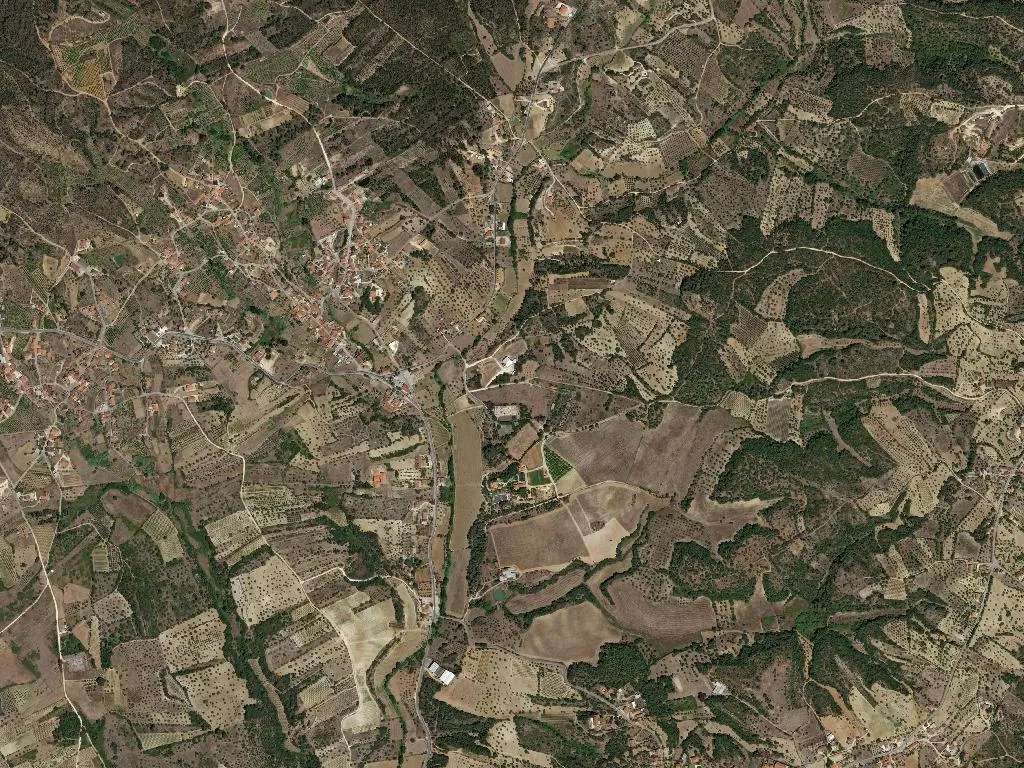
The late sun warms the whitewashed limestone and, somewhere beyond the olive rows, the faint murmur of running water crosses the plain. Chancelaria rises out of Ribatejo’s landscape as a place that refuses to choose between valley and hill. At 74 m above sea level the fields unroll until the eye gives up, and the light changes colour three times between siesta and supper. Silence here is not absence; it is birdsong, wind combing through olive groves, and—every Wednesday—the chapel bell that marks the end of primary-school lessons.
Footprints Older Than Memory
The Ourém–Torres Novas Natural Monument of Dinosaur Footprints technically sprawls beneath these fields, though no villager has ever tripped over a sauropod track. What they have seen are quarrymen levering out blocks for new walls, some returning with tales of “odd marks” in the stone. Only later did the geologists confirm what they’d been walking on. Tread the footpaths today and you step across Lower Cretaceous mud turned to limestone, but you also step where Joaquim planted his almond grove and where Ilda lost her shoe in the rice-paddy mud half a century ago, before the land was drained.
Way-marked but Nameless
Chancelaria lies on the Interior Route of the Via Lusitana, yet ask for the pilgrims’ path and locals simply shrug, “It’s the Camino de Santiago, isn’t it?” Footsore walkers appear in May and September, refill bottles at the village spring and enquire about coffee. There is coffee—if Dona Amélia is awake. The arrows scrape past Manel’s gate; he’s grown used to foreigners frowning at phones that insist north while the track itself seems to prefer south.
Olive Oil, Pears and River Wine
The olive oil is irrefutably local: trees my grandfather twisted into shape long before I was born. Their contortions owe less to time than to blunt pruning and modern tractors that refuse to swerve. The oil pours gold and catches the throat with a pepper the export market labels “intense”. Pêra Rocha arrived more recently when my cousin stuck a few grafts in Grandmother’s old vegetable patch. They aren’t quite Óbidos-standard, yet wooden crates of them shift briskly at Torres Novas market. As for wine, the Tejo denomination begins a 20-minute drive away; leave cash in the plastic bag on the neighbour’s step and the Cartaxo cooperative will have bottles waiting.
Clocks Without Hands
The parish roll claims 1 428 residents, a figure that presumably counts the ones who left and forgot to unregister. Mid-afternoon the streets belong to dogs and the slim shadows of telegraph poles. Humans re-emerge after five, when the heat slackens and the television has looped through its seventh rerun. Three houses offer beds: Dona Lurdes, who bakes orange-scented cakes for guests; Zé, who painted his late father’s house an implausible cobalt; and a sleek villa that stands empty because its owner moved to Porto and never answers emails. No one minds. Destination enough is the grocery doorstep gossip, the scent of burned pine from Sequeira’s chimney, the bread delivered daily—except Sunday—by tricycle from Lapas.
Night settles and lights switch on one careful bulb at a time; wages here won’t stretch to chandeliers. The sky, unpolluted, offers the constellations Lisbon reserves for its planetarium. Somewhere behind the last row of houses the perennial stream keeps its own counsel, an animal that knows the way home even in August.