Full article about Riachos: Bread smoke & dinosaur chalk in Ribatejo light
Riachos, Torres Novas: dinosaur trails, Caminho arrows, wood-smoke mornings and peppery new olive oil in Ribatejo’s white-oleander plain.
Hide article Read full article
The scent of just-baked bread and scorched eucalyptus
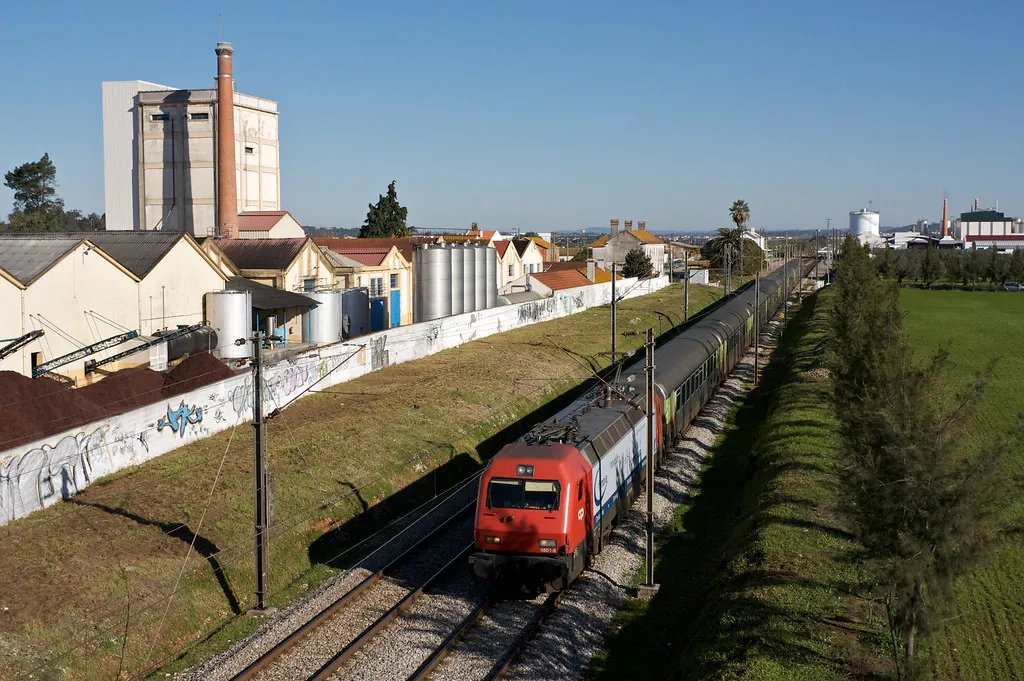
In Riachos the first thing that hits you is the smell: wood-smoke and yeast drifting across an ocean-flat plain where the Ribatejo light has the brutal clarity of a photographer’s lamp. The parish’s 4,990 inhabitants live under terracotta rooftops threaded with straw-coloured reeds, their gardens loud with white oleander. Nobody needs a calendar: when the irrigation arms begin their slow evening rotation you know, without looking, that it is late July.
175 million years in a limestone slab
Three kilometres north, the Serra de Aire’s dinosaur footprints lie baked into grey stone. As a schoolchild I was marched here to stare at the three-toed indentations; my grandfather insisted they were the Devil’s tracks, left during his fall from grace. Today the interpretation centre charges five euros for what once cost a pocketful of chestnuts, yet the plateau still smells of bruised nettles and warm chalk. Stand still and you can hear wind whistling through the fissures like breath through a flute.
Yellow arrows on the road to Santiago
The Caminho de Santiago has always passed this way – medieval pilgrims followed the same line of low hills – but only in 2014 did glossy yellow arrows appear on telegraph poles. Modern walkers pause at Zé Pedro’s café to refill plastic bottles and ask, shyly, if anyone rents rooms. Three households now do: Dona Idalina once ladled vegetable soup gratis, then discovered she could charge fifteen euros and still fill every bed. The marked trail bisects my father’s maize field; Manel’s mongrel barks the entire night whenever a backpacker pitches a tent beside the irrigation ditch.
Pear drops, new oil and anti-bird netting
Autumn announces itself when Pêra Rocha pears land in the café display, their freckled skin the colour of parchment. A single A4 sheet taped to the olive press door proclaims ‘Azeite Novo’; the first pour is violent – peppery, throat-catching, the colour of melted emeralds. In back gardens women still stir fig-and-cinnamon jam, though many now swap sugar for stevia ‘because the doctor says so’. Orchards shimmer with diamond netting sold by my cousin at five euros the metre; otherwise starlings strip every tree bare before the fruit can sweeten.
Emptying classrooms and diesel Seat Ibiza
The primary school runs two classes per year; in the nineties it managed four. Old men occupy the concrete bench outside the mini-market, issuing running commentary on every passing car. At fifteen the children leave for Torres Novas’ secondary school – ‘for a future’, mothers insist – and by four o’clock the bar is a tangle of rucksacks and cheap cola. Those who stay commute to Autoeuropa’s car plant in Palmela or stack shelves at the Intermarché twelve kilometres away, shrugging: ‘It’s what there is.’
What lingers after you leave
When evening light strikes the church tower and pigeons wheel above the olive press, Riachos smells of damp earth and sun-dried sheets. The bell tolls seven times for the week’s dead – three funerals last Thursday. Zé Manel still tills his allotment with a clattering two-wheeled tractor that predates the revolution, while Dona Amélia gathers chicory for her rabbits from the verge. Carry away the memory of bread from Zé Carlos’ wood oven braided with the resinous snap of eucalyptus logs – not postcard Portugal, but something that catches at the back of the throat when you breathe in hard.