Full article about Sunrise over Palhais-Coina, where Tagus light meets alluvial
Flat horizons, single-storey homes and 16th-century stone: life in Portugal’s forgotten parish
Hide article Read full article
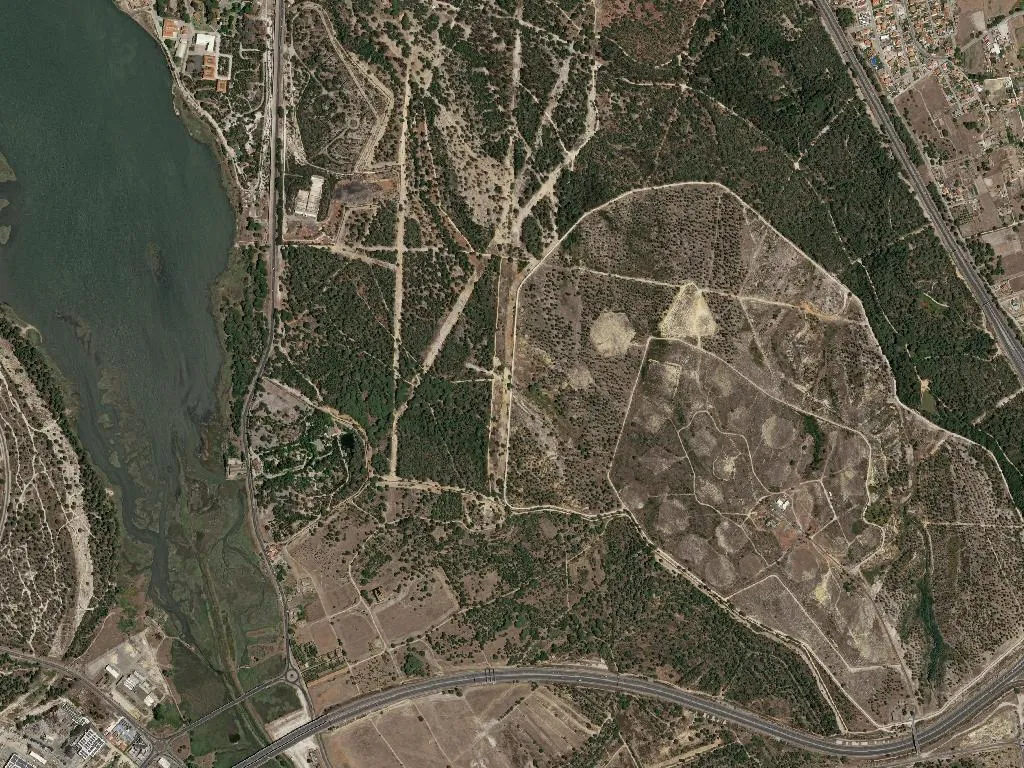
The light clocks the Tagus estuary first, slapping the water with the indolence of something that still hasn’t chosen between river and sea. What ricochets off the surface lands on 13 square kilometres of alluvial pancake west of Barreiro, a parish union nobody realises they’ve entered until the road signs change. At 35 m above sea level, the horizon is so obligingly flat that even a Lisboeta can read the horizon and know, instinctively, they have left the city.
Where the city gives up
Officially Palhais-Coina is a “transition parish”; in practice it is the place the dormitory blocks failed to reach. Population density is 264 souls per km² – room to stretch an arm without touching your neighbour, except on Friday morning outside the butcher’s when a queue forms that resembles a pocket-sized pilgrimage. The 3,642 residents occupy single-storey houses set in vegetable plots where a chicken is still raised for Christmas dinner. Census sheets say there are 742 over-65s and only 610 children, yet visit the Catrapona football pitch on a Sunday and you’ll swear every under-14 in Portugal appears at once, summoned like winter strawberries.
Two monuments and a reason to pause
The listed heritage fits in a single breath: the 16th-century Igreja de Palhais with its Manueline portal, and the ochre-washed Palácio da Coina, built by the Count of Lumiares for summer duck-shoots. That’s it. No aqueducts, no castles, no audio guides. Inside the interpretation centre the coffee machine hisses for the benefit of the curator alone. Architecture along the lanes is South-Bank standard: terracotta floors, whitewashed walls, sash windows the colour of tired eyes. Nothing clamours for attention; houses simply endure, stubborn as elderly relatives who refuse to move closer to hospital.
Wine that doesn’t intoxicate, only explains
The Setúbal Peninsula demarcation slips this far east, but forget postcard vineyards. Vines here pop up between vegetable beds and orange groves like discarded gardening gloves. The local Moscatel arrives in unlabelled bottles passed from cousin to cousin; you don’t buy it, you receive it. A wedge of sheep’s cheese or a neighbour’s olive-oil cake is the accepted accompaniment. There are four places to stay, all 1930s farmhouses restored by Lisboetas who recognised a bargain and kept quiet about it. Book late and you’ll be sleeping in Montijo.
The hour when everything makes sense
Stay until the Tagus swallows the sun. Façades turn the colour of burnt honey, even the bar dog grows philosophical, and you understand why no one has repaired the cracked windowpane in the old school: there is no hurry; time is not money here, merely something you use sparingly, like aguardiente after supper.