Full article about Carvalhal: Where Pine Resin Meets Atlantic Salt
Alentejo hamlet above empty dunes, scented by hot pine and iodine wind
Hide article Read full article
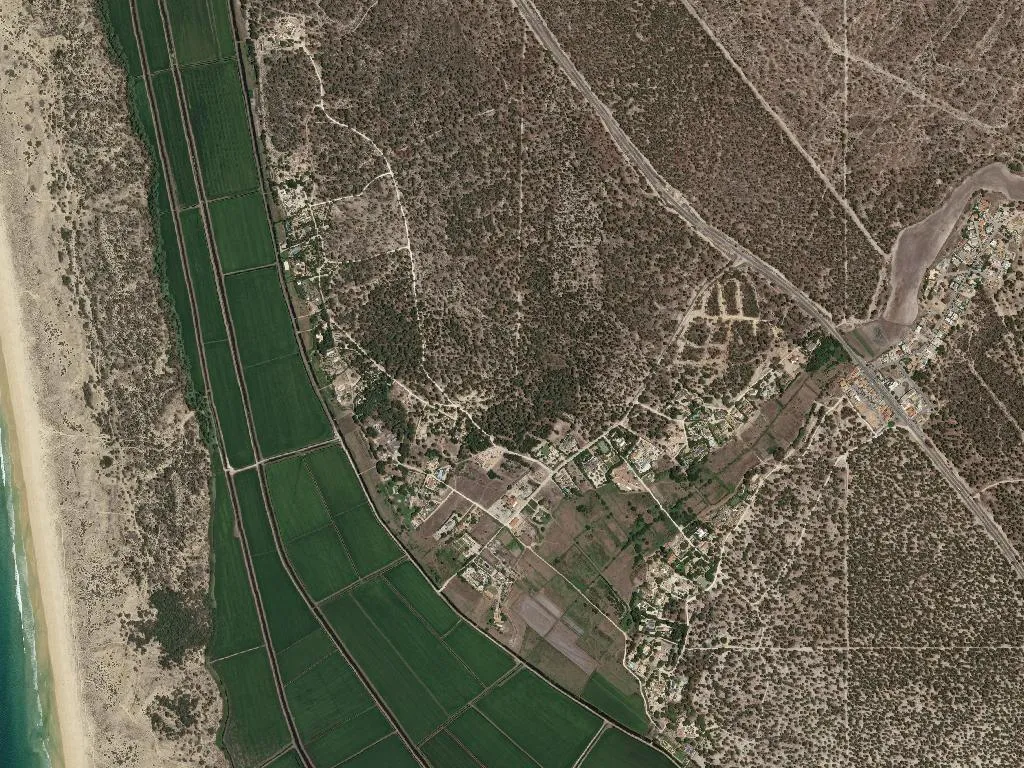
The tarmac dissolves into pale sand. Beyond the windbreak of umbrella pines the air is thick with hot resin and Atlantic iodine, a perfume that exists nowhere else on the Alentejo coast. From the ridge you hear waves long before you see them, the sound filtered through needles and cones, and the midday light – white, weightless – ricochets off the dunes hard enough to narrow your eyes. Carvalhal sits nineteen metres above sea level, a thin scatter of houses spread across 82 km² of sand and scrub, population density: eighteen souls per square kilometre. Horizon, pine, dune, sea: the landscape arranges itself in distinct, deliberate tiers.
Roots that pre-date the pines
The name remembers oak woods that once anchored these loose soils; today it is stone pines that throw the shade. In a royal charter of 1182, Afonso Henriques gifted the place to the Knights Templar – written proof that people have been counting on this ground for eight centuries. Life was shaped by dry-land wheat, hand-stripped cork and the seasonal fisheries of the Sado estuary. The arrival of the EN261 and, later, the A2 turned the parish into a plausible detour from Lisbon, but the village still keeps time by the tide tables and the angle of the sun.
Portugal’s most over-exposed bike path
Twenty kilometres of flawless asphalt slice straight through the forest, linking Comporta to Melides and passing within tyre-track distance of Carvalhal. Instagram has made the cycle lane almost as famous as the beaches themselves: an optical illusion of tarmac disappearing beneath cathedral-high pines, dunes shimmering at the far end, sky pinned overhead like a blue sail. Early riders get cool asphalt and air spiced with rosemary; by mid-morning the thermals rise and the scent shifts to warm pine and sun-baked sand. At Praia do Pego, Sal restaurant sets out coffee and orange cake on a terrace that overlooks nothing but white sand and the Atlantic’s slow breathing. Continue another two minutes and you reach Praia do Carvalhal, still free of beach-bar shacks on the foreshore – only high dunes, salt-bleached driftwood and a dependable surf break that empties at the first hint of on-shore wind.
Rice, razor clams and Setúbal whites
The parish kitchen treats land and sea as equal larder. Pans of eel or shellfish rice arrive at table the colour of sunset; açorda scented with estuary shad is bulked out with coriander and garlic; lamb stew carries the IGP stamp of Baixo Alentejo. Migas – breadcrumb hash – are tossed with DOP pork from black-footed Alentejo pigs. Desserts are monastic in their sweetness: queijadas made with fresh curd, honey cake dense enough to stop a door, toucinho-do-céu – literally “bacon from heaven” – a yolk-and-almond slab that defies the name. Vineyards fall inside the Península de Setúbal region: brisk whites from Fernão Pires and Arinto, darker, sun-warmed reds of Trincadeira and Castelão. Finish with Serpa sheep’s cheese and a slice of Carnalentejana DOP beef and you have the full, certified pantry.
Dolphins at dawn, flamingos by chance
The Sado estuary begins five kilometres north, where a resident pod of bottlenose dolphins follows the receding tide like clockwork. Boatmen leave from Carrasqueira’s rickety stilted pier and will cut the engine so you can hear the animals breathe. Closer to the village, Lagoa Formosa acts as a service station for migratory birds – glossy ibis, slender-billed gulls, the occasional flamingo pausing to refuel. Pine-trunk footpaths lead south-east towards Comporta’s estate lands, threading purple heath and low scrub so quiet the only sound is the crunch of needles underfoot. Mediterranean weather keeps the calendar open: dry summers, mild winters, walking boots or binoculars valid any month you choose.
Stay until the light turns buttery. Climb the highest dune above Carvalhal beach and the wind flicks sand against your calves while the ocean unrolls in parallel white lines. The salt smell thickens as the sun drops; the ridge behind you cools first. Sit long enough and the village stops feeling like a detour and starts feeling like a place you were always meant to find – at least until the tide swings back and rewrites the coast again.