Full article about Between Two Blues: Melides’ Dune-Ridge Dawn
Feel chilled Atlantic sand slip underfoot while flamingos pose on the mirror-calm Lagoa de Melides
Hide article Read full article
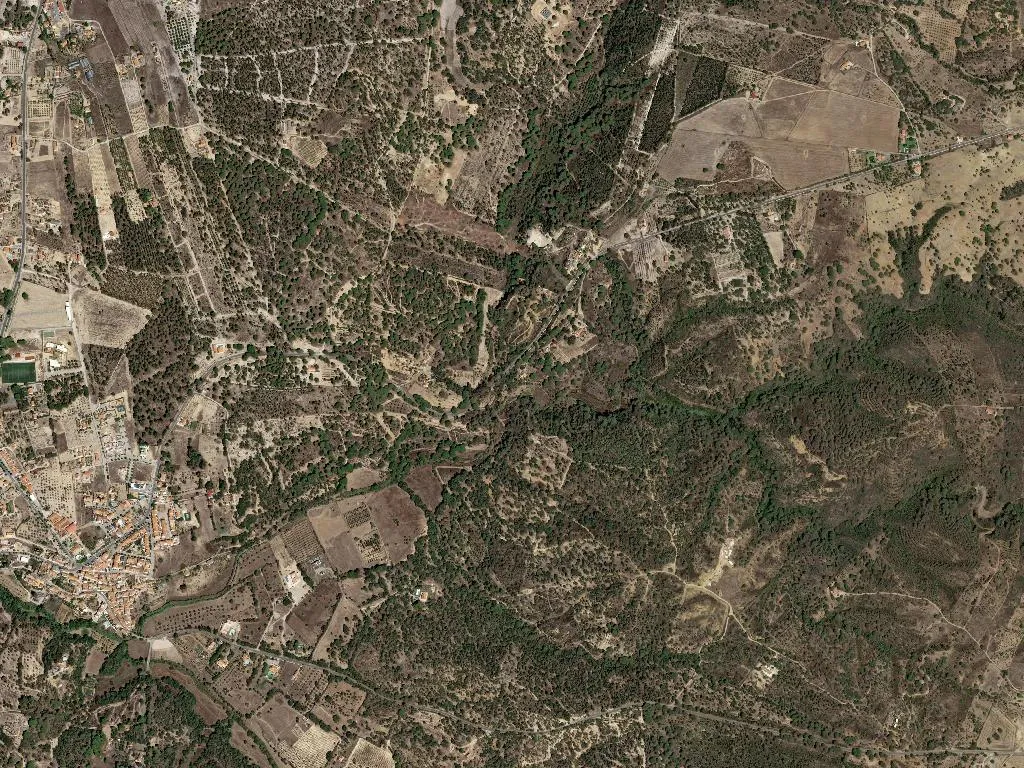
The sand still holds last night’s chill when you step onto the ridge. Barefoot, you feel it shift and squeak—an audible reminder that only 200 metres of dune separate two ecosystems. On one side, the Atlantic unloads in orderly sets, cobalt water that has travelled 5,000 km uninterrupted. On the other, the Lagoa de Melides lies glass-still, green as Chartreuse, a mirror for flamingos that balance like lithe ballet students. Between them, the morning sun warms the resin of umbrella pines and the scent rises like a struck match.
Salt and Stone
The parish church dominates the square with the composure of a building that has watched empires shrink. Rebuilt in 1757 after the earthquake that shifted the river mouth, its walls are almost a metre thick—stone insulation against both August heat and the century’s political weather. Granite blocks of the 1876 bridge over the Ribeira de Melides have been polished by cartwheels, wellingtons and the brackish tide that still sneaks inland twice a day.
Walk a kilometre south-east and you find the palheiros: low, clay-and-timber huts once used by rice farmers and net menders. Their walls, a sandwich of compressed earth and woven cane, stay cool without air-con; inside, the air smells of smoked eucalyptus and drying grass. A few still function as tool sheds, but most stand empty, their plaster flaking to reveal the basketry skeleton. Above them, Cerro da Mina’s windmill—built 1892, retired 1954—keeps vigil, its immobile sails now the village’s weather vane for memory rather than wind.
Where Fresh Water Learns to be Salt
At 800 hectares, the lagoon is one of Portugal’s largest coastal wetlands south of the Tagus. A three-kilometre boardwalk, installed in 2018, threads through dunes and reed beds without disturbing the 240 bird species that breed here—among them Europe’s southernmost colony of blackbirds, their song a liquid trill that ricochets off pine bark. Rent a sit-on-top kayak at dusk and you’ll push through reflections of Grândola’s sierra, the paddles dripping molten copper as the sun slips behind the hills.
Beyond the inlet, Praia de Melides unrolls for four kilometres of wheat-coloured sand. The swell is consistent enough to draw Lisbon surfers when a north-westerly blows, yet roomy enough for you to plant a towel the size of a tennis court and see no neighbour. It was here that Samsung shot its 2021 Galaxy advert, chasing the high-definition Atlantic light that directors can’t fake in a studio. Just east of the access boardwalk, archaeologists mapped Roman fish-salting tanks and Punic amphora shards—evidence that salted commerce thrived here between the 2nd century BC and the 5th AD, long before hashtags.
Table Between Cork Oaks and Tidal Mud
Order the eel stew at Casa da Rosa and it arrives in a black clay pot, coriander and garlic rising like incense. The meat slips off the bone in sweet, river-salty fibres; mop it up with pão alentejano—a sourdough whose crust could double as body armour. Follow with roast lamb from the Baixo Alentejo, the fat caramelised in a wood-fired oven until it shreds at the nudge of a fork, sided by migas of wild asparagus and yesterday’s bread. Finish with a sliver of Serpa DOP cheese, whip-cream yellow, and a queijada de Melides—pastry that explodes into cinnamon-dust and candied-egg confit. The wine list starts with a 2019 Periquita, the grape that an exiled English wine merchant, William Carrington, introduced here in 1830; its earthy note tastes of sun on pine needles and pairs with everything the Atlantic or the montado can provide.
Pilgrims, Boats and Moonlit Challenges
On the first Sunday of May, tractors polish the cobbles for the Romaria de Nossa Senhora da Conceição. The procession leaves the 18th-century chapel, circles the square and returns, but the real liturgy begins after dark when cantigas ao desafio—improvised poetic duels—carry until the café runs out of aguardiente. In mid-August, the Círio dos Pescadores sees every working boat in the lagoon dressed with marigolds and signal flags; the parish priest blesses each hull while the helmsmen stand caps-in-hand, an invocation older than outboard motors. The monthly livestock fair, held on the first Saturday, turns Praça da República into a handshake economy: cork-ox muzzles, Alentejo foals, and Iberian black piglets changing owners without a single printed contract.
When the sky bruises towards night, flamingos lift from the lagoon in ragged squadrons, necks bent like question marks against the orange. Their wings beat a low, metallic drum that rolls across the water. Only then do you grasp the village’s quiet sleight of hand: two hundred metres of sand are enough to keep two worlds intact, yet Melides has always insisted they are the same world, simply viewed from opposite banks.