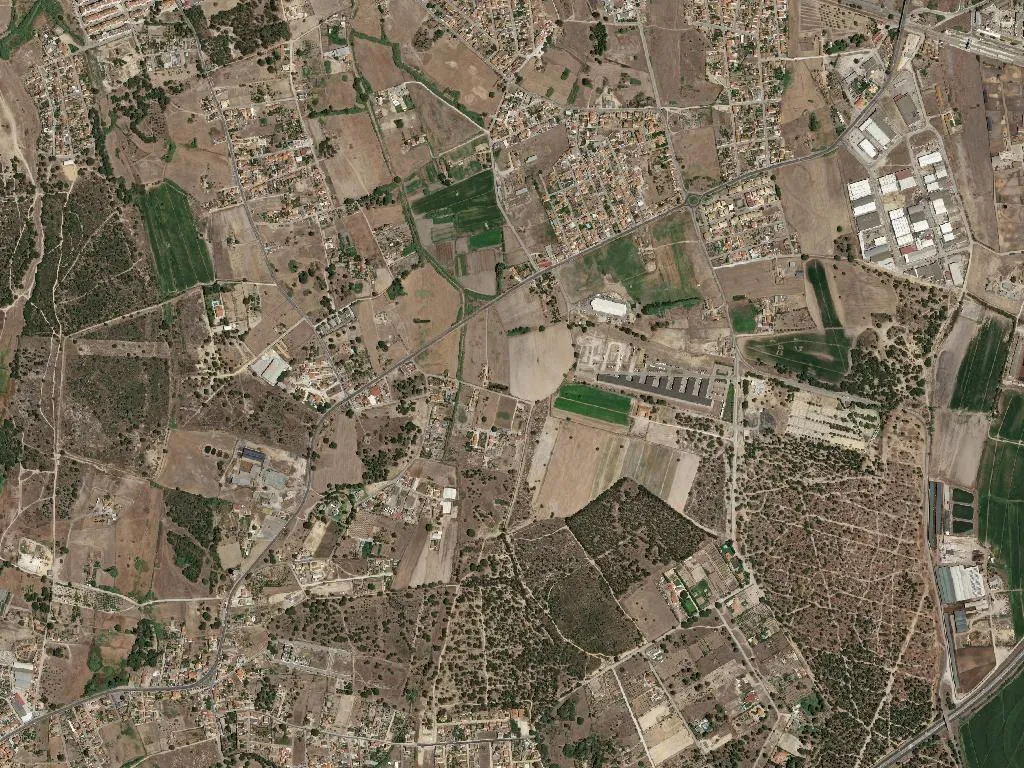
Full article about Alhos Vedros
Alhos Vedros, Moita – riverside tide-mill ruins, baroque church glow and Tagus salt-pan vistas minutes from Lisbon.
Hide article Read full article
The smell comes first. A damp exhalation of estuarine silt and brine drifts up from the riverbed when the tide slips away, braided with the green snap of coriander leaking from a kitchen that opens straight onto the square. At Cais da Palha the Tagus peels back to expose a slick brown skin of mud, cracked by silver rivulets that catch the morning light and shatter it into splinters. This is how Alhos Vedros wakes – not to the clatter of commerce but to the estuary’s low, wet murmur, herons poised like white tent pegs in the marsh, a single bicycle ticking along the riverside path towards the ruined Forte da Casa.
Wild leeks and crusader plots
The parish’s name is a pocket of medieval botany: “vedros” is an antique plural of “green”, a nod to the glaucous blades of wild leek (Allium ampeloprasum) that once colonised these low Tagus fields. After the 1458 Portuguese capture of Alcácer-Ceguer in Morocco, King Afonso V parcelled out the land to returning knights; the settlement was promoted to parish status in 1539. For the next four centuries life orbited two axes: rain-fed cereals and legumes on the higher ground, and salt extraction from the tidal pans that quilt the shore. Eighteenth-century evaporation cauldrons and warehouses still stand beside the estuary, built to exploit one of Europe’s largest tidal ranges – a spring amplitude of 3.6 m. The stone-and-timber tide mill that ground grain here until 1952 slumbers beside the sluice gates, its oak beams swollen and liquorice-dark after seventy years of damp.
Lioz limestone and a baroque glimmer
The parish church occupies the central square with the quiet composure of something that has already survived an earthquake. The 1755 quake took down part of the nave; the rebuild gave it a single barrel vault, a modest pediment and, inside, an early-18th-century gilded altarpiece that harvests the thin light from high windows and returns it as warm amber. Outside, the 1862 Chafariz do Largo da Igreja – a royal fountain carved from lioz limestone and stamped with the coat of arms of King Luís I – no longer spills water, yet its polished lip is still cool to the touch. A two-minute walk away the tiny Manueline chapel of Nossa Senhora da Saúde waits all year for its September romaria: a candle-lit procession from the mother church, slow hymns, and trays of doughy cake and muscatel handed round. On the eve of St Paul – 24 January – the village re-enacts the Noite dos Fachos, lighting pyres to “burn the cold” and, older residents insist, any lingering evil eye.
Eel stew, bread that drinks the river, and a glass of Setúbal
The parish plate tastes of the estuary. Tagus eel stew is simmered with tomato, onion, smoked paprika and a handful of coriander, then poured over slices of corn-bread that soak up the bronze liquor until they resemble river clay. Açorda de marisco – clams, razor-shells, prawns – arrives steaming under a drift of coriander, the poached egg dissolving in the centre like a pale miniature tide. Salt-marsh lamb, grilled over vine prunings, shares table space with Merino reared on the surrounding plains and certified Carnalentejana DOP. Finish with a half-moon “horseshoe” cake of eggs and cinnamon, or a torta de gila dusted with icing sugar that clings to the fingers. A chilled glass of white moscatel from Setúbal’s nearby vineyards cuts through the salt and lingers like a low, sweet note on the reed flute.
Salt-pans, flamingos and a wartime airstrip
The Salgados Trail starts behind the parish hall and loops eight kilometres through vegetable plots, tide channels and the bird hide at Cais da Palha. The seasonal Alhos Vedros stream empties into the Alfavaca arm of the estuary – a Natura 2000 site – funnelling spoonbills and migratory flamingos that smear the green marsh with sudden pink. Weekends offer a forty-five-minute trip in a traditional flat-bottomed boat, paddled in near silence over the Tagus’ thick, mirror-bright water. Locals still trade a quieter story: during the Second World War the football pitch doubled as a clandestine landing strip for RAF Lysanders ferrying SOE agents into the Iberian Peninsula – a memory buried beneath the scuffed grass where children now chase goals instead of ghosts.
In the municipal garden the Cavalinho de Pau – a wooden hobby horse carved in 1940 from Tagus driftwood – leans forward as if forever galloping against the current. It is the last image most visitors carry away: not a solemn monument, but a stubborn toy fashioned from timber the river tried to claim and failed.