Full article about Canha’s oak-shadowed lanes and cork-scented air
Cork oaks, baroque smoke and Lusitano hooves in Montijo’s quiet village
Hide article Read full article
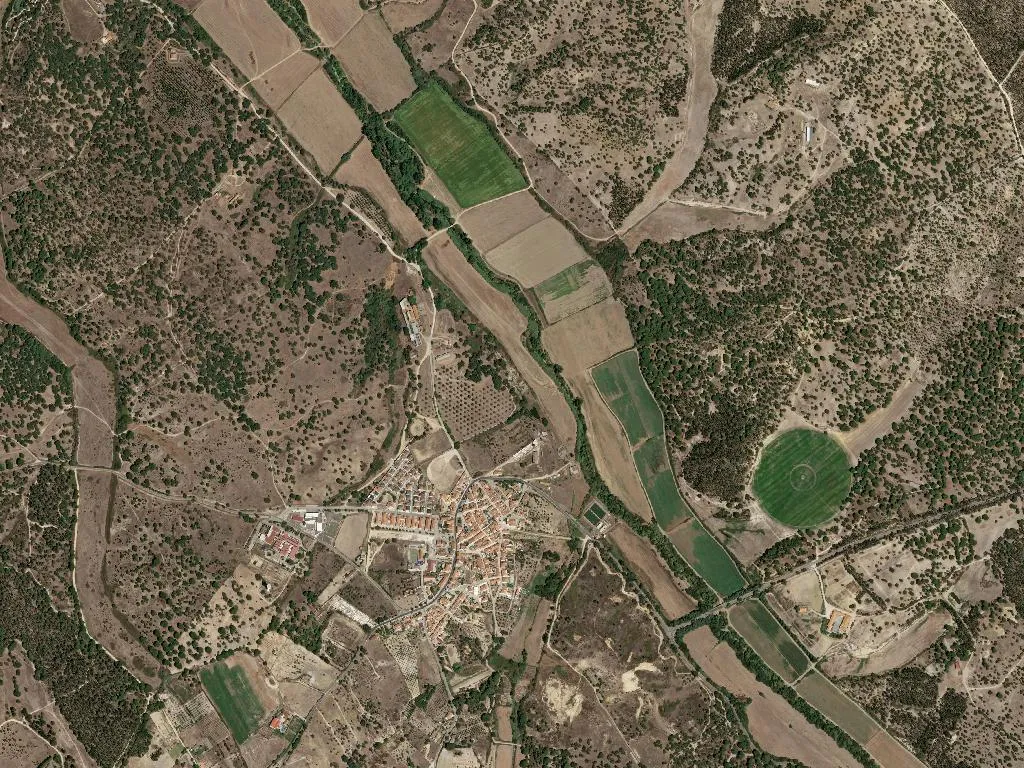
The smell hits before the water comes into view: damp earth, iron-rich, rising off the Ribeira de Canha like breath. Tall reeds—cannae to the Romans who first mapped this valley—shiver in the breeze that drifts up from the Tagus estuary fifteen kilometres north. It’s a green-mineral note, cut with the faint woodsmoke that slips from chimneys when the sun drops and living-room hearths are lit. Canha inhales and exhales slowly, suspended between stands of cork oak and vineyards that run to the razor-flat horizon of the Ribatejo plain.
Cork, smoke and the parish oak
In the cobbled square a single cork oak, classified of public interest, throws its century-old shadow across the churchyard. The bark is elephant-thick, fissured like dried riverbeds, the colour of weathered limestone. Local men still gather on the stone bench beneath it, backs against the trunk, arguing over rainfall figures and the price of olive oil while the Old Fountain—a 46-metre artesian bore—keeps up its cold, metallic chatter. Push the heavy door of the 1750s mother church and baroque gilt flares in the half-light, candle smoke drifting round gilded cherubs.
Whitewash flakes from the last surviving single-storey cottages—walls of mud and cane, low eaves painted ox-blood red, shutters the colour of oxidised copper. Behind them, pocket-sized gardens squeeze in lemon trees and rogue figs that push through walls. Down by the stream, stone presses and mill races lie roofless, ivy threading the flywheels that once drove olive pulp. The water still moves, but no one is watching.
Estates, Lusitanos and the taste of bravo
This is latifúndio country: estates measured in square miles, not acres. At Montinho and Escatelar the cork savannah is laid out like a pattern book—widely spaced oaks, holm trees twisted by Atlantic gales, hedgerow olives older than the railways. Monte das Mós breeds Lusitanos for the Portuguese School of Equestrian Art; stallions graze behind traditional stone-and-chalk stables, tack rooms smelling of saddle soap and saibro beaten earth. Ride the sandy tracks and you fall in with the landscape’s slow metronome: hoof on dry ground, oak leaves scraping, a short-toed eagle calling from its thermal staircase above the valley.
Moinho Novo estate plays the experience differently—farm-to-table lunches, donkey grooming for children, bird-watching hides—but the village tavern is where the land ends up on the plate. Try migas—fried breadcrumbs soaked in lamb stew—then steak from Bravo do Ribatejo cattle, grass-fed and grilled over holm-oak embers. Eels caught the same dawn are simmered with coriander and vinegar; the bread is a 50-50 mix of wheat and rye, chewy enough to demand the Peninsula de Setúbal red, its schist-and-sun tannins cutting through fat. Finish with olive-oil cakes, still warm, freckled with sugar.
A tidal plain that breathes
Canha sits on the eastern rim of the Tagus Estuary Natural Reserve. Twice a day the Atlantic exhales fifteen kilometres away and the village feels it: channels of brackish water finger across the fields; temporary ponds appear overnight; white storks spear frogs in the ruts. Marsh harriers hang motionless, eyeing voles. The signposted Ribeira trail squelches through reedbed and willow carr; red clay clings to boots like wet terracotta. In November mist the stream is heard, not seen—a low, constant syllable under every footstep.
Lisbon is twenty minutes west via the Vasco da Gama bridge, yet Canha keeps rural time. On the first Saturday of the month the parish council forecourt becomes a micro-market: DOP Riscadinha apples from Palmela, cloudy olive oil in re-used Fanta bottles, sheep’s-milk cheese wrapped in laurel leaves. Conversations pause for whole sentences of silence. The proposed “complementary” airport—touted to relieve Lisbon’s congested Portela—hovers over every discussion like a weather front, but for now the soundscape is simpler: wind in the cork oak, the noon bell from the matriz, a neighbour’s rooster that never learned the dawn schedule.
At dusk the light lies almost flat, gilding the savannah, stretching tree shadows into kilometre-long calligraphy. The Old Fountain still spills cold, clear water, just as it did when Romans planted the first reeds and named the place after them.