Full article about Pegões: where marsh-mirror dawn meets land-reform furrows
Tagus winter ponds, 1974 wheat-to-vine smallholdings, 1751 gilt altarpiece, silent 1989 station
Hide article Read full article
Dawn on the threshold of two regions
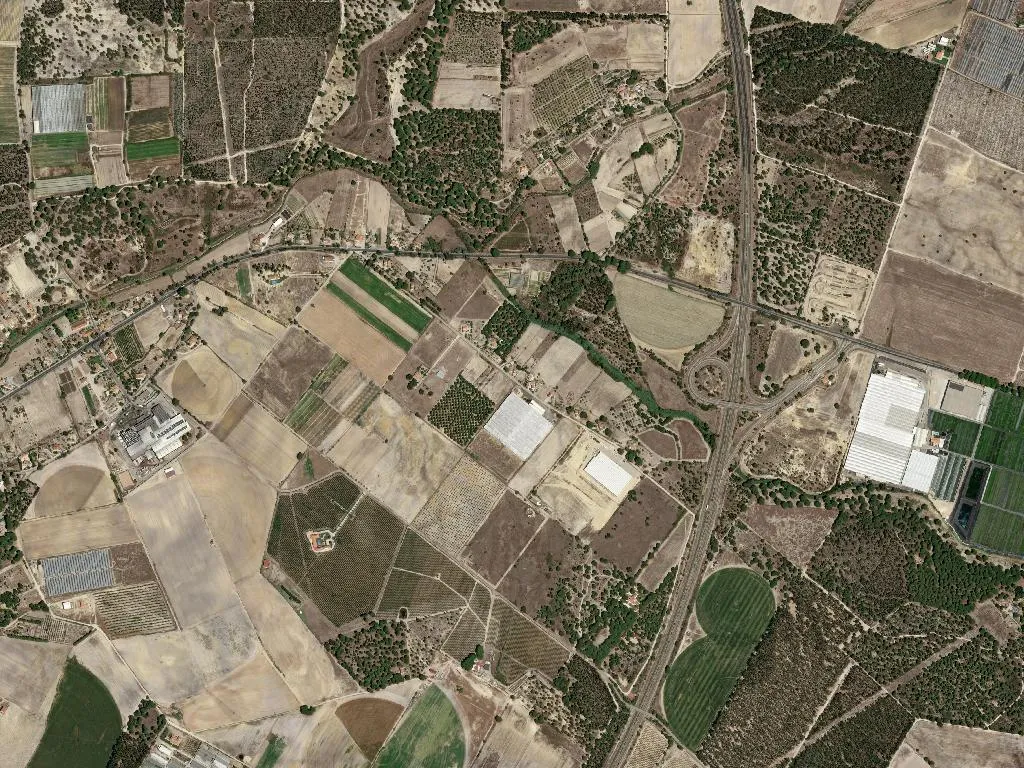
A freight train’s whistle rips the half-light above the Tagus alluvial plain. Below, the winter marshland—locally called lezíria—lies under a skin of silver mist; olive trunks stand ankle-deep in mirror-bright pegões, the seasonal ponds that baptised this parish. First light gilds the willow canopy along the Coina River, then thins over cracked-earth vineyards drawn with set-square precision. The air smells of damp loam and the distant brackish breath of the estuary, only 20 km away as the flamingo flies.
Land reform in puddle country
History here accelerates in a single year. After the 1974 Carnation Revolution, 380 new farmers arrived to work 6,000 ha of expropriated estates once owned by the Viscounts of Asseca, the Companhia das Lezírias and the House of Abrantes. Wheat monoculture gave way to a five-to-fifteen-hectare patchwork, first run as co-operatives, later as family holdings. Roman roof-tiles found on Cabeço do Pinheiro and a 1385 royal charter that mentions the villae of Coina now sit beside memories of shared Fiat 411 tractors and stormy parish-hall assemblies. The name Pegões, recorded as early as 1334, still describes the landscape: shallow winter depressions that turn roads into causeways and vineyards into reflective sheets.
Stone, gilt and a station clock frozen at 1989
The built heritage whispers rather than shouts. São João Baptista parish church, rebuilt after the 1755 earthquake, shelters a 1743 gilded carved altarpiece by Setúbal’s Ferreira brothers; candlelight ripples across its undulating surfaces. The tiny 1705 Chapel of Santo António, vowed during a plague outbreak, fills on 13 June when a brass band, trays of chouriço and the obligatory pimba soundtrack turn Dr. Francisco Sanches Street into an open-air tavern. Pegões-Gare station opened on 28 April 1861, became redundant on 1 February 1989, and now keeps an Ovar-made wall clock and the needle telegraph used during the 1934 railway strike. At the edge of the Tagus Estuary Natural Reserve, the 1601 tidal mill on the Coina—its granite encrusted with salt—has been a listed monument since 1982; the sluice gates still operate when the moon co-operates.
Cuttlefish bread pudding and cooperative Castelão
Cooking straddles the Ribatejo–Alentejo divide. Açorda of Coina cuttlefish—garlic and coriander pounded in a marble mortar—floats on toast from Alhos Vedros bakers. Spring lamb stew scented with fresh mint is finished in black Molelos clay pots; the same vessels appear again for January-to-March feijoada made with knuckle bones during the pig-killing season. Roast suckling emerges from the wood oven of Canto do Sabor at 13:00 sharp on Sundays; order 48 hours ahead if you want crackling. Parish sweet tooth? Try the 1958-vintage pão de Deus—a fluffy bun glazed with grated coconut—at Padaria Ginja, or Easter folar braided with the recipe nuns once carried from Madre de Deus convent in Lisbon. Pegões lies inside the Península de Setúbal wine region: 247 micro-producers bottle Castelão reds and Fernão Pires whites. The 1955 co-operative winery opens by appointment (€3, includes a walk through the 1962 granite lagares). On Wednesday’s market in Praça da República look for Ribatejo DOP beef and Palmela’s striped-skinned maçã riscadinha apples.
Flamingos at eye level
The 4.8-kilometre PR4 footpath—Trilho dos Pegões—glides along the eastern rim of the Tagus Estuary reserve. Raised wooden hides give eye-level views of greater flamingos between October and March; late afternoon brings spoonbills and glossy ibis. Drains cut in the 1930s criss-cross otherwise flat salicornia marsh; willow galleries mark the Coina’s last bends before the river surrenders to the tide. Inside the 1952 primary-school-turned-visitor-centre, an 1887 map shows the coastline before the Port of Lisbon breakwaters shifted it. Cyclists find 65 m of total elevation gain and only 120 vehicles a day on the EN378—essentially a country lane perfumed with wild fennel.
When the final egrets glide back to eucalyptus roosts at Quinta do Outeiro and bakery smoke rises straight into still air, Pegões reveals itself as a landscape of slow accumulations: winter water in name-giving hollows, gilt in modest chapels, stainless-steel tanks filling with next year’s wine, memories of land reform lingering in doorways. Somewhere beyond the marsh the same freight train sounds its horn—this time farther off, already crossing the estuary’s glassy flats.