Full article about Poceirão & Marateca: vines, salt wind and silence
Walk 28,000 hectares of pasture, flamingo-flanked Sado mud and ageing cork oaks
Hide article Read full article
Where the Vineyards Meet the Salt
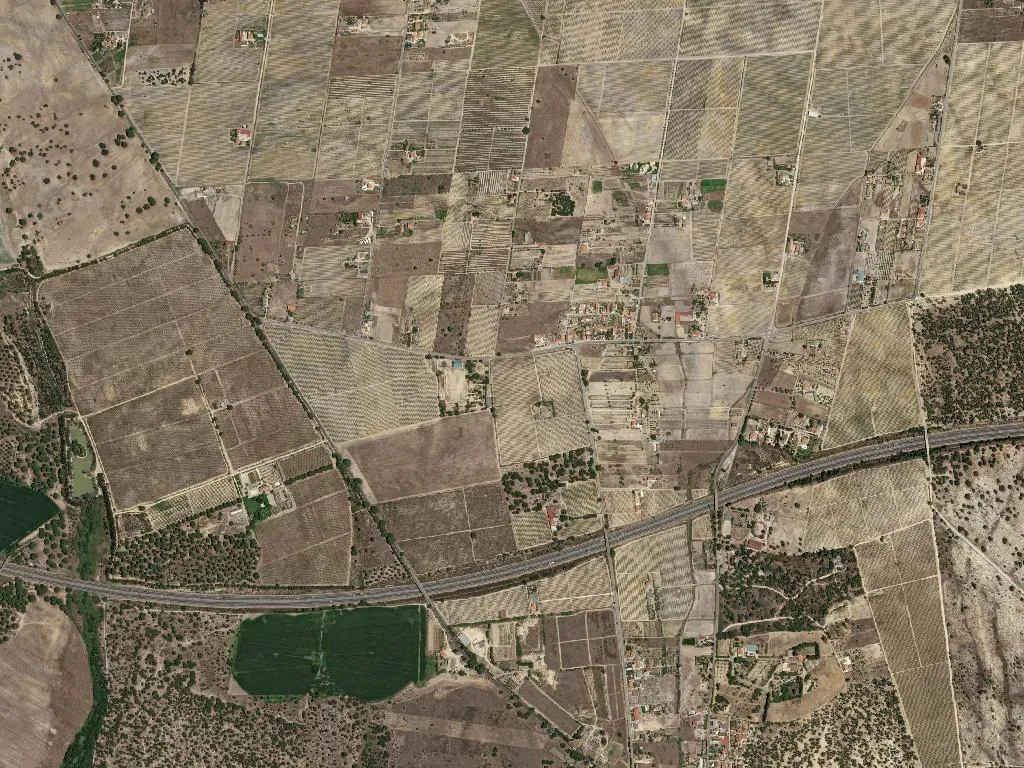
The first clue is the scent – not yet of the earth, but of the breeze carrying the salt of the Sado mixed with the warm aroma of holm oaks. We are less than forty metres above sea level, on a plain that seems to stretch endlessly, and the air has that September clarity: dry, clean, with a light that makes each olive leaf look hand-cut. In the distance, a tractor the size of a toy moves across an ocean of vines. Closer, the dry leaves of the vine crunch underfoot. This is how you enter Poceirão and Marateca – not through a grand gate, but by feeling time slow until urgency simply dissolves.
28,000 hectares where silence outnumbers people
Spread across more than 28,000 hectares – an area larger than many entire municipalities – live 8,811 souls. That is roughly thirty-odd inhabitants per square kilometre, meaning you can walk for kilometres without meeting anyone. Census data note 2,300 residents over 65 and only 1,065 children. Translation: plenty of people who remember the fields before tractors, and far fewer who will stay to work them.
"Poceirão" derives from the Latin pocerium, a place of pasture, and it still is: open ground, distant flocks, sheep like white full stops on a parchment of dry green. "Marateca" no one can quite explain, but it sounds right – it sounds like soil. The two parishes were officially merged in 2013, yet locals will tell you the land had already done the paperwork long ago.
Between the Sado and the Arrábida
Here the Sado estuary is not a scenic backdrop glimpsed from a miradouro; it is simply there, to the north, reached by dirt tracks where herons give you the sidelong stare of bouncers who know you don’t belong. Binoculars are unnecessary – stop, wait, and the flamingos appear, pink against the grey mud, producing photographs better than any postcard.
To the south, the Arrábida hills act as a weather shield: long, dry summers, mild winters, grapes given time to decide what kind of Moscatel they want to become.
What you eat, what you drink
Wine tastings happen at the quinta, but the real ritual is this: Moscatel de Setúbal served in small glasses, preferably in the shade, while conversation meanders between rainfall and the price per kilo. Around the glass, the food is what has always been made: lamb stew thick enough to demand bread, seafood açorda because the estuary is just over there, sopa da panela that tastes like comfort in bowl form. Queijo de Azeitão arrives at the perfect temperature – slice off the top and let the cream meet crust. Olive oil goes on everything, as it should. In autumn the Maçãs Riscadinhas appear, red-striped apples that snap when you bite.
When the harvest arrives
From September to October the plain wakes up. Suddenly there are people in the vineyards, plastic crates stacked high, the metallic snip of secateurs. Taking part in the vindima is to understand why visitors book local rooms – not to gaze at the landscape from a balcony, but to stand inside it: sand in your shoes, the weight of grapes in your hand, the skins warm from the sun. It is work, but work done to the rhythm of conversation, punctuated by water breaks or a quick espresso.
End of day
When the sun begins to leave and the cork oak scrub turns rust-coloured, the place is distilled into a single gesture: tilt the glass of Moscatel against the last light and watch, through the gold, the line where the vineyards end and the estuary begins. There the land gives itself to water without drama, without ceremony – a quiet "see you tomorrow".