Full article about Quinta do Anjo: vines, angels & Sado-salt air
Quinta do Anjo, Palmela, hides Roman wine troughs, 17th-century angel legends and seafood best washed down with Moscatel de Setúbal
Hide article Read full article
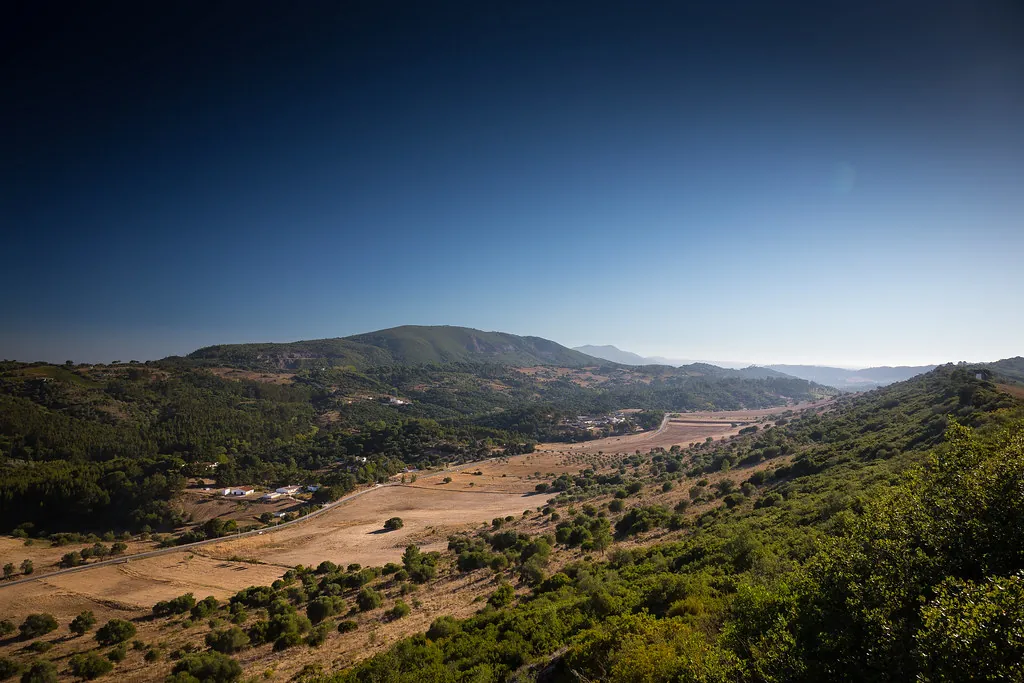
Quinta do Anjo: where the vines remember the estuary
The scent arrives first. Fermenting must drifts through the lanes, laced with brackish salt the Atlantic wind drags up the Sado. By mid-September the air itself is purple; tread a pavement and your soles stick with escaped juice. Locals still call the Castelão grape “Periquita” and crush it in thirty Roman lagares – shoulder-high troughs hacked straight into the limestone, still bearing the furrows of two-thousand-year-old feet.
The angel that floated up-river
In 1640 a carved wooden angel was found bobbing near the tide-mill. The image gave its name to a scattering of cottages that only became a parish in 2013, population now 14,262. Export papers in the Torre do Tombo archives record “vinhos de Quinta d’Anjo” bound for 17th-century England; the trade started rather earlier—amphorae stamped with potters’ marks from the 2nd century CE still wash up after storms. Inside the early-Manueline Igreja da Piedade, gilded cherubs hover above 17th-century azulejos painted with caravels and compass roses – a reminder that every fortune here began with the river.
Whitewash, terracotta and the 1930 railway
Life pivots around the Largo da Igreja: single-storey fishermen’s houses banded in cobalt and egg-yolk tile, a 1603 Renaissance fountain, the baroque chapel of São José. Then came the 1930 Southern Line: oak barrels could reach the cellars of Lisbon before lunch, and the station yard later doubled as 19th-century Beira for the film of O Crime do Padre Amaro. The café that served as the movie crew’s canteen still displays location stills above the coffee machine.
Soup, eels and a glass that once wowed Paris
Lunch begins with chilled tomato-mint soup and a drifting poached egg, followed by Sado eel stew soaked into crusty Alentejo bread. The seafood açorda is sharpened with handfuls of coriander; clams arrive by the sieve-full. Everything submits to a nip of Moscatel de Setúbal – the 1867 Paris World Exposition medal-winner – before yielding to DOP Azeitão sheep’s-milk cheese and the striped, perfumed Maçã Riscadinha apple. Finish with toucinho-do-céu, an almond-rich convent sweet, or São Gonçalo biscuits dipped in egg-yolk jam.
Between flamingos and bottle-nosed neighbours
The 12-km PR3 loops from Palmela castle down to the parish, merging into the 14-km Sado Ecopista – a tarmacked former railway that cyclists ride to Setúbal in forty minutes. Along the banks Europe’s only resident pod of bottlenose dolphins patrols against a pink fringe of flamingos. The 6-km “Vine & Sea” trail threads Roman lagares and ends at the Sado viewpoint where the river widens into a mirror for migrating ospreys.
Calendar ruled by the grape
September: the Festa da Vinha e do Vinho turns the square into a press; children stomp to fado beats. August: the Romaria da Piedade processes downhill, flowers balanced on fishing boats. July: the Círio dos Pescadores blesses every net on the tide. January: the Noite dos Fogaréus ends with a cauldron of caldeirada ladled out under torchlight while the first must of the new year begins its silent bubble in the stone tanks beyond.