Full article about Abela: Cork Oaks, Roman Ruts & Bone of St James
Neolithic tomb, Islamic glaze in pockets, toasted pine-nut smoke—summer in Alentejo hill village
Hide article Read full article
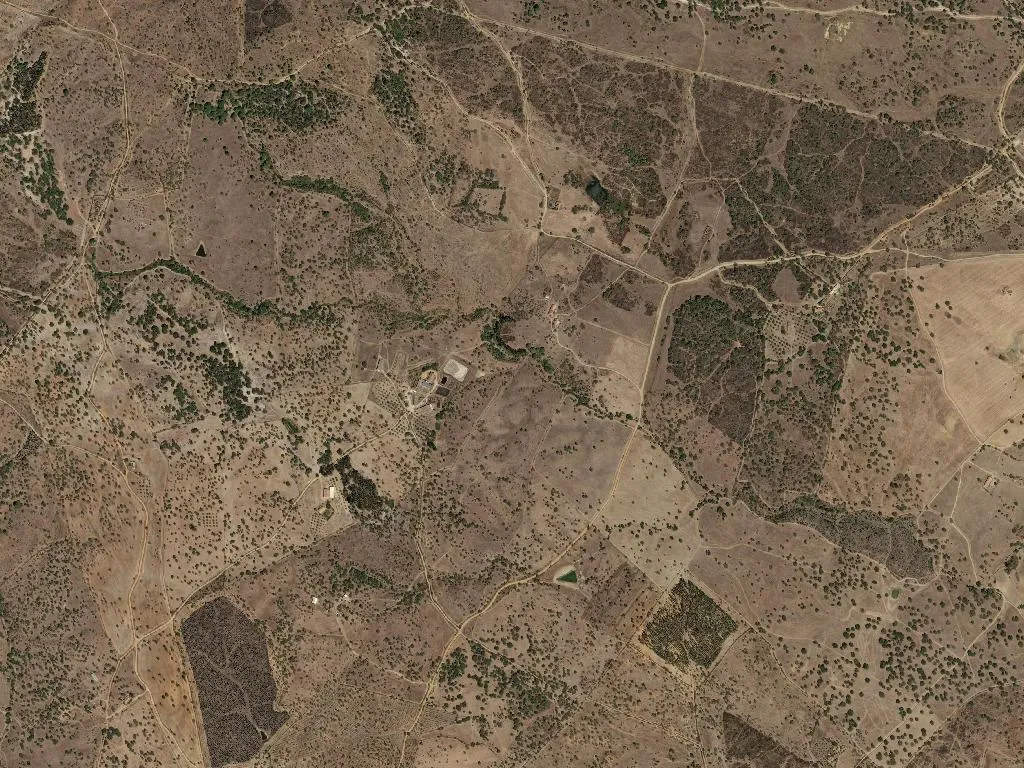
The wind combs through the cork-oak canopy and carries the scorched-earth perfume of August. Beneath the trees the stone still hoards the day’s heat, popping the occasional acorn so that a black pig, snout low, snaps it up mid-crack. Up here on the Serra de Abela, 148 m above the vanished Atlantic that left only fossil cowries in the Pedra Branca shell-midden, the silence is so complete you can hear your own pulse when you stop walking.
The stone that remembers before names
The anta—Portugal’s answer to a Neolithic long-barrow—stands between two cork oaks like someone recalling a time before maps. Granite slabs, blackened by winter rain and moss, form a chamber that still smells of unopened earth when you duck inside. Local lads sit on the capstone at weekends, draining small beers and claiming it guarantees success with girls from Santiago. Cross the Tanganheira stream and a Roman bridge shows where cartwheels once hauled grain to the coast: ruts worn ankle-deep into the limestone like wrinkles on an old face.
At Castelo Velho the walls merge with the ridge itself; wild strawberries grow between the stones. Children play hide-and-seek and come home with socks in shreds and pockets full of Islamic glaze—sky-blue shards the soil coughs up after rain.
Sunday’s own scent
Inside the parish church the gilded carving gives off a signature perfume: centuries-old incense, candlewax and the breath of every mass since 1755. Sr António, the sacristan, still climbs the groaning stairs each morning to wind the clock, exactly as his father and grandfather did. In the reliquary the bone of St James is smaller than you expect, but nobody questions it—after all, Queen Maria II herself sent it.
The Chapel of the Conception sweats in summer and freezes in winter, yet on the first Sunday of May its forecourt swells with people. Grandmothers arrive in black, rope-soled shoes in hand; men drag braziers of toasted pine-nuts that burn your fingers if you grab too soon.
What the pot keeps quiet
Zé Manel’s stew spends the day in the bakery oven after the bread is out. A neighbour leans over the wall: “He’s added extra paprika—his daughter’s come down from Lisbon.” The mint is from the yard, last year’s wine still throws a sediment, and the potatoes are so new their skins scrape off with a fingernail.
In the tavern on Largo—enter by the side door, the front has been bricked up for decades—Dona Rosa makes açorda the way her mother taught her: yesterday’s bread, coriander from the clump beside the outdoor shower, a thread of olive oil so green it catches in your throat. The egg comes from her own hens: “Happy birds, they even get ground maize.”
Where the land stops and the sea begins
The Moinhos trail starts behind Sr Brito’s house. His dog is half-blind but still barks on reflex. The windmill’s sails are shredded, the door wired shut, yet inside you can smell the flour his grandfather ground—flour that clings to clothes and makes you sneeze. Rockrose snags your ankles, but among the spikes the first autumn rain brings the best mushrooms.
The Lagoas are a world apart: here the wind shifts and brings a salt scent the earth normally hides. In October the flamingos arrive and the village breathes differently. Children skip school to watch “the pink birds”; parents pretend not to notice because they want to watch too.
When night is stitched with verses
In the cultural centre the floorboard always groans in the same place. Cante ao desafio—improvised duet singing—still happens much as it did when Father Caeiro cycled over to jot down the lyrics. Verses cover the same themes: land, labour, women, but each singer bends them to his own cracked voice, wine-softened and smoke-raw. Silvestre, playing a viola built by his father-in-law, can still make the widow of Zé Grande cry simply by beginning “Adeus, ó que partiste.”
When the Kings come in January the cold slices straight to the bone. They sing door to door anyway, voices hoarse, feet numb. At each house they receive a slab of cake and a glass of aguardente—“to warm up,” they say, though they are already shaking from drink.
Dusk settles; the church bell tolls three times, as it has every afternoon since Sr António died. Kitchen stoves flare and the smell of wet firewood braids with onions hitting hot oil. In that moment Abela stops being a dot on the map and becomes a taste on the tongue, an ache in the lower back of anyone who has ever hooded these rows, a homesickness that cannot be explained—only felt when you leave with earth still lodged in the tread of your shoes.